USA26 August, 20263 min read
Zohran Mamdani Opposes RSS Chief Mohan Bhagwat’s Madison Square Garden Event
This article is an automated aggregation of coverage from news outlets. Our editorials offer in-depth analysis curated by the NewsCord team.
Mamdani says he does not support Bhagwat's Madison Square Garden rally. City may lack authority to cancel the private event.
Mamdani vs Bhagwat
New York City Mayor Zohran Mamdani said he does not support an upcoming event featuring RSS chief Mohan Bhagwat at Madison Square Garden, while acknowledging the city may not have jurisdiction to cancel a privately organised programme. Mamdani made the case for a pluralistic, secular India when he said, "I don't support the rally, but I don't know if the city has any jurisdiction on canceling a private event." The event is billed as the "Universal Oneness Celebration" and is scheduled for Saturday, August 29, at Madison Square Garden in Manhattan, with local media reporting it is expected to draw around 5,000 attendees.
“I don't support the rally, but I don't know if the city has any jurisdiction on canceling a private event.”
Organizers say the gathering is part of the RSS centenary-year global outreach programme, with Bhagwat’s tour described as covering the United States, Canada and the UK, and with Bhagwat expected to deliver the keynote address. The controversy has drawn a counter-campaign in New York that frames the dispute as a fight over pluralism, politics and free speech, with Mamdani’s remarks adding political weight to protests already being organised by groups critical of the RSS and Hindutva.

Quotes and counter-claims
At a news conference outside New York City Hall, Hindus for Human Rights deputy executive director Sravya Tadepalli said, "Mohan Bhagwat does not represent Hindus. He leads an extremist Hindu nationalist movement that has fueled violence, exclusion and fear for minority communities," as protesters urged the event be canceled.
The same news conference also included calls for the RSS to be denied a platform, with the coalition describing its protest as an interfaith response to what it considers the dangers of Hindu nationalism.
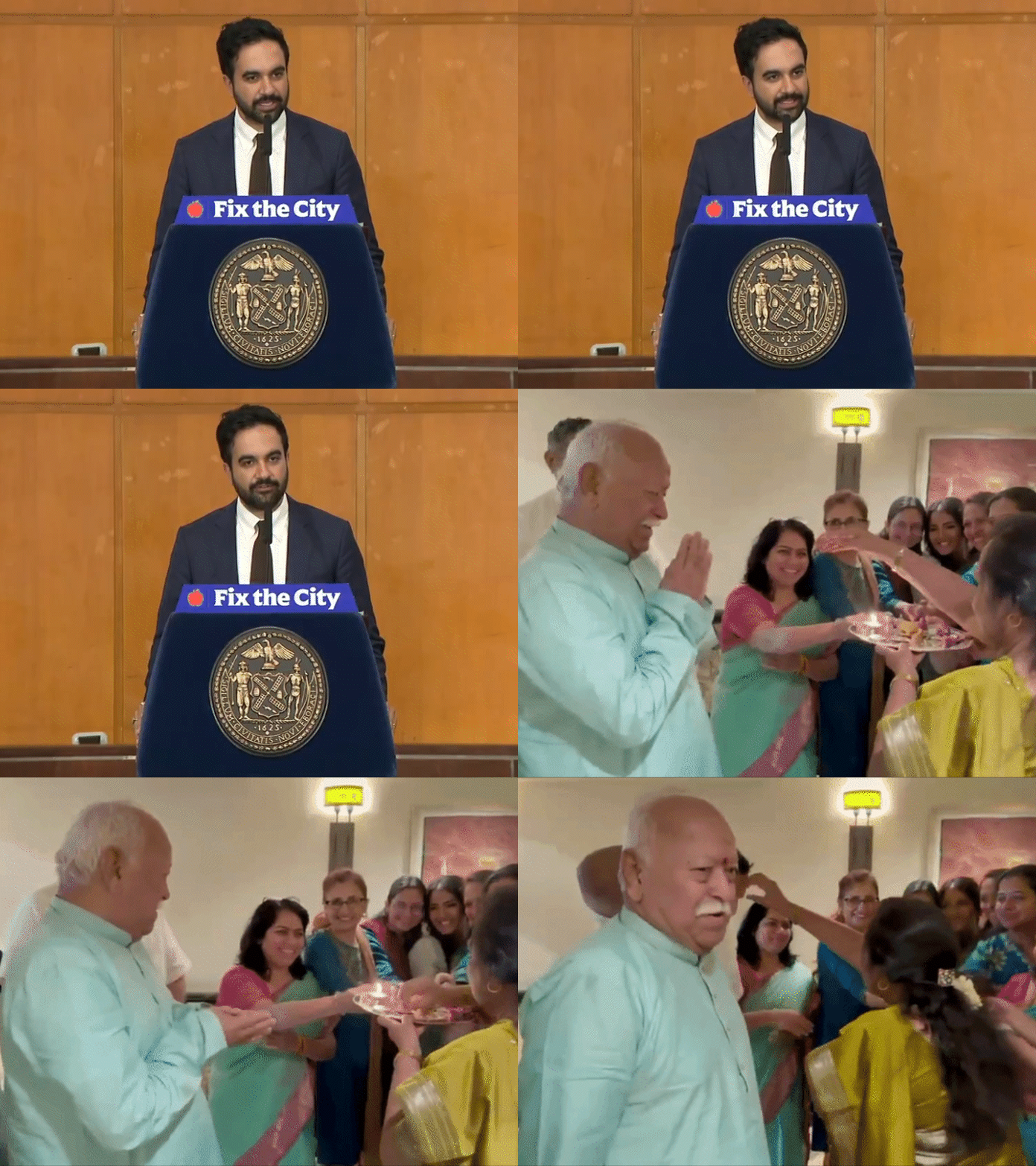
In response to the criticism, the RSS rejects accusations that it is anti-minority or intolerant and describes itself as a "Hindu centric civilizational, cultural movement" focused on uniting Hindus.
The US Commission on International Religious Freedom (USCIRF) added another layer to the dispute, with the commission calling for sanctions against the RSS and urging the US government not to extend diplomatic courtesies or high-level meetings to its leadership.
Mamdani’s opposition was echoed by other political figures, with Brad Lander, a New York Democrat and former New York City comptroller, saying, "There is no room for Mohan Bhagwat and RSS hatred in our city," while alleging the RSS had "fomented violence and promoted hatred against Muslims, against Sikhs, against Dalits, against Christians."
What’s at stake next
The dispute is now reaching Washington, where USCIRF has called for sanctions against the RSS and urged the US government not to extend diplomatic courtesies or high-level meetings to its leadership. USCIRF’s position is described as intensifying scrutiny surrounding Bhagwat’s visit, while Indian authorities are said to have repeatedly rejected USCIRF’s assessments as biased and selective. In New York, the campaign to stop the event has drawn support from political leaders and representatives of Hindu, Muslim, Sikh, Dalit and Christian groups, with Brad Lander and Shahana Hanif appearing at a news conference outside New York City Hall.
The event’s organizers, including the American Hindus for Engagement and Dialogue (AHEAD Forum), say the programme is intended to promote unity, civic responsibility, interfaith understanding, dialogue and global harmony, and they describe the message as "The World Is One Family." Meanwhile, the RSS says its global outreach tour is aimed at engaging with Indian diaspora communities and introducing Indian cultural traditions and the concept of Vasudhaiva Kutumbakam, as the controversy continues to center on whether the city can or should act against a private gathering.