Take action
Tell the LA Times to take the ads down
One letter, in your name, to the address the Times prints on the ad. It asks for one thing: take both pages down by 14 October.
What the Times published
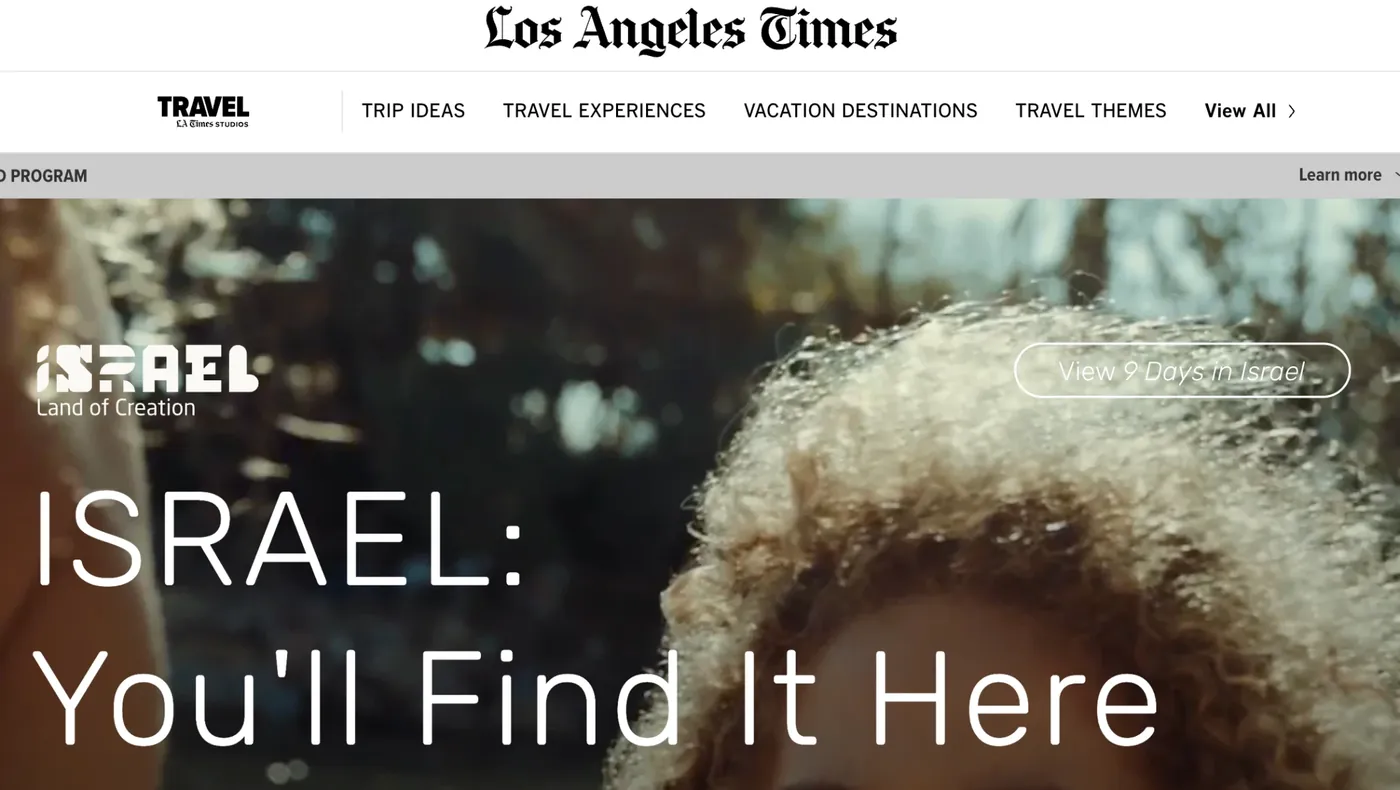
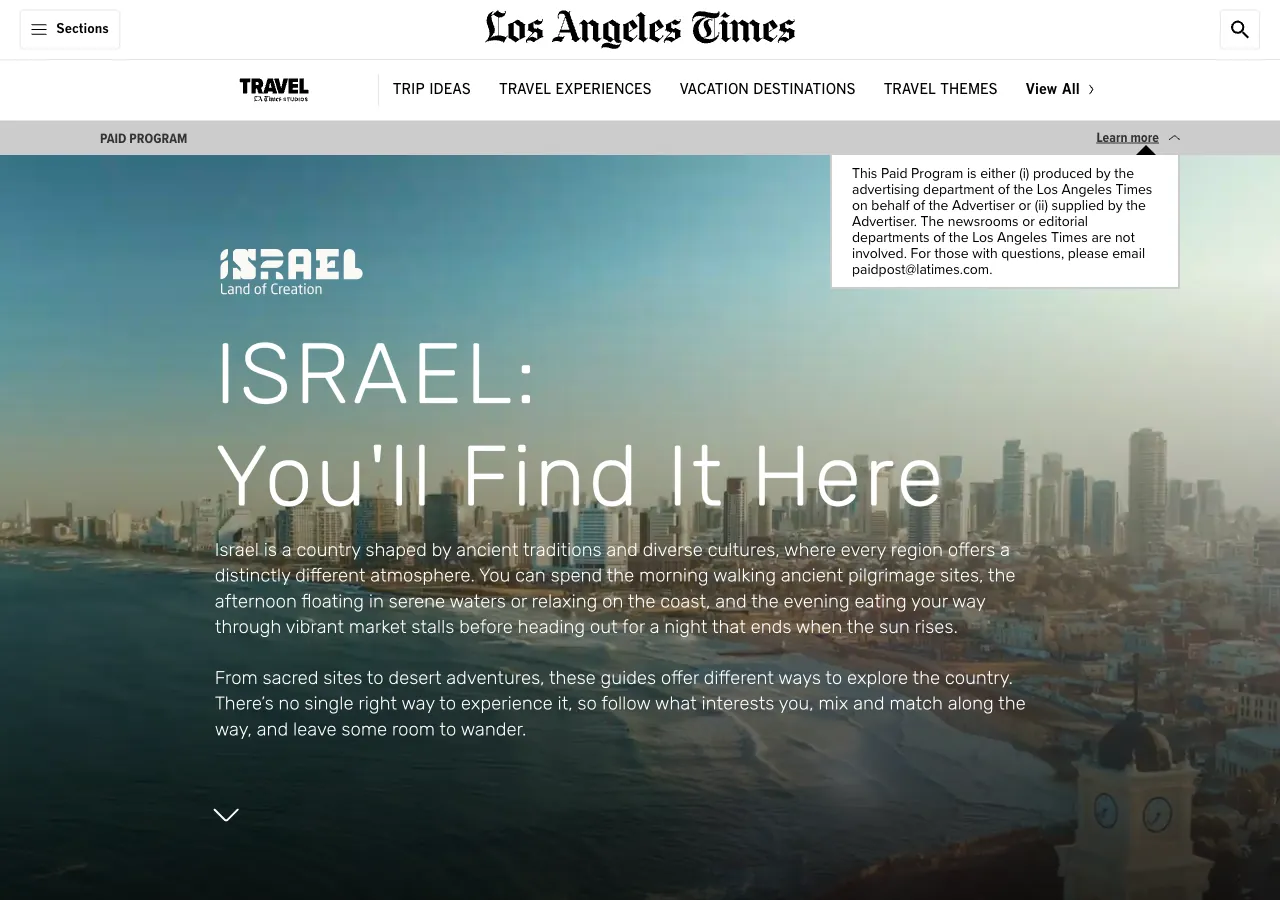
On 16 September 2026 the Los Angeles Times published a travel page called “Israel Travel Guide” in the Travel section of latimes.com, under a grey bar that reads “Paid Program”. It opens with the “Israel: Land of Creation” logo of Israel’s Ministry of Tourism and the headline “ISRAEL: You’ll Find It Here”. It links to the Ministry’s websites, goisrael.com and israel.travel, and to a second paid post the Times has run since 17 July, “9 Days in Israel”.
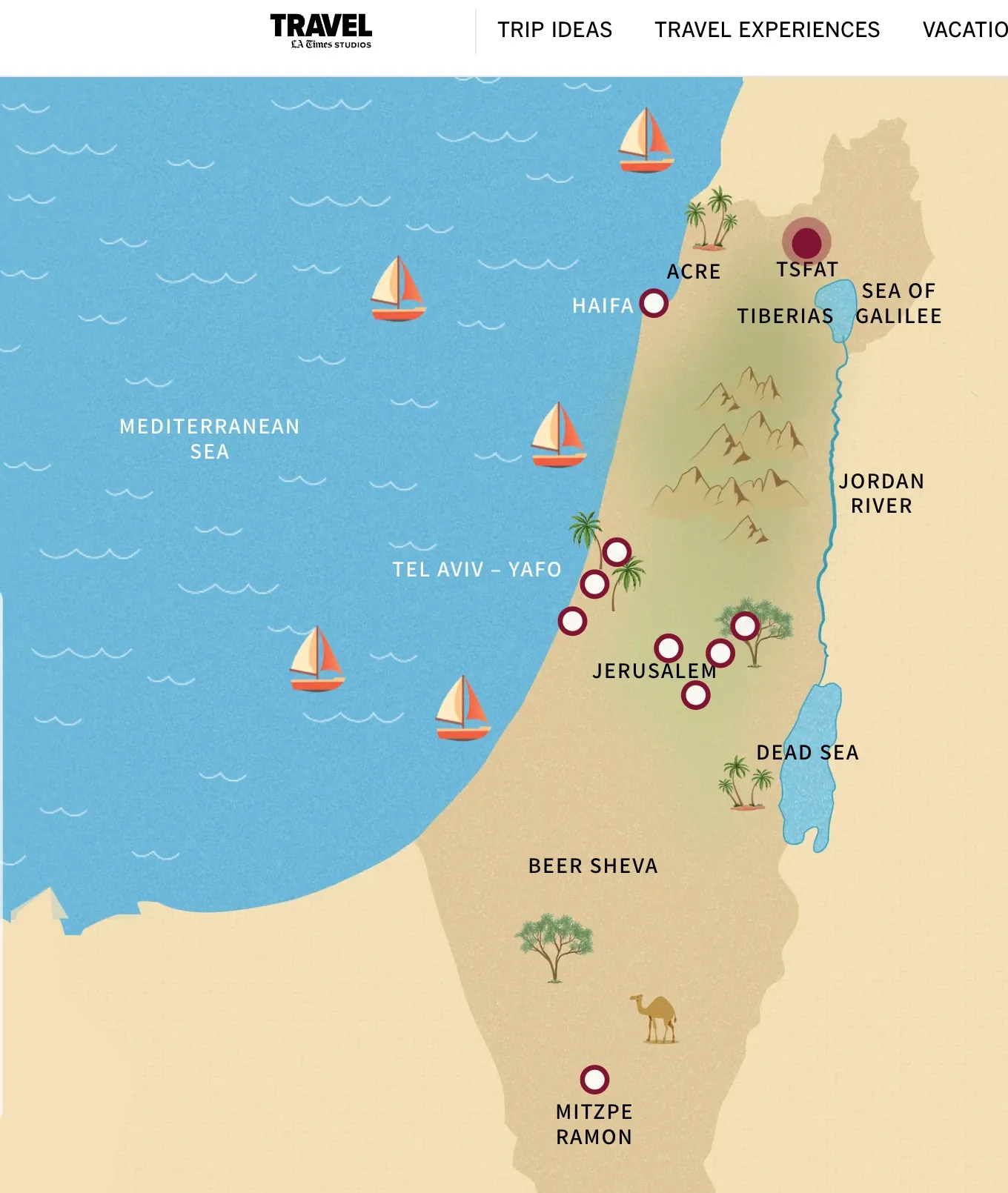
Neither page names the advertiser in words. The Times’s disclosure says each page is “either (i) produced by the advertising department of the Los Angeles Times on behalf of the Advertiser or (ii) supplied by the Advertiser”. The interactive map at the centre of the first page is hosted on Ceros, a design platform, in an account named “la-times-communication” and a project named “israel-ministry-of-tourism”.
What the map shows
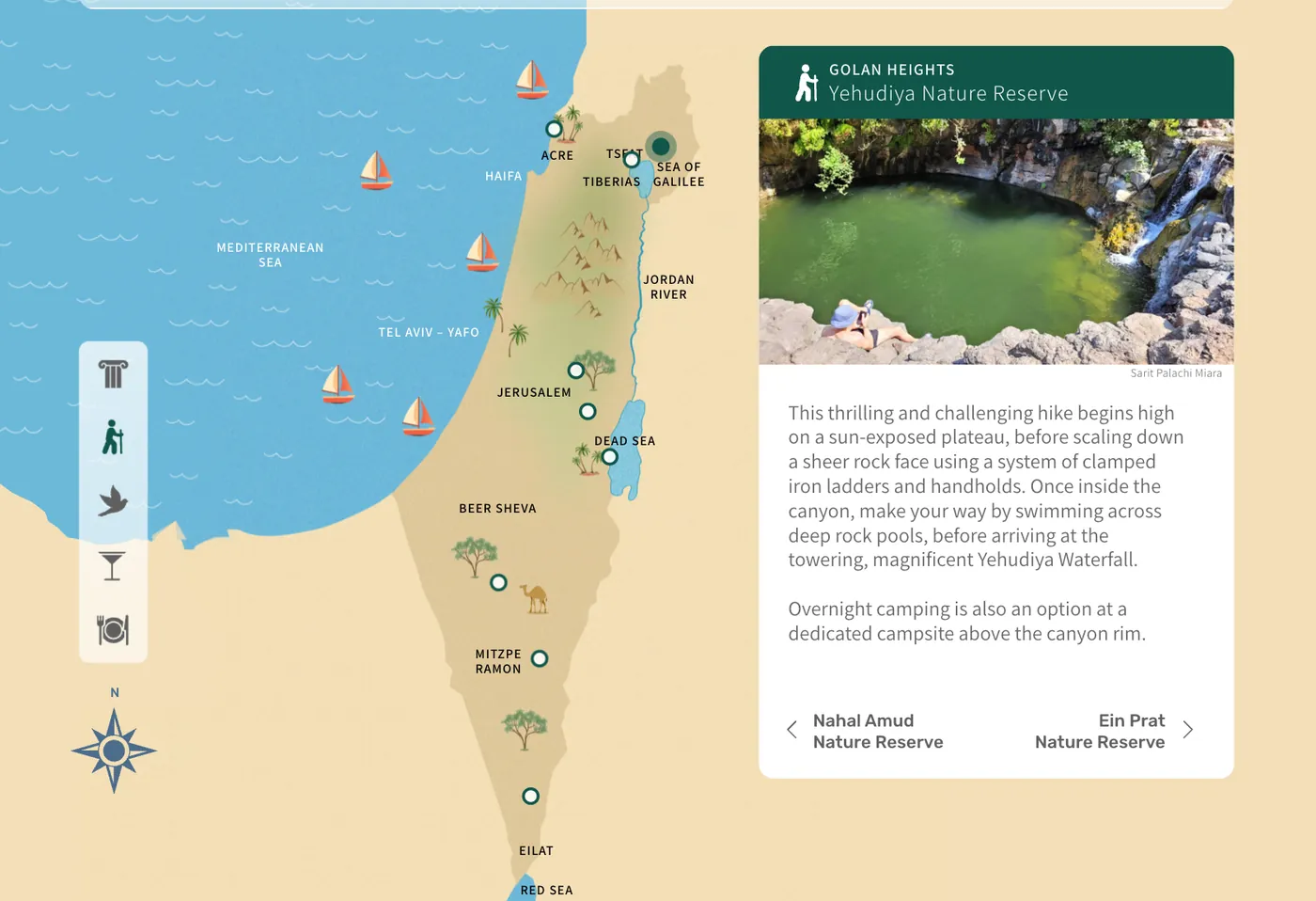
The map colours everything from the Mediterranean to the Jordan River as one country. It draws no line around the West Bank, none around the Gaza Strip and none around the Golan Heights, which Israel took from Syria in 1967. The ad files a waterfall hike in the Golan under the heading “Golan Heights” and never mentions Syria.
The Times published the map one year to the day after the UN Independent International Commission of Inquiry found, on 16 September 2025, that Israel has committed genocide in the Gaza Strip. The map draws Gaza as part of Israel. Across both pages Gaza appears once, in a line about Mitzpe Ramon, a town in the Negev: “the ancient incense road that carried frankincense and myrrh from Arabia toward Gaza”.
Where the ads send readers
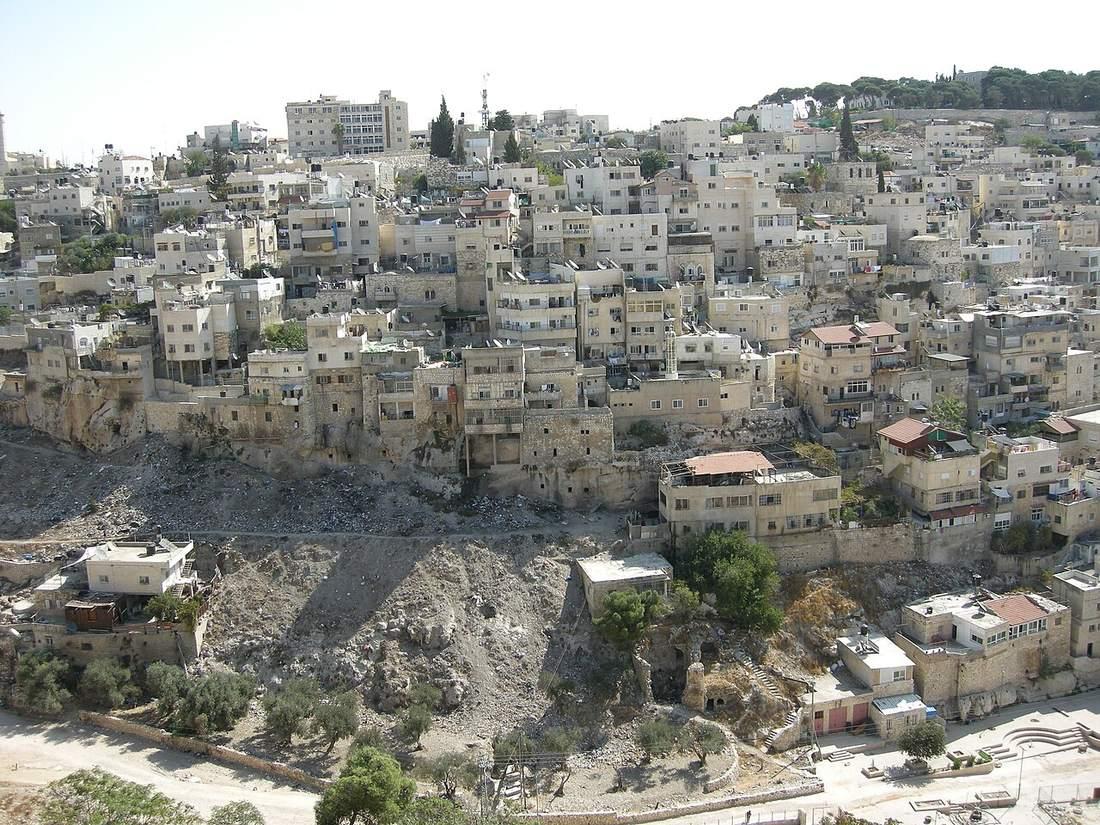
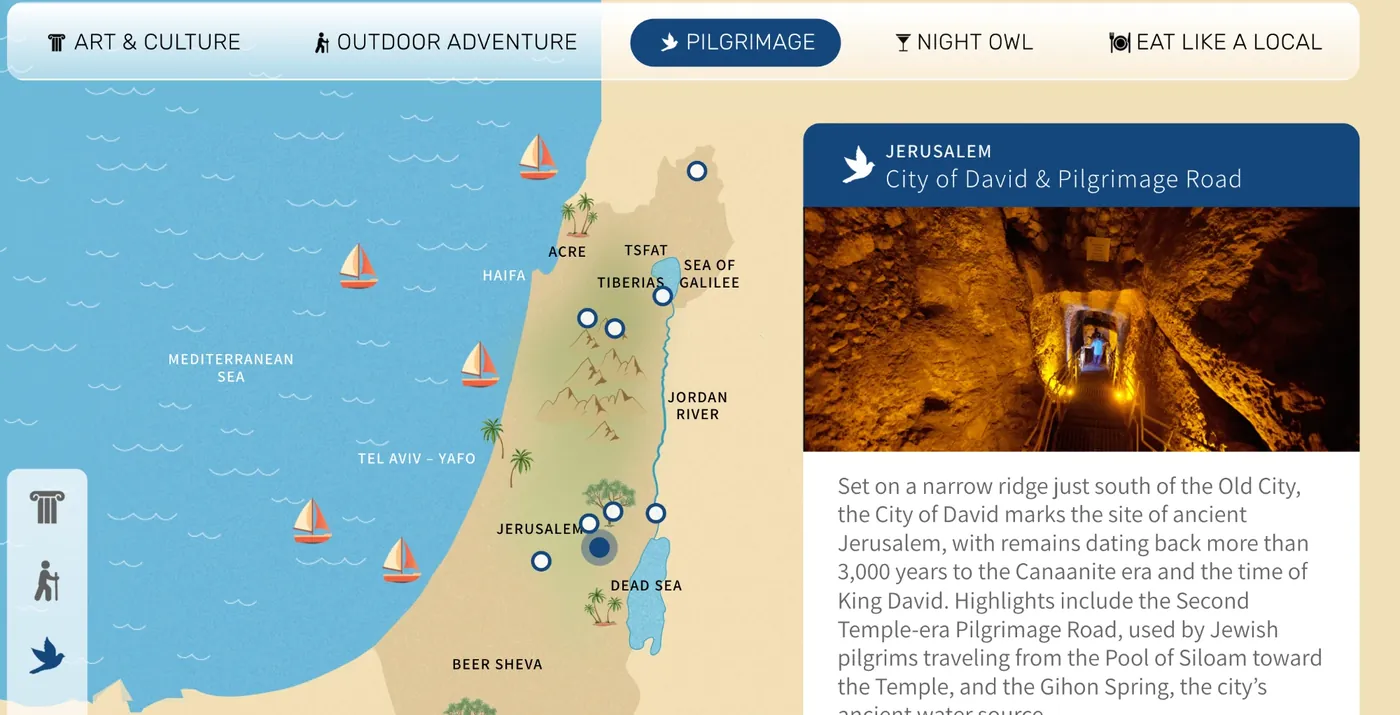
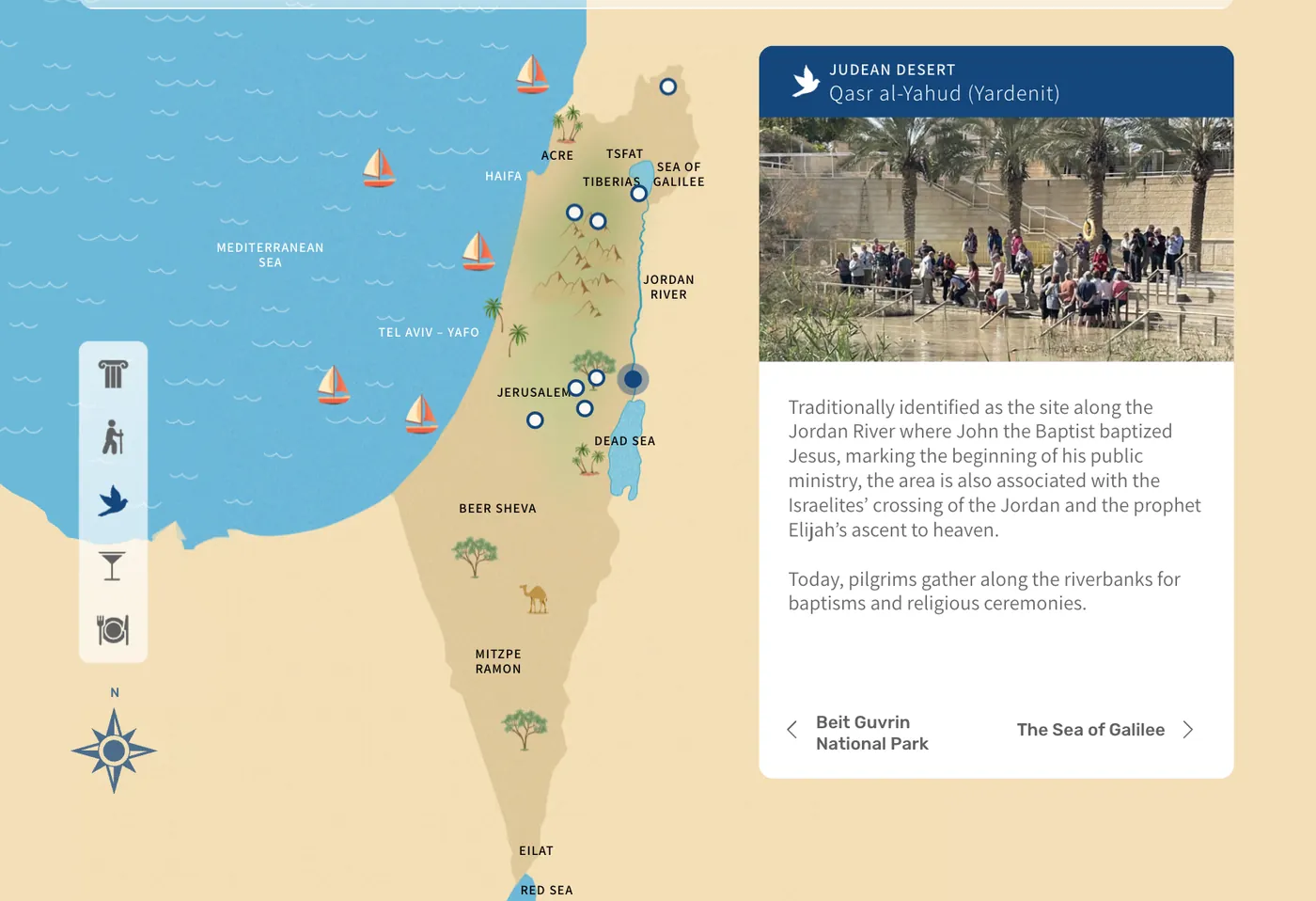
The map page recommends 47 places. Nine are in occupied territory. In occupied East Jerusalem: the Old City, the Tower of David, the City of David, the Mount of Olives and “Hummus in the Old City”. In the occupied West Bank: Qasr al-Yahud, Ein Prat and Nahal Darga. In the occupied Syrian Golan: Yehudiya. Four of its nine pilgrimage stops are on occupied land.
On the City of David:
“Set on a narrow ridge just south of the Old City, the City of David marks the site of ancient Jerusalem, with remains dating back more than 3,000 years to the Canaanite era and the time of King David.”
On Ein Prat, a spring in the West Bank:
“This is the perfect place for a day out in nature with the family. … You may even spot the Nubian Ibex, the symbol of Israel’s commitment to preserving its natural world.”
The ad files Qasr al-Yahud, on the Jordan River near Jericho, under “Judean Desert” and labels it “Yardenit”, the name of a different baptism site by the Sea of Galilee, inside Israel.
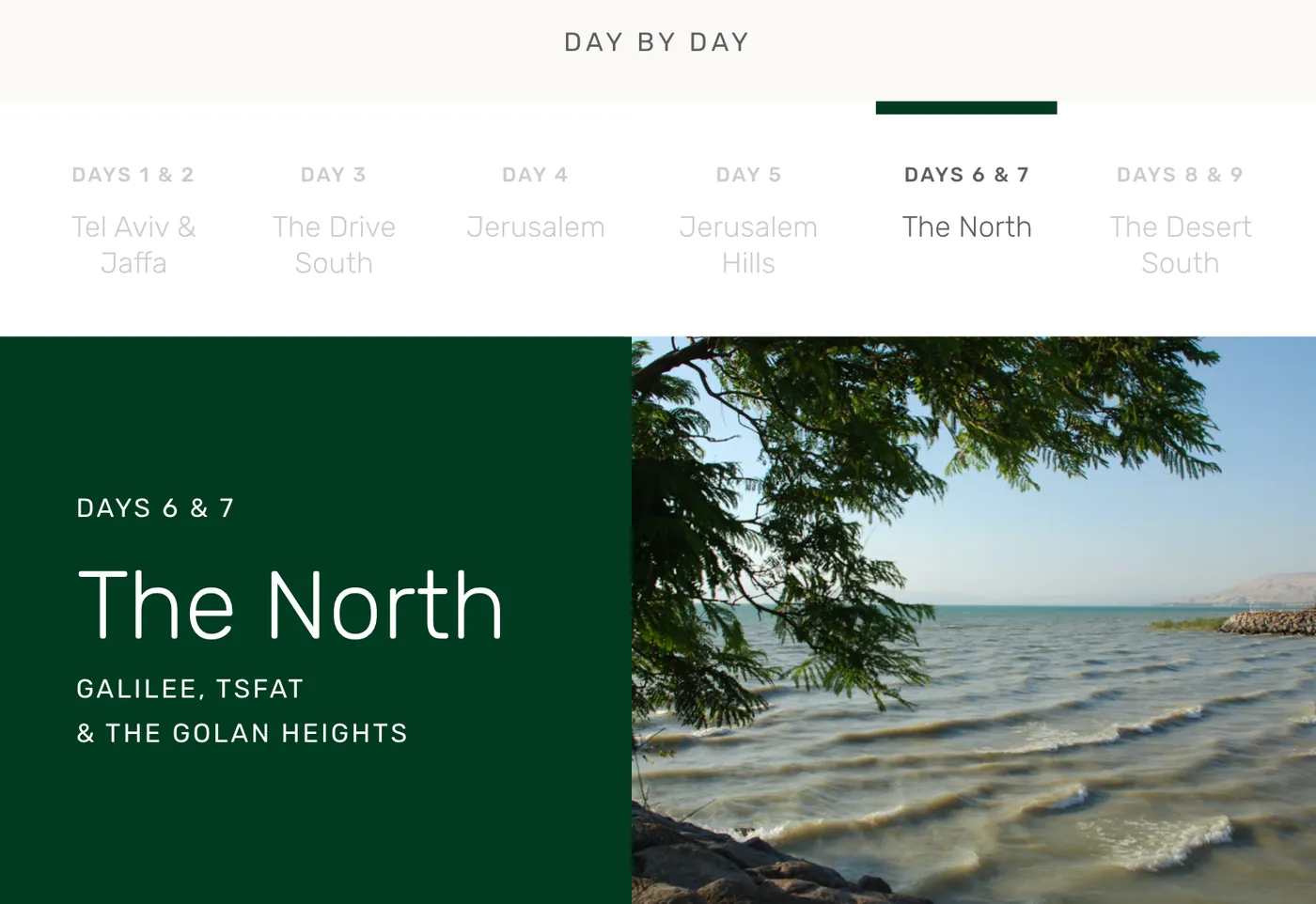
“9 Days in Israel” takes readers into occupied territory on five of its nine days: the Old City and the City of David on day 4, Wadi Qelt and the Monastery of Saint George of Choziba on day 5, the Golan Heights on day 7 after a night there, the Jordan Valley and Qumran on day 8, and Ein Feshkha on day 9.
On the Golan:
“the Golan Heights offers something different: open space.”
On the Pilgrim’s Road under Silwan:
“the Pilgrim’s Road in the City of David, only recently excavated and opened to visitors, which offers one of the most visceral encounters with ancient Jerusalem available today.”
What the ads leave out
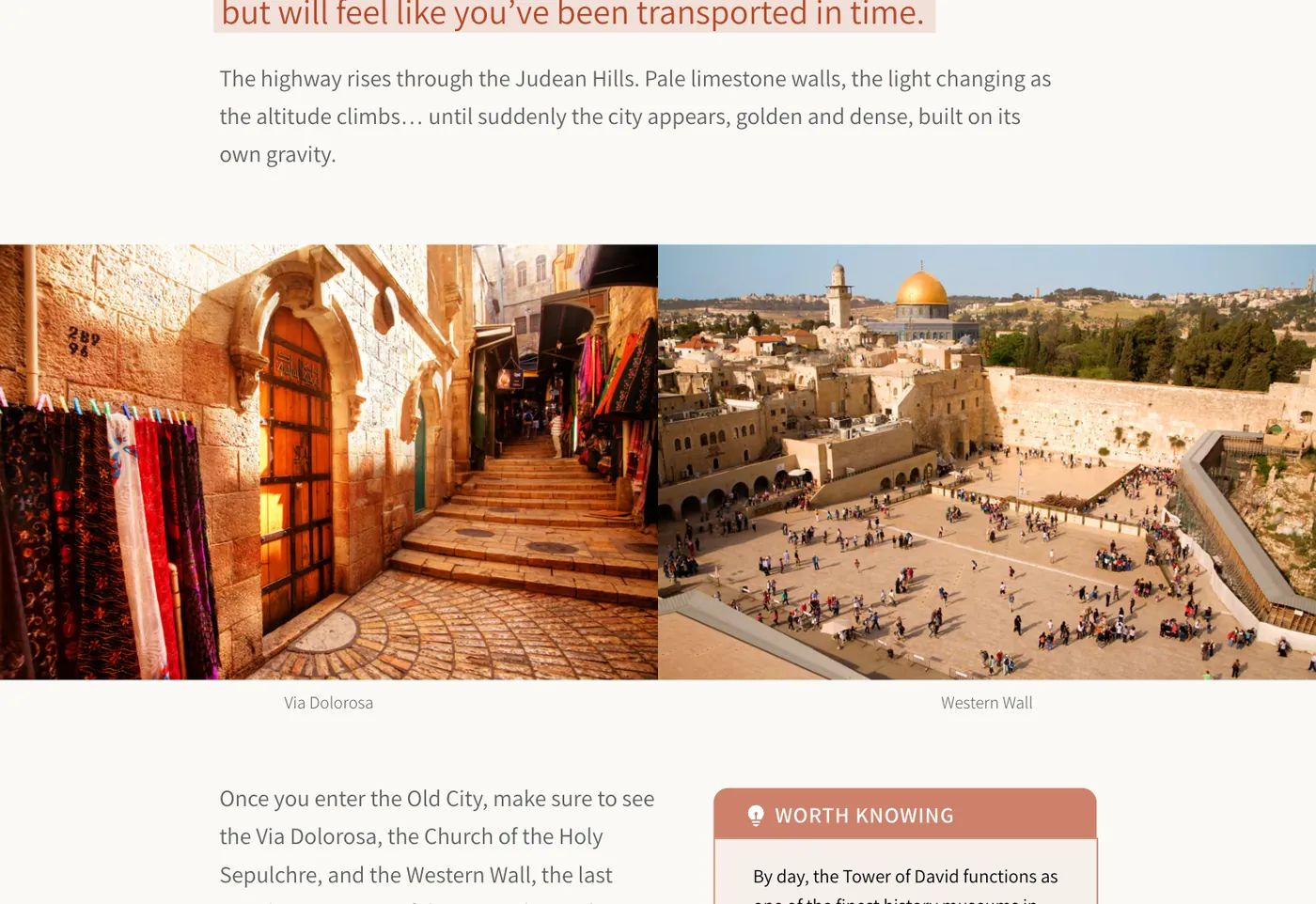
The words “Palestinian”, “West Bank” and “occupied” appear nowhere on either page. Neither page names Syria. The map page names the Temple Mount, and neither page names Al-Aqsa, though the itinerary’s own photograph of the Western Wall has the Dome of the Rock above it.
What happened at the places the ads sell
The Western Wall plaza. On 10 June 1967, three days after Israel took the Old City, Israeli authorities demolished the Moroccan Quarter in front of the wall. Roughly 650 people in 135 homes were made homeless, and two mosques were destroyed. The plaza the itinerary sends readers to stand in was built on the site. (Jerusalem Story)
The City of David. The site sits in Silwan, a Palestinian neighbourhood of occupied East Jerusalem, and is run by Elad, a settler organisation. In the next neighbourhood, Al-Bustan, about 1,000 Palestinians live in about 100 houses. In 2010 Jerusalem’s then mayor, Nir Barkat, advanced a plan to clear them for a tourist park called the King’s Garden. In the year to November 2024 at least nine of their buildings were demolished, eight of them in two weeks. The Israeli group Peace Now, which documented the demolitions, calls the plan “part of a broader government plan to develop tourism”, says “the tourist sites are operated by the settler organization Elad”, and writes that Al-Bustan “effectively ‘blocks’ the completion of the tourism corridor that the government and settlers aim to establish around the Old City”.
The West Bank. The British government has accused “settler terrorists” of carrying out “ethnic cleansing” of Palestinians there, and in September 2026 banned trade with Israeli settlements. The Times reported both.
Gaza. The UN commission concluded that Israel’s president, Isaac Herzog, its prime minister, Benjamin Netanyahu, and its then defence minister, Yoav Gallant, “have incited the commission of genocide”. The ad, branded by Netanyahu’s government, draws the Gaza Strip as part of Israel.
The ads whitewash genocide, ethnic cleansing and occupation. They sell holidays in the places where all three happened, and they leave out the people they happened to.
What the Times’s own news pages say
On 26 September, ten days after the map went up, the Times published an Associated Press report that says:
“Israel has occupied the West Bank since it captured the territory along with East Jerusalem and the Gaza Strip from Jordan and Egypt in the 1967 war.”
The same report opens with settlers who “diverted water from a spring serving a Palestinian village in the occupied West Bank to fill an ancient pool they promoted as a tourist attraction”. It quotes the Israeli group B’Tselem saying heritage designations are used to “elevate the historical, cultural, and religious ties of the State of Israel and the Jewish people to the West Bank”. It reports Israel’s heritage minister, Amichai Eliyahu, at the pool, saying there is “no such thing as a Palestinian nation”.
On 25 September the Times published another Associated Press report: the UN human rights office has added 61 companies, 214 in all, to its list of firms “involved in violating Palestinian human rights through business ties to Israeli settlements in the occupied West Bank”.
The Times’s news pages call the West Bank occupied. Its advertising pages sell it as Israel.
What the law says
In July 2024 the International Court of Justice advised that Israel’s continued presence in the Occupied Palestinian Territory, which it defined as the West Bank, East Jerusalem and the Gaza Strip, is unlawful, and that “all States are under an obligation not to recognize as legal the situation arising from the unlawful presence of the State of Israel in the Occupied Palestinian Territory”.
UN Security Council Resolution 2334 calls on every state to “distinguish, in their relevant dealings, between the territory of the State of Israel and the territories occupied since 1967”.
On the Golan, Resolution 497, adopted unanimously on 17 December 1981, says Israel’s decision “to impose its laws, jurisdiction and administration in the occupied Syrian Golan Heights is null and void and without international legal effect”.
The map does what Resolution 2334 asks every state not to do. It erases the line between Israel and the land Israel occupies, and the Times sold Israel’s government the space to publish it.
Why we are asking for removal
NewsCord is not asking the Times for a corrected map, a label or a disclaimer. A map with the 1967 line drawn on it would still be an Israeli government advert for holidays in occupied East Jerusalem, the West Bank and the Golan. A label reading “occupied” over the City of David would still send readers to a site run by the organisation that wants Al-Bustan’s families gone for a tourism corridor.
Asking the Times to adjust the ads would accept that it may sell holidays on occupied land as long as it describes them better. That request would normalise the ads, and NewsCord will not make it. The Times should take them down.
What the Times should do by 14 October
- Take down both paid posts, “Israel Travel Guide” and “9 Days in Israel”, and the interactive map with them.
- Refuse further paid posts that sell travel to occupied land, from this advertiser or any other.
Readers can write to the Times at [email protected], the address it prints on the ads. The letter below goes there in your name.
Take action
Tell the LA Times to take the ads down
Your letter goes to [email protected], the address the Times itself gives for questions about these pages. It asks the Times to take both paid posts down by 14 October 2026. It does not ask for a better version.
Sources: Los Angeles Times paid posts “Israel Travel Guide”, published 16 September 2026, and “9 Days in Israel”, published 17 July 2026, read on 30 September and 1 October 2026; Associated Press in the Los Angeles Times, 25 and 26 September 2026; UN Independent International Commission of Inquiry, 16 September 2025; International Court of Justice advisory opinion, 19 July 2024; UN Security Council resolutions 2334 (2016), paragraph 5, and 497 (1981), paragraph 1; Peace Now, 20 November 2024; Jerusalem Story on the Moroccan Quarter.