What the motion says
On Sunday 4 October Green Party members voted 1,022 to 813 that Zionism is racism. The motion defines Zionism as “a political ideology which called for the creation … of an ethnonationalist Jewish State in historic Palestine to the exclusion and/or domination of the non-Jewish population”. It says: “The real, material manifestation of Zionism has been the historic and ongoing dehumanisation, displacement, dispossession, disenfranchisement and destruction of Palestinians.” It commits the party to “the establishment of a single democratic Palestinian State in all of historic Palestine with Jerusalem as its capital, equal rights for all, and the right of return for Palestinians and their descendants”. The party’s own summary says the motion “states that anti-Zionism should not be equated with antisemitism”.
The motion is right. Amnesty International, Human Rights Watch and B’Tselem, Israel’s own leading human rights group, have each found that Israel practises apartheid against Palestinians. In July 2024 the International Court of Justice found the occupation unlawful, and found that Israel’s laws and measures in the occupied Palestinian territory breach the ban on racial segregation and apartheid. A UN commission of inquiry has found that Israel is committing genocide in Gaza. A state built to keep one people above another is a racist state, and the ideology that built it is racism.
What the papers did instead
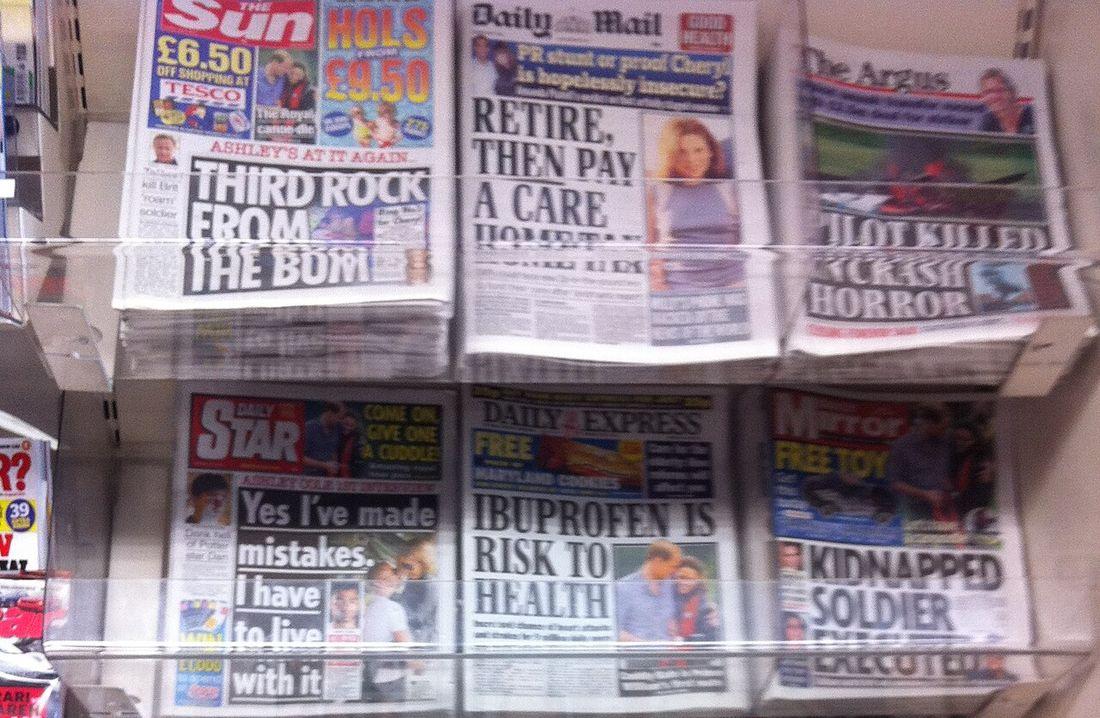
The papers that reported the vote gave its opponents 5,632 words and its supporters 620, across the 15 reports in our census. Thirteen quoted no Palestinian at all, and none of 22 headlines named Palestinians, Gaza or genocide. Read the census.
Then they went after the woman who wrote the motion. Lubna Speitan is a British-Palestinian Green Party member. Ten reports of the vote on the Sunday, from BBC News to CNN, never printed her name. Two days later she was in headlines beside the word al-Qaeda, and a motion about the oppression of her people was being reported as a story about a man jailed in the United States for terrorism.
She answered in a statement of her own:
“Those who support Zionism have failed to identify a coherent counter argument to the policy. Instead, they have resorted to personal attacks against those who support it, including me.”
The Telegraph calls itself a newspaper. On this story it printed an anonymous account’s words as hers, put a phrase nobody said in its headline, misdescribed a court file anyone can read, and rewrote what she told its reporter at her door. That is how a misinformation outlet works: it goes after the person, so it never has to answer the argument.
What the Telegraph did to Lubna Speitan
“Hunted down”
The Telegraph wrote that she “called for Zionists to be ‘hunted down’”. The next day it wrote that she “has also been filmed calling for Zionists to be ‘hunted down’ like Nazis”. This is what she says in the clip:
“That time will come where they are hunted in the same way as the Nazi oppressors were. This is justice. We will take freedom. It won't happen without force.”
She does not say “hunted down”. After 1945, Nazi officials were pursued across the world and put on trial. Her next sentence is “This is justice.” The clip opens with her saying “We will stand defiantly against these Zionist, racist, colonial settler oppressors”, and speaking of Israeli settlers’ attacks on her family in Jerusalem. None of the reports that quoted the clip printed that.
The words “hunted down” first appear in the caption of an anonymous account on X, @habibi_uk, which posted the clip on the night of the vote and called her “the raging antisemite Lubna Speitan”. A second account cut “This is justice. We will take freedom.” from its transcript, so that “It won’t happen without force” followed the hunting. The Telegraph printed the first account’s words as hers. GB News printed the second account’s cut.
| In the video | “hunted in the same way as the Nazi oppressors were. This is justice. We will take freedom. It won’t happen without force.” |
|---|---|
| The Telegraph | “called for Zionists to be ‘hunted down’”, and on Wednesday “‘hunted down’ like Nazis” |
| GB News | “urging people to ‘hunt’ Zionists down before warning: ‘It won’t happen without force.’” |
| The Jerusalem Post | “hunted in the same way as the Nazi oppressors were,” adding that this would not happen without force |
| The Times | “hunted in the same way as the Nazi aggressors were” |
“Good friend”
Both Telegraph headlines put “good friend” in quotation marks, and GB News made it “good friends”. Nobody in any of these stories used those words. The man is Minh Quang Pham, jailed in the United States for terrorism offences. His case file calls her the “defendant’s close friend”, in a motion written by his own lawyer in 2015:
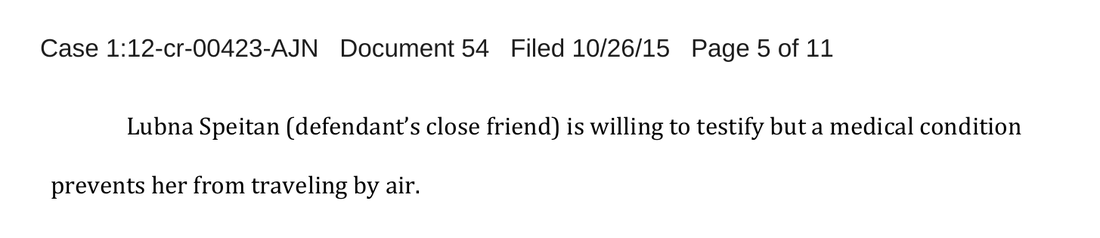
The prosecution answered that no details had been given of how long they had known each other or how often they met, and called it a “purported friendship”. The Jewish Chronicle, which first reported her letter to his judge, wrote: “It is understood she knew him at college only.” At her door she told the Telegraph “This is someone I went to college with”, and it did not print that sentence. The recording is below.
The court file
The Telegraph wrote that her testimony “was expected to boost an insanity defence”. The prosecution’s own filing says otherwise:

It wrote that prosecutors “noted that all five witnesses proposed by the defence had refused to travel to New York, meaning that they would not be subject to the same ‘pressure’ to tell the truth”. The defence motion says she was “willing to testify” but could not fly for medical reasons. The word “pressure”, which the Telegraph put in quotation marks as the prosecution’s, appears in neither the prosecution’s reply nor the judge’s order.
What the papers left out
The Jewish Chronicle wrote: “There is no suggestion that she knew of any criminal activity or terrorist affiliation.” The Telegraph, the Times, GB News and the Press Association did not print that line. She told the Telegraph that 56 members of her family have been killed by Israel in Gaza. The Telegraph printed it about 1,200 words into its story, and the others left it out. On Wednesday the Green Party opened an investigation into her.
What happened at her door
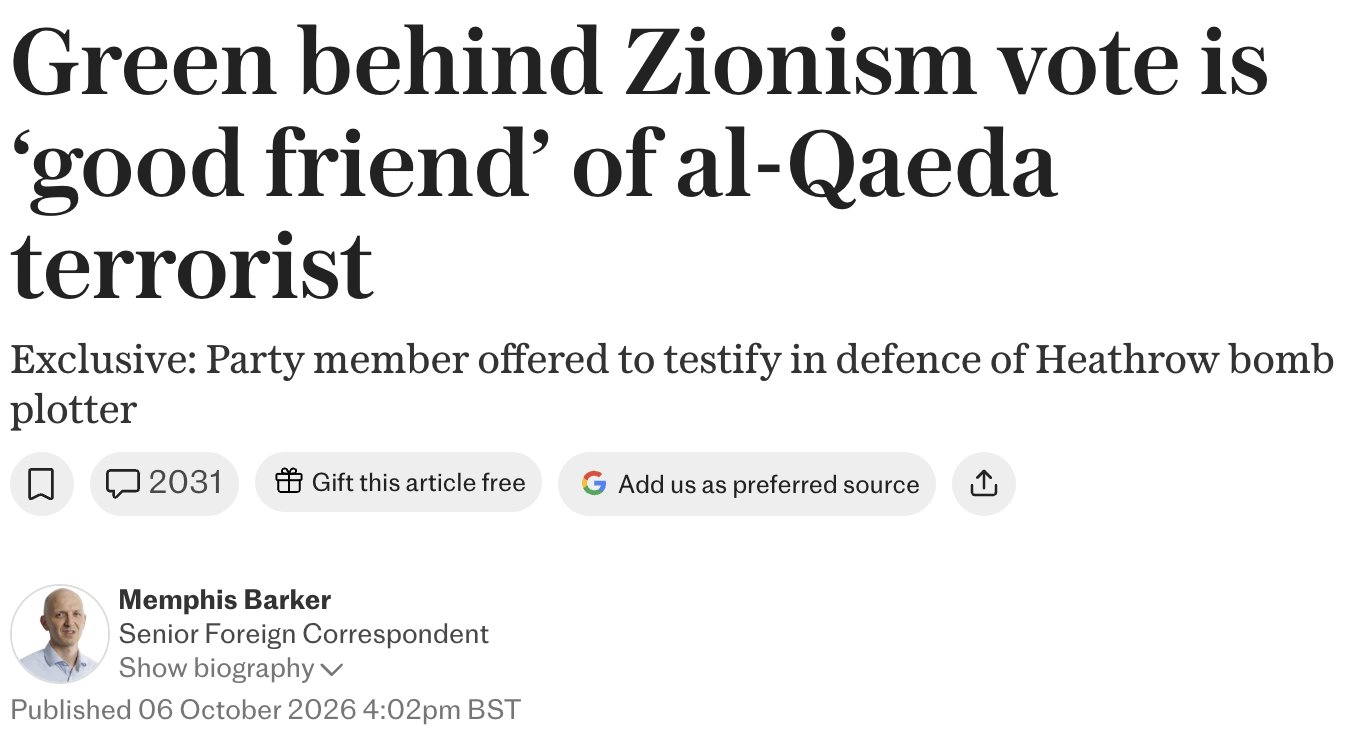
Memphis Barker, the Telegraph’s senior foreign correspondent and the byline on both stories, went to Lubna Speitan’s home before the first one ran. NewsCord has the recording of the whole conversation, nearly eight minutes long. She told him three times that she could not talk and asked him to email his questions:
Speitan“I’m not available at the moment.”
Speitan“I’m very sorry. I’m just about to jump onto an online interview now. If you can send me your questions…”
Speitan“Like I said, if you can email me that, I do have to get onto another online interview.”
He kept going: “While I’ve got you here, do you have any comment”. She asked how he had found her home, and asked him not to come back:
Speitan“I’d like to ask also how you got my address.”
Barker“It’s from open source records that my colleague found, when we were looking into this story.”
Speitan“Could you please do me a favour and kindly not circulate that, and also please kindly not come to my address? I’d appreciate that.”
Barker“Absolutely not. 100% guarantee that’s not how we work at all.”
He told her the accusation was not his: “all I’m doing is reporting what critics would say and are starting to say”. The headline that ran put “good friend” in the Telegraph’s own voice. Then he said “I’ll leave you in peace”, and asked one more question:
Barker“I do want to say, you know, the defence characterised you as a close friend of Minh Quang Pham. Do you dispute that now, or do you consider that still to be accurate?”
Speitan“No, it’s still the case. What’s, you know, it hasn’t changed. And is that going to be another attack on me? Because my friend, you know, has been targeted as well. Like, what? This was many years ago. This is someone I went to college with.”
She told him whose doors he should be knocking on:
“Why don’t you interview the people who have killed our families? Why don’t you interview the IDF who could be our neighbours, who walk our streets with impunity after slaughtering our families, that this system has done nothing to hold them to account for? These are terrorists. They are… whose doors you should be knocking on and asking them how it feels to kill Palestinians.”
This is what she said, against what the Telegraph printed:
| At her door | In the Telegraph |
|---|---|
| Asked about the friendship, her first answer: “I’m very sorry, I’m just about to jump onto an online interview now. If you can send me your questions…” | “When asked about her relationship with Pham, Ms Speitan first described the question as ‘insulting’” |
| Barker asked: “Do you dispute that now, or do you consider that still to be accurate?” | “Asked by The Telegraph whether they remained friends” |
| “No, it’s still the case.” | “Yes, it’s still the case.” |
| “This was many years ago. This is someone I went to college with.” | Not printed. |
| “who walk our streets with impunity after slaughtering our families” | “and walk the streets with impunity while destroying our families” |
| “whose doors you should be knocking on and asking them how it feels to kill Palestinians” | Not printed. |
The Telegraph left out that she declined, changed the question, changed her “No” to “Yes”, cut the sentence about college, turned “slaughtering” into “destroying”, and dropped the line about whose doors it should knock on. It printed what was left of that answer about 1,200 words into the story, in the same paragraph as the 56 members of her family killed by Israel in Gaza.
Barker has reported an unverified claim with care before. In July 2025 he wrote about the birthday letter the Wall Street Journal said Donald Trump sent Jeffrey Epstein. He called it “a letter he allegedly wrote” and added: “The Telegraph has not been able to verify if Mr Trump was the author.” Writing about a Palestinian woman, he printed an anonymous account’s words as hers with no such line, and put “good friend” in his own headline.
Whose doors they could knock on
More than 2,000 British nationals were serving in the Israeli occupation forces (IOF) in March 2025, by the Israeli army’s own count. In April 2025 lawyers for the Palestinian Centre for Human Rights and the Public Interest Law Centre gave the Metropolitan Police a 240-page report accusing ten British nationals who served in the IOF of war crimes in Gaza. On 27 April 2026 the Met’s War Crimes Team said it would not investigate. Lubna Speitan challenged that decision, represented by the Public Interest Law Centre, and in July the Met withdrew it and agreed to look again at the evidence against four British nationals it could identify.
The Jewish Chronicle reported her challenge on 24 July. In October the Telegraph, the Times, GB News, BBC News, the Press Association and the Jewish Chronicle itself put her name beside al-Qaeda’s. None of them mentioned it.
The Telegraph found her home from “open source records”. It has the same means to find the British soldiers of the IOF and ask them what they did in Gaza. It used them on the Palestinian woman trying to get some of those soldiers investigated, kept asking after she said she could not talk, and printed her name in a terrorism headline. That is intimidation, and a terrorism headline puts a private citizen’s safety at risk.
The same treatment for anyone who stands with Palestine
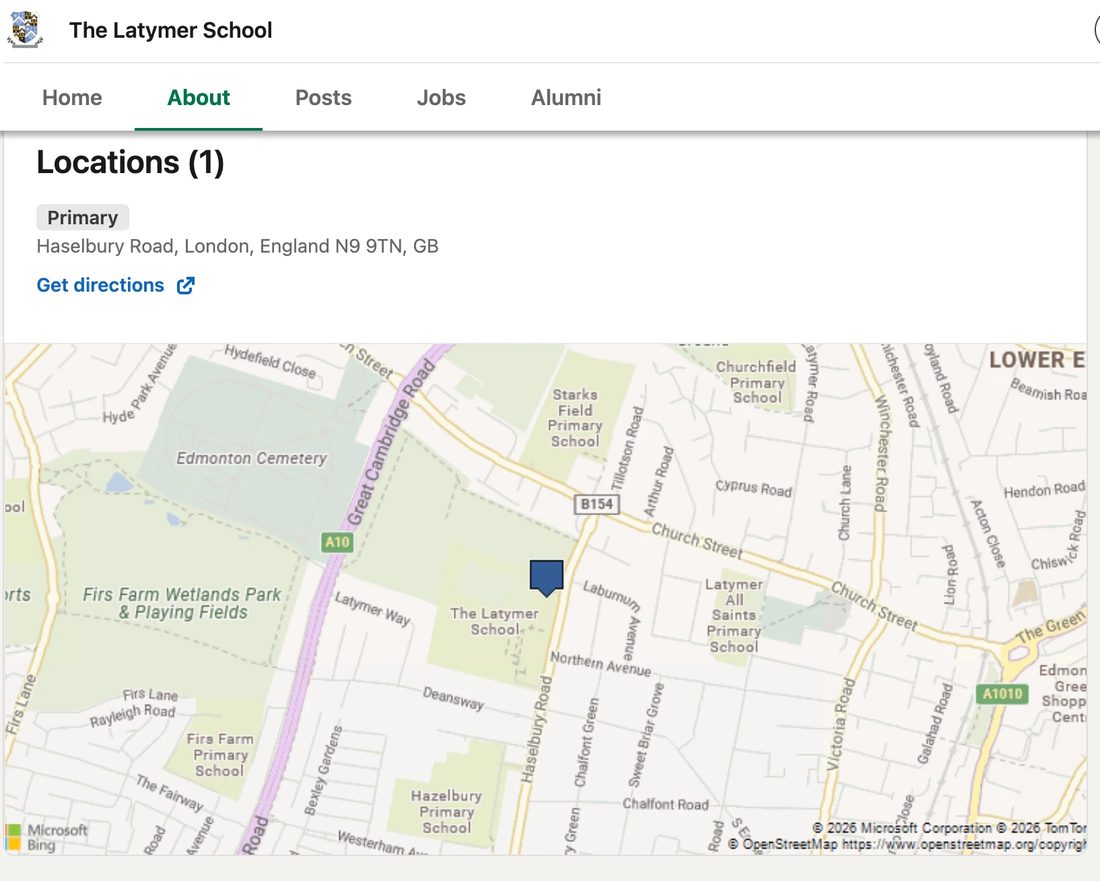
NewsCord got the same treatment. When we asked cinemas not to show the new Ali G film, because the character is a white comedian’s caricature of Black British street culture, Guy Adams of the Daily Mail asked: “So was NewsCord’s decision to take on Ali G motivated by the actor’s faith?” His answer was “we cannot know for sure”. He wrote that I was “a former pupil at the £32,000-a-year in west London”. The school’s name is missing from the sentence. I went to The Latymer School, a state grammar school on Haselbury Road in Edmonton, north London, which charges no fees. The fee and the place belong to Latymer Upper School, a private school in Hammersmith, west London, whose fees for 2026-27 are £32,025 a year. Anyone can check which in two clicks on LinkedIn:

The Mail has since added a correction at the foot of the article. The same piece says NewsCord “began life under the umbrella of Tech For Palestine” and took “a reported £250,000 investment via a ‘funding round’ overseen by Tech For Palestine”. Tech for Palestine launched on 2 January 2024, ten weeks after NewsCord’s first line of code, and did not oversee its funding. The piece also says NewsCord “publishes material supporting everyone from Hamas to the repressive government of Communist China”. NewsCord has never published anything supporting either. My complaint to IPSO is open.
NewsCord has documented two more cases, each with every article listed and linked.
Misan Harriman
The chair of the Southbank Centre, an open supporter of Palestine, asked why the press and the Met had not reported the third victim of the Golders Green attacker, a Muslim man stabbed that morning. The Telegraph’s arts correspondent wrote that he had shared a Golders Green “conspiracy”. Four days later the same correspondent’s headline read “Southbank Centre chief compares Reform victory to Holocaust”. The line came from an activist’s 57-second cut of a video five minutes and 40 seconds long, and the words were Susan Sontag’s, as the paper’s own standfirst conceded. NewsCord counted 62 articles about him across 18 outlets.
Read the full recordGary Lineker
A jury took two hours and eleven minutes to acquit Tony Greenstein, a 72-year-old Jewish anti-Zionist, of a terrorism charge over posts about Gaza. No national outlet reported the verdict. Two days later Lineker reshared a clip of Greenstein’s speech outside court, and the Telegraph’s headline was “Gary Lineker is done disguising his true views on the Jewish state”.
Read the full record
What they skipped
The Telegraph could have found all of this in minutes: the whole of a 66-second clip, a court file anyone can read free on CourtListener, and the Jewish Chronicle’s own July report of her war crimes case. The Mail could have checked my school in two clicks.
Speitan said what the stories were for:
“This is a classic distraction. I am not the conversation. Racism is. Zionism is. The ethnic cleansing and genocide of Palestinians is. Let’s talk about that.”
What the Telegraph and GB News should do by 15 October
- The Telegraph removes “hunted down” and “good friend” from both stories, removes its claims about an insanity defence and witnesses refusing to travel, and publishes a correction with due prominence.
- GB News removes “good friends” from its headline and its claim that Speitan urged people to “hunt” Zionists “down”.
The checks take minutes. The Telegraph ran its stories without them.
Sources: The Telegraph, 6 and 7 October 2026, and 18 July 2025; the Jewish Chronicle, 6 October and 24 July 2026; The Times, GB News, BBC News and the Press Association, 6 and 7 October; posts on X by @habibi_uk, 4 October, and @treesey, 5 October; United States v. Pham, No. 1:12-cr-00423 (S.D.N.Y.), Documents 54, 58 and 64; US Attorney’s Office, Southern District of New York, 4 February 2025; Left Foot Forward and the Green Party, 4 October 2026, for the motion; International Court of Justice, advisory opinion, 19 July 2024; Al Jazeera, 7 April 2025, and the Public Interest Law Centre, 23 July 2026, for the war crimes referral; Declassified UK, 11 February 2026; Lubna Speitan, statement and to NewsCord; Daily Mail, “The Plot to Cancel Ali G”, 3 October 2026; TechCrunch, 2 January 2024; NewsCord’s editorials on the vote coverage, Misan Harriman and Gary Lineker.