Data Investigation
The same reporter who called Jason Arday a “diversity poster boy” had already spent May on Misan Harriman.
Misan Harriman asked why the Muslim victim of the Golders Green attacker got so much less coverage than the two Jewish victims. Four national titles spent the next two months answering that question with his character. We counted every article about him, named every journalist who wrote one, and then checked those names against our census of the coverage of Jason Arday, the Cambridge professor found dead on 14 August. Nine names appear in both.
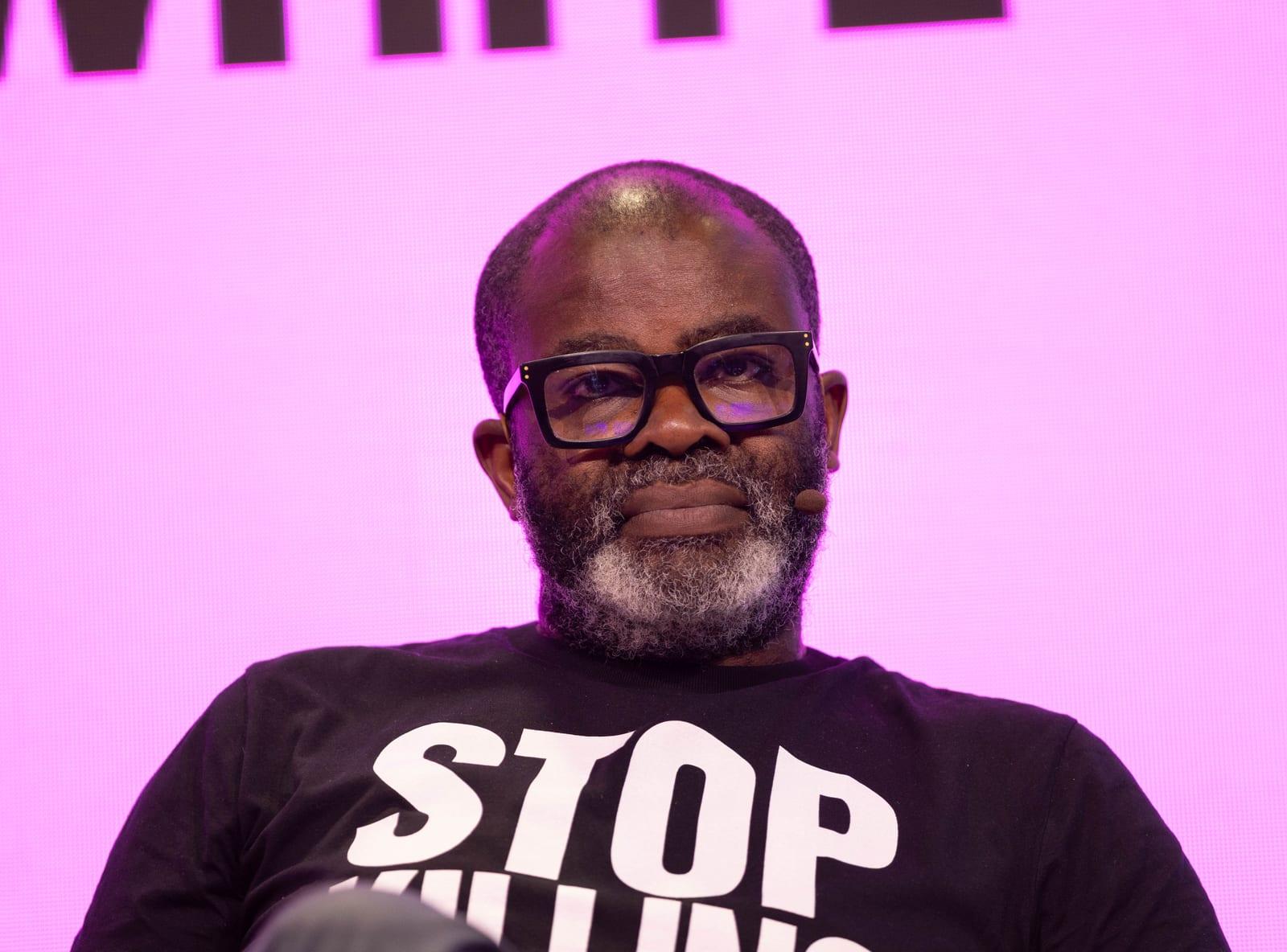
By NewsCord Editorial TeamPublished 16th August 2026Photo: Amy Martin Photography, CC BY-SA 4.0, via Wikimedia Commons
62 articles about one man, across 18 outlets
Every article we could find about Misan Harriman and the campaign against him, published between 12 January and 8 July 2026. Counting rules are the same as our Jason Arday census: distinct articles substantively about the subject, retitled and syndicated duplicates within an outlet collapsed to one, passing mentions excluded. Every article is listed with its link at the foot of this page.
Our own interest in this story, declared
NewsCord is not a neutral observer here. The mass complaint to IPSO described above was submitted through our complaint tool, and Press Gazette named the platform when it reported the story. IPSO said the complaints may have been AI-generated and referred the matter to the Information Commissioner's Office; the Telegraph then wrote about that too. So one of the 62 articles counted on this page is, in part, about us. We have counted it like any other, and we are telling you rather than leaving you to find out.
Who wrote it
48 named journalists produced this coverage. A further 1 piece carries no journalist at all: leaders, editorials and wire copy, the outlet speaking as itself rather than through a reporter. Joint bylines credit each named reporter once.
9 of the same journalists wrote about both men
We hold a second census: 274 articles about Jason Arday, the Cambridge professor found dead on 14 August 2026 after three weeks of national coverage. Two prominent Black Britons, two campaigns, one question worth asking of the data: are these the same bylines?
9 named journalists appear in both censuses, accounting for 48 articles between them. They are not all doing the same thing, and the page will not pretend otherwise: 7 drove the scrutiny, while 2 are Guardian writers who reported the story or argued against the campaign. The chart and table below label each one.
The sharpest single fact is at the Telegraph. Gordon Rayner wrote 12 pieces about Jason Arday and 2 about Misan Harriman, 14 in four months on two Black Britons. It was his byline on “Cambridge’s diversity poster boy in plagiarism row”, the article that took the Arday allegations mainstream, and his byline on “Southbank chief in fresh row over ‘anti-Semitic’ conspiracy theory”.
A reporter covering two stories on their patch is not wrongdoing, and we do not allege coordination. The point is narrower and harder to explain away: the sustained coverage of two prominent Black Britons, four months apart, was produced by the same small group of bylines at the same small group of titles, and at the Telegraph the same reporter opened both.
Every journalist who wrote about both
| Journalist | On Harriman | On Arday | Role | Outlets |
|---|---|---|---|---|
| Gordon Rayner | 2 | 12 | Drove the scrutiny | The Telegraph |
| Janet Eastham | 1 | 7 | Drove the scrutiny | The Telegraph |
| Lanre Bakare | 1 | 6 | Reported the story | The Guardian |
| George Odling | 4 | 1 | Drove the scrutiny | The Times |
| George Bunn | 1 | 3 | Drove the scrutiny | GB News |
| Leo McKinstry | 1 | 2 | Drove the scrutiny | Daily Express, Daily Mail |
| Fintan Starkey | 1 | 2 | Drove the scrutiny | GB News |
| Afua Hirsch | 1 | 1 | Wrote in his defence | The Guardian |
| MARTIN ROBINSON | 1 | 1 | Drove the scrutiny | Daily Mail |
What he says the coverage was about
“I've organised for Black Lives Matter, championed women's rights, LGBTQ+ rights, transgender protections, and for the Ukrainians during the war, and no one has had a problem until I started speaking out against Israel's genocide in Palestine.”
“Truth itself is on the line; just because these right-wing and frankly racist newspapers scream the loudest, it does not mean it is the truth.”
“racialised harassment”
What this does and does not show
What is counted
Sixty-two articles across eighteen outlets, every one listed below with its link, date and byline. The count is a floor: an outlet's archive that resists indexing hides articles from us, never invents them. Coverage of a public figure who chairs a publicly funded institution is legitimate, and some of these pieces are ordinary reporting of a story other people made. The census measures volume and authorship, not merit, and the two must not be confused.
What is not claimed
We do not claim these journalists coordinated, and nothing here suggests they did. Reporters cover the stories on their patch, and an arts correspondent writing about an arts chair is doing their job. Nor do we claim every crossover name is hostile: two of the nine are Guardian writers, one of whom wrote in defence of both men. What the data shows is narrower and harder to explain away: the same small group of bylines, at the same small group of titles, produced the sustained coverage of two prominent Black Britons within four months, and in the Telegraph's case the same reporter opened both.
The complaint is already drafted
Formal IPSO complaints and editor letters over the Telegraph pieces and the syndicated versions that followed, personalised and sent in your name.
Take action →Every article we counted
62 articles shown.
How this was counted
Assembled on 16 August 2026 by searching each outlet's own archive, sitemaps and search feeds alongside Google News and Bing News indices, then opening every candidate article to read its headline, publication date and byline from the page itself. Counting rules match our Jason Arday census: distinct articles substantively about the subject, retitled or syndicated versions within one outlet collapsed to a single row, passing mentions excluded. Unusually for a set this heavy with paywalled titles, every article carries a recoverable byline, so nothing here is credited to an unknown hand.
- Press Gazette: IPSO notifies Information Commissioner over AI-generated Misan Harriman complaints (22 May 2026)
- Novara Media: Four newspapers may have breached regulator's code over media hit job on Southbank chair (28 May 2026)
- Civil Society: Charity Commission assessing concerns over Southbank Centre chair's comments (19 May 2026)
- Civil Society: Regulator opens compliance case into Southbank Centre (5 June 2026)
- The Art Newspaper: Misan Harriman to step down as chair of London's Southbank Centre (25 June 2026)
- The Art Newspaper: Thunberg and Bonneville among signatories of letter defending Harriman (14 May 2026)
- The Guardian (Afua Hirsch): the campaign to sack Misan Harriman is part of an assault on black figures in public life (21 May 2026)
- NewsCord: The Misan Harriman Smear Campaign, the two Telegraph pieces read line by line
- NewsCord: the Jason Arday census, 249 articles in 22 days
What happened, and when
A man attacks Ishmail Hussein in Southwark, then stabs two Jewish men, Shloime Rand and Moshe Shine, in Golders Green. Nobody dies. Harriman, chair of the Southbank Centre since July 2021, asks publicly why the Muslim victim of the same attacker received so much less coverage than the two Jewish victims. That question is the origin of everything that follows.
The Telegraph publishes the first attack piece, by Craig Simpson: 'Arts Council-funded venue chief shares Golders Green conspiracy'. A question about editorial proportion is recast as endorsing a conspiracy theory.
The Telegraph, again Craig Simpson: 'Southbank Centre chief compares Reform victory to Holocaust'. The line Harriman had actually quoted, in a 57-second clip, was Susan Sontag's, relayed from Kurt Vonnegut. The paper's own standfirst concedes the words were Sontag's. Harriman denies making the analogy.
IPSO begins receiving complaints from the public about the coverage, submitted through NewsCord's complaint tool. See the disclosure below.
An open letter defending Harriman is signed by around 245 people including Greta Thunberg, Tracey Emin, Mark Ruffalo, Riz Ahmed, David Oyelowo, Gary Lineker and Susan Sarandon: the campaign is 'entirely without foundation in fact', its purpose 'to traduce and marginalise Misan'. A separate pledge passes 100,000 signatures. Amnesty International denounces the smears.
The Times runs a leader, 'Charity Commission must investigate the Southbank Centre chairman', alongside two news pieces the same day. Its chief culture writer had already questioned his suitability, noting that 'the son of a Nigerian billionaire' had 'developed little interest or expertise in classical music'.
The Charity Commission says it is 'assessing concerns raised in the media'. It opens a formal regulatory compliance case on 5 June. More than 64 MPs and peers write to Culture Secretary Lisa Nandy demanding an investigation; Nandy confirms Arts Council England is examining complaints and notes it 'has the power to suspend, withdraw or claw back grant funding'.
IPSO says it has received complaints that 'may have been generated using artificial intelligence' and writes to the Information Commissioner's Office. The Telegraph reports this about complaints against its own coverage. IPSO later confirms 22,390 complaints for May, revised down from 26,500 after duplicates, more than three times its entire 2025 volume.
IPSO rules Harriman's own complaints against the Telegraph, Mail, Express and Times within remit, saying they 'may raise a breach' of Clause 1 (accuracy), Clause 3 (harassment) and Clause 12 (discrimination). The publishers get 28 days to resolve it directly. As of 16 August 2026 no ruling, resolution or correction has been published by any of the four.
Harriman announces he will not seek a third term and will step down in autumn 2026. He has not resigned and, as of 16 August 2026, has not left. The Southbank Centre says he told the deputy chair in January, before any of the coverage. The announcement came seven weeks after the first Telegraph piece. His own words: 'It's semi-public knowledge that my term is coming to an end anyway.'