Europe28 September, 20262 min read
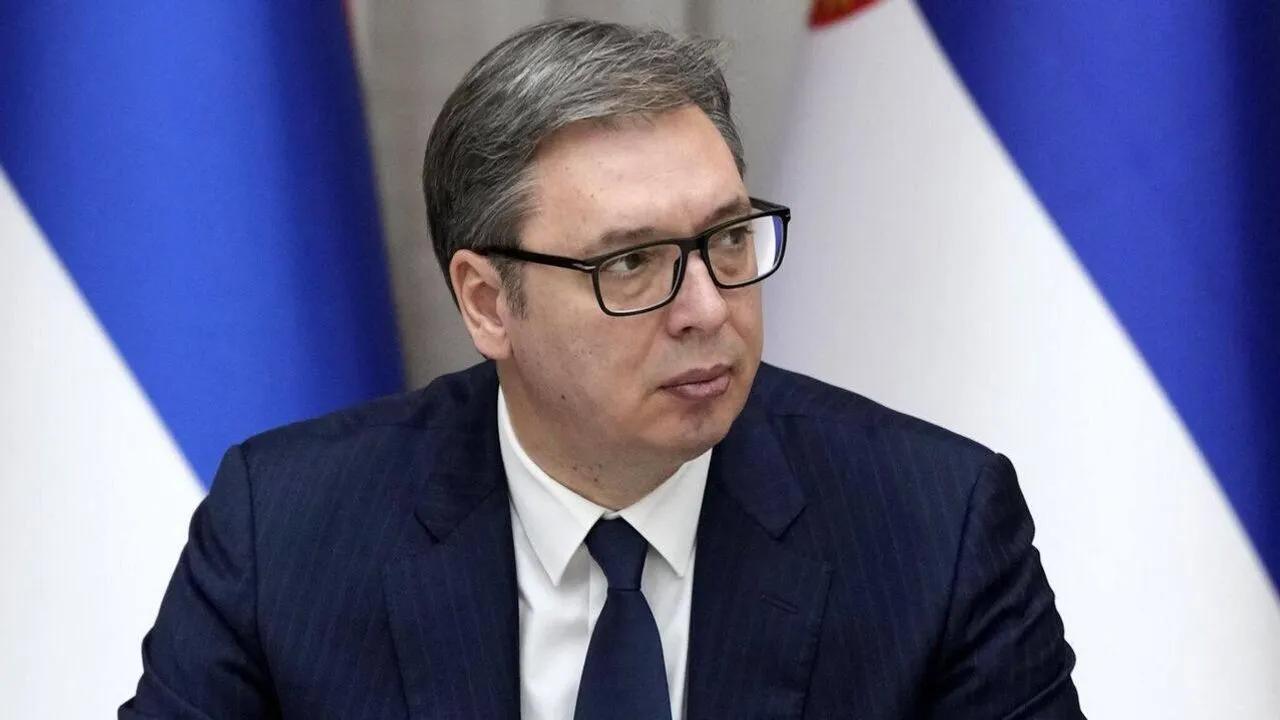
Aleksandar Vucic Resigns as Serbia President, Sets Snap Parliamentary Election for October 25
This article is an automated aggregation of coverage from news outlets. Our editorials offer in-depth analysis curated by the NewsCord team.
Vucic resigned as president seven months before term end to run for prime minister. The resignation paves the way for early parliamentary elections on October 25.
41 outlets told this the same way.
Outlets did split on Russian Drones Enter NATO Airspace, NATO Jets Scramble Across Romania, Poland, Germany, Belgium, France →
Vucic resigns, elections set
Serbian President Aleksandar Vucic signed and submitted his resignation on Sunday, stepping down as president and saying, "I am now signing the text that reads as follows: 'Pursuant to Article 116, paragraph 5 of the Constitution of the Republic of Serbia, I submit my resignation from the office of President of the Republic.'"
Ana Brnabic then assumed presidential duties for up to three months and had to call a presidential election within that period, while Vucic said he would take part in the snap parliamentary elections scheduled on Oct. 25 as an ordinary citizen.

Vucic’s resignation came as Serbia’s streets had been filled with young people rallying against the government, and Al Jazeera said the student movement had called for early elections for nearly two years.
Vucic announced snap parliamentary elections for October 25, and Al Jazeera described the early vote as an attempt by governing populists to cling to power despite widespread discontent.
Vucic’s resignation also set up a political calendar in which Serbia would vote twice, with the acting president serving until a new head of state was chosen and the parliamentary election arriving first.
Protests, analysts, and rivals
Viktor Stamenkovic, a researcher at Belgrade’s Institute for Political Studies, told Al Jazeera that the move was "essentially about reducing political risk". Stamenkovic also told Al Jazeera that "Given the circumstances, the ruling camp is choosing the electoral sequence it considers least dangerous," referring to Vucic’s Serbian Progressive Party (SNS). Milica Vojinovic, an investigative reporter at the Serbian outlet KRIK, told Al Jazeera that the governing party wanted to "continue their corruption projects" through new public procurements.
The youth movement recently submitted their election list to state election authorities after a march through the capital of Belgrade, formally entering the race. Polls showed the vote could bring representatives of the student movement into parliament and state institutions, with the Serbia-based Center for Research, Transparency and Accountability (CRTA) saying it was important.

EU path and foreign policy
Serbia’s efforts to join the European Union have stalled under Vucic because of democratic backsliding and a refusal to join sanctions against Russia over the war in Ukraine. Vucic denies that opposition protests were driven by internal factors and maintained another thesis that the opposition was incited from Brussels to force Belgrade to align its foreign policy with the European one. Serbia has been a candidate for EU accession since 2012 and has been negotiating chapters since 2014, while the process has stalled for years.
The two recurring obstacles were normalization with Kosovo and foreign policy, and it described Serbia as the only candidate country that has not aligned its sanctions with the EU’s against Russia. The tie with Moscow rests on gas arriving through the TurkStream corridor and on the ownership of strategic assets in the energy sector, framing those stakes as central to how Brussels and Moscow view Belgrade.