Iran · updated 1h ago · 3 min read
Pakistan’s Army Chief Asim Munir Urges Iran To Curb Houthi Attacks On Saudi Arabia
Munir urged Iran to curb Houthi attacks on Saudi Arabia. Pakistan pledged to defend Saudi Arabia under their mutual defense agreement.
16 outlets, one story, no spin found.
7 of 8 outlets skipped it: UN chief Guterres praises Pakistan’s mediation role and announces a visit soon..
16outlets compared
Iran-linked pressure in Yemen
Pakistan’s military leadership said it would go “the extra mile” to defend Saudi Arabia as the kingdom faces increasing attacks by Houthi militants backed by Iran in Yemen.
“We will go the extra mile for the security of the two Holy Mosques and Saudi Arabia.”
In that context, a spokesman for the Pakistani army, Ahmed Sharif Chauhdry, told Arab News that “We will go the extra mile for the security of the two Holy Mosques and Saudi Arabia.”

The same reporting ties the escalation to Houthi claims of new Saudi airstrikes on areas they control in Yemen and to Riyadh’s accusation that the Houthis attempted to target Mecca with a drone.
Al Jazeera Net also frames the pressure on Iran as Pakistan urged it to curb Houthi attacks on Saudi Arabia, with the Financial Times saying Pakistani Army Chief Asim Munir urged Iran to rein in the attacks before Islamabad was forced to defend the kingdom under the mutual defense clause.
The Financial Times account says Munir traveled to Tehran in August to meet Iranian President Ebrahim Raisi and other Iranian leaders, and conducted phone calls with Foreign Minister Javad Zarif, including one on Thursday.
Calls with Tehran and deterrence
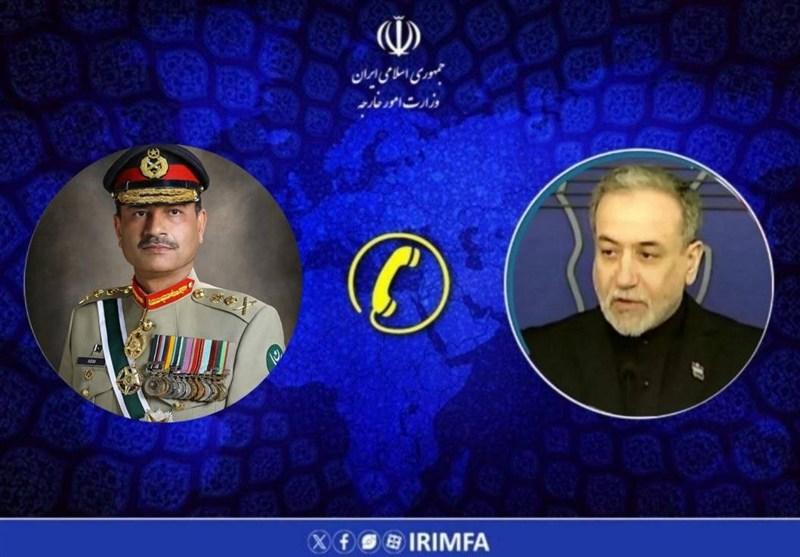
As US-Iran negotiations remain stalled, Iranian Foreign Minister Abbas Araghchi spoke by phone with Pakistan’s army chief Asim Munir during Araghchi’s visit to Beijing, according to Iranian and regional reporting.
Mehr News Agency said the call covered “the latest regional developments and matters of concern to both countries,” while Araghchi was in Beijing for diplomatic consultations.

An Anadolu Ajansı report said Munir urged Tehran to “use its influence” on Houthis to halt their strikes on Saudi oil and economic infrastructure during a phone call with Araghchi.
The same Anadolu account says Iranian Foreign Ministry spokesman Esmaeil Baqaei described the Houthis as independent actors “pursuing their own interests,” while Pakistan’s Foreign Ministry spokesperson Sajjad Haider Khan said operational details require “operational confidentiality.”
Arab News PK similarly described Araghchi speaking by telephone with Munir from Beijing, with IRNA saying “During the call, the latest regional developments and issues of mutual interest to both countries were discussed and reviewed.”
Mecca Agreement and next steps
Pakistan’s officials linked the Houthi escalation to the Mecca Agreement for mutual defense signed on August 7 between Saudi Arabia, Pakistan, and Turkey, which they described as obliging mutual defense if any comes under attack.
“it is time to implement the Mecca Agreement in light of the latest Houthi attacks on the Kingdom of Saudi Arabia”
Okaz reported Pakistan’s Defense Minister Khawaja Muhammad Asif saying “it is time to implement the Mecca Agreement in light of the latest Houthi attacks on the Kingdom of Saudi Arabia,” while also saying Islamabad is committed to the defense treaty with Saudi Arabia.
In the same reporting, Pakistan’s Foreign Ministry spokesperson Zahid Haider Khan told a press briefing that Pakistan is committed “in principle and spirit” to implementing the Mutual Strategic Defense Agreement with Saudi Arabia and the Mecca Agreement for collective defense.
The Al-Jazeera Net account also says Pakistan’s Foreign Ministry spokesperson told reporters that “when, how, where and what force will be used against any targets... and other operationally sensitive matters require us to maintain a degree of secrecy at this stage.”
Meanwhile, the Al-Bawwābah al-Wasṭ account places the Mecca Agreement “against the backdrop of the war between the United States and Iran” and describes Tehran-backed Houthi attacks as part of the regional pressure on Saudi Arabia.