Iranupdated 1h ago2 min read
Archive photo · 24 March 2021Iran Offers Two-Day Strait of Hormuz Reopening If U.S. Accepts Demands, Trump Threatens Decisive Strike
“Iran has agreed to cut the timetable from seven to two days.”
“Iran’s foreign ministry says it is considering a two-day plan to reopen the Strait of Hormuz if the US agrees to its conditions”
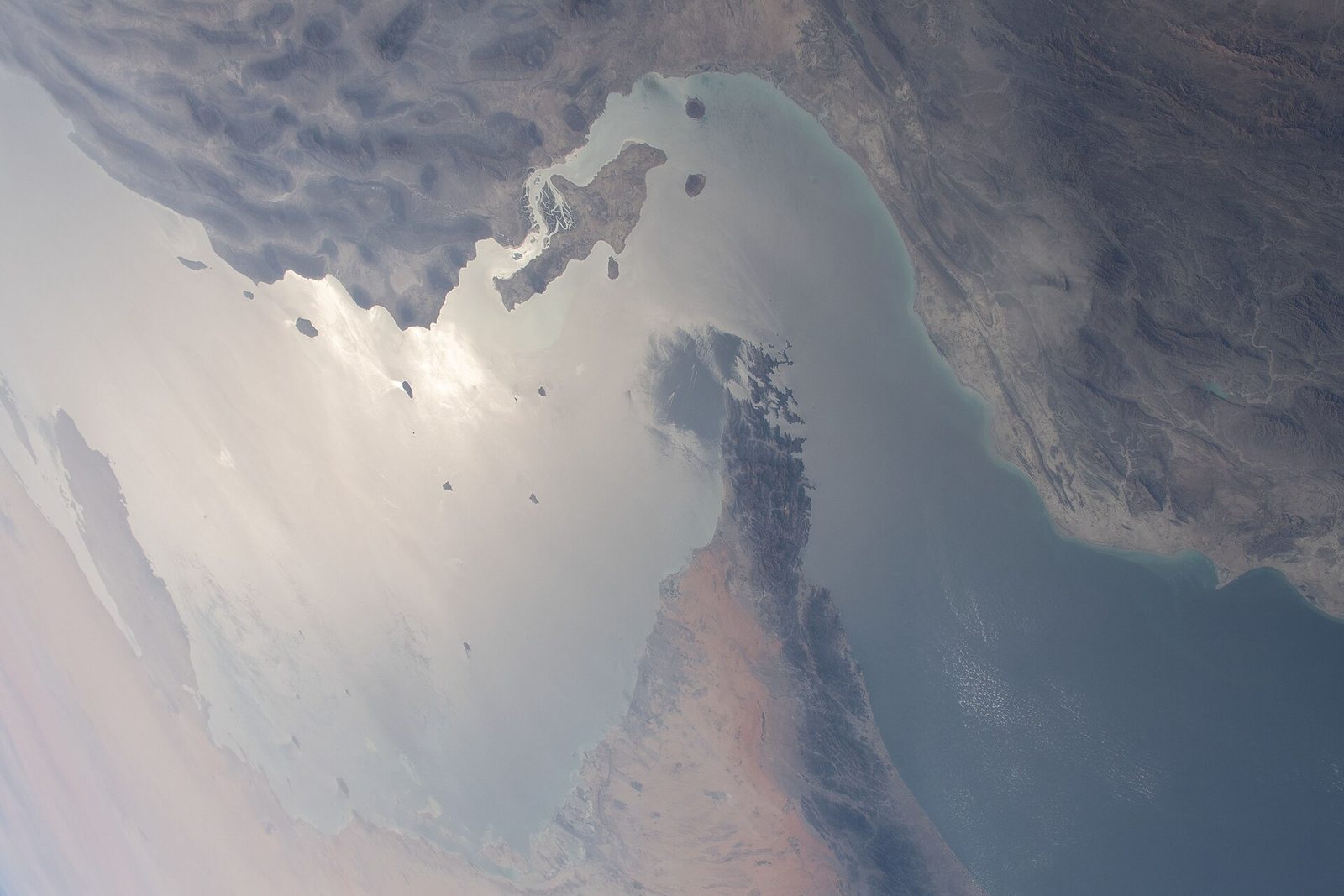
Photo: NASA Johnson Space Center / US federal government, Public domain · Cropped for layout
This article is an automated aggregation of coverage from news outlets. Our editorials offer in-depth analysis curated by the NewsCord team.
Iran proposes a two-day plan to reopen Strait of Hormuz if the US accepts demands. Qatari mediation shortened Iran's plan from five days to two days for reopening Hormuz Strait.
Save coverage image
The Guardian was read line by line by the Watchdog: 3.0. See the score →
Two-day Hormuz condition
Iran said it could reopen the Strait of Hormuz within two days if the United States accepts its demands, after Iran had previously proposed a seven-day deadline. Iranian Foreign Ministry spokesperson Saeed Khatibzadeh said, "the possibility of implementing this plan within two days is further proof of Iran’s goodwill." Iran added that restoring security to the Hormuz Strait and resuming negotiations could happen within a short period if Iran’s demands are met, while "messages between Washington and Tehran are still ongoing" via intermediaries.
Donald Trump threatened a "decisive strike" and said Washington "may be forced at some stage to deliver a decisive blow to Tehran," without specifying when. The BBC also reported that Trump hinted at resuming military strikes on Iran while a rally in the state of Iowa preceded midterm elections scheduled for November 3, 2026.
Qatar-mediated framework
Iran’s foreign minister Abbas Araghchi said Qatar-mediated talks produced a "two-day plan" in which the United States would implement measures on the first day and the Strait of Hormuz would reopen on the second. Araghchi said, "on the second day, the Strait of Hormuz reopens and transit returns to its previous state," while the proposal remained conditional on US action. Iranian Foreign Ministry spokesman Esmaeil Baqaei told reporters that "everything depends" on the US side accepting Tehran’s conditions, and he said only then could the subsequent stages be discussed.
The Economic Times reported that Araghchi said the Qatari side proposed shortening the implementation period from five days to two days, and he tied the plan to lifting sanctions and reducing US forces in the region. The BBC further described Iran’s earlier September seven-day plan, conveyed to the United States through Qatar, that would reopen the Strait of Hormuz on the sixth day if Iran’s demands were met.
Diplomacy versus strike threats
Iran warned that any renewed war with the United States could last longer than the previous round of fighting, and Iran’s official TV quoted Army spokesman Ahmad Reza Niya saying the American president would not be in a position to set its end time or terms. The BBC reported that Iran’s warning came after Trump said there was more to be dealt with, and it placed the dispute under pressure from major electoral deadlines in both countries. The Times of Israel said Iran was considering a two-day plan to reopen Hormuz if the US agreed to its conditions, and it quoted foreign ministry spokesman Esmaeil Baqaei saying the exchange of messages was still ongoing via mediators.
The BBC also reported that Trump said he discussed the Iranian file with Israeli Prime Minister Benjamin Netanyahu, and it described Netanyahu’s call as "difficult" while an American source said it was "straightforward." In the Strait of Hormuz, the BBC reported that UK Maritime Trade Operations said a tanker traveling southeast of the Gulf was attacked by two unknown projectiles about 72 nautical miles east of Ra’s al-Kaffa (Ras al-Khafji), while all crew members were safe and there was no environmental impact reported.