USA11 August, 20263 min read
Trump Extends National Guard Crime Deployment in Washington, D.C. Through January 2029
National Guard deployment extended through January 2029. Projected cost of about $1.4 billion through Trump’s term.
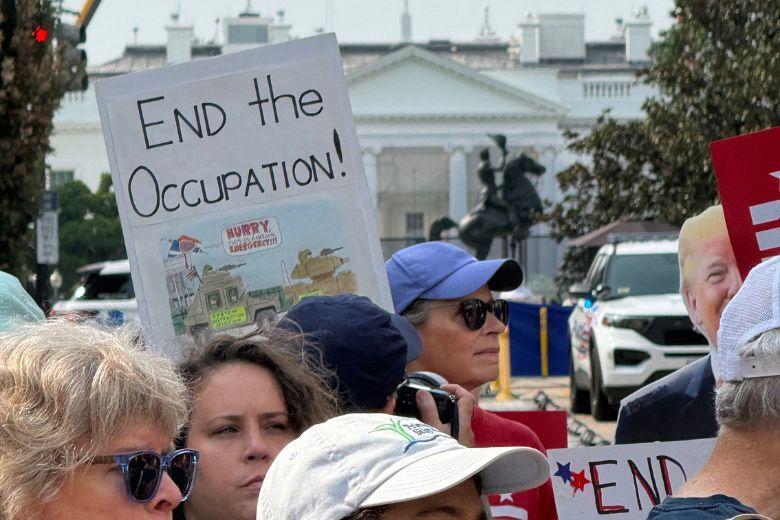
Extended D.C. patrols
President Donald Trump’s National Guard crime emergency in Washington, D.C. has stretched from an initially temporary mission into an extension through January 2029, with armed troops continuing to patrol the nation’s capital.
The AP reported that the deployment was extended through January 2029 after being launched in August 2025, and NPR described how “Thousands of National Guard members have been patrolling the streets of Washington D.C. for a year now.”

NPR said the troops have become a routine part of city life, appearing on busy streets, in farmer’s markets, metro stations and around the national monuments, while the mission is framed as an anti-crime deployment.
NPR also reported that Trump first deployed the National Guard to D.C. in August 2025 after declaring a “crime emergency” and launching the D.C. Safe and Beautiful Task Force, despite violent crime being at a 30-year low.
The AP said residents and a new cadre of local officials still question why having troops on the streets of the nation’s capital is necessary, even as the mission is extended through January 2029.
Debate over legality
Civil liberties critics and local officials have challenged the deployment’s legitimacy, with the ACLU of the District of Columbia arguing it is not a genuine emergency and that the military presence should not become normal.
AP quoted Scott Michelman, legal director of the ACLU of the District of Columbia, saying, “There’s a deep irony that here we are in the capital of the free world, and our president is treating it like a police state.”

NPR reported that Joseph Nunn, counsel at the Brennan Center’s Liberty and National Security program, warned that “Armed military personnel standing on the street corners in an American city should never be normal.”
NPR said the U.S. Marshals Service deputized all guard members in D.C. to temporarily grant certain law enforcement powers, while also stating they cannot carry out arrests but can detain people and are issued a handgun.
NPR further reported that the White House did not directly respond to NPR’s questions about why the extension was deemed necessary, instead linking to a U.S. Marshals Service press release about the Joint Task Force.
Costs, arrests, and next phase
As the deployment continues toward January 2029, the sources describe both a growing footprint and a continuing political test for new candidates after the midterms.
AP said extending the deployment into 2029 will cost about $1.4 billion, and it reported that figures released by the U.S. Marshals Service showed over 16,000 arrests since the surge began, including 35 homicide suspects and 3,200 narcotics arrests.
AP also reported that Attorney General Todd Blanche said the arrests and weapons seizures “mean safer neighborhoods and lives protected,” while Metropolitan Police Department statistics showed overall crime down 20% through Friday and homicides down 32%, from 97 to 66.
NPR reported that the number of National Guard members deployed to D.C. started at around 800 and steadily increased more than five-fold to around 4,700, with a “summer surge” of law enforcement announced ahead of the America 250 events.
DC News Now reported that Brig. Gen. Leland D. Blanchard II said, “We’re going to expand our footprint,” as the mission entered a new phase and moved into “some places that have been asking us to come in.”