Iranupdated 24m ago2 min read
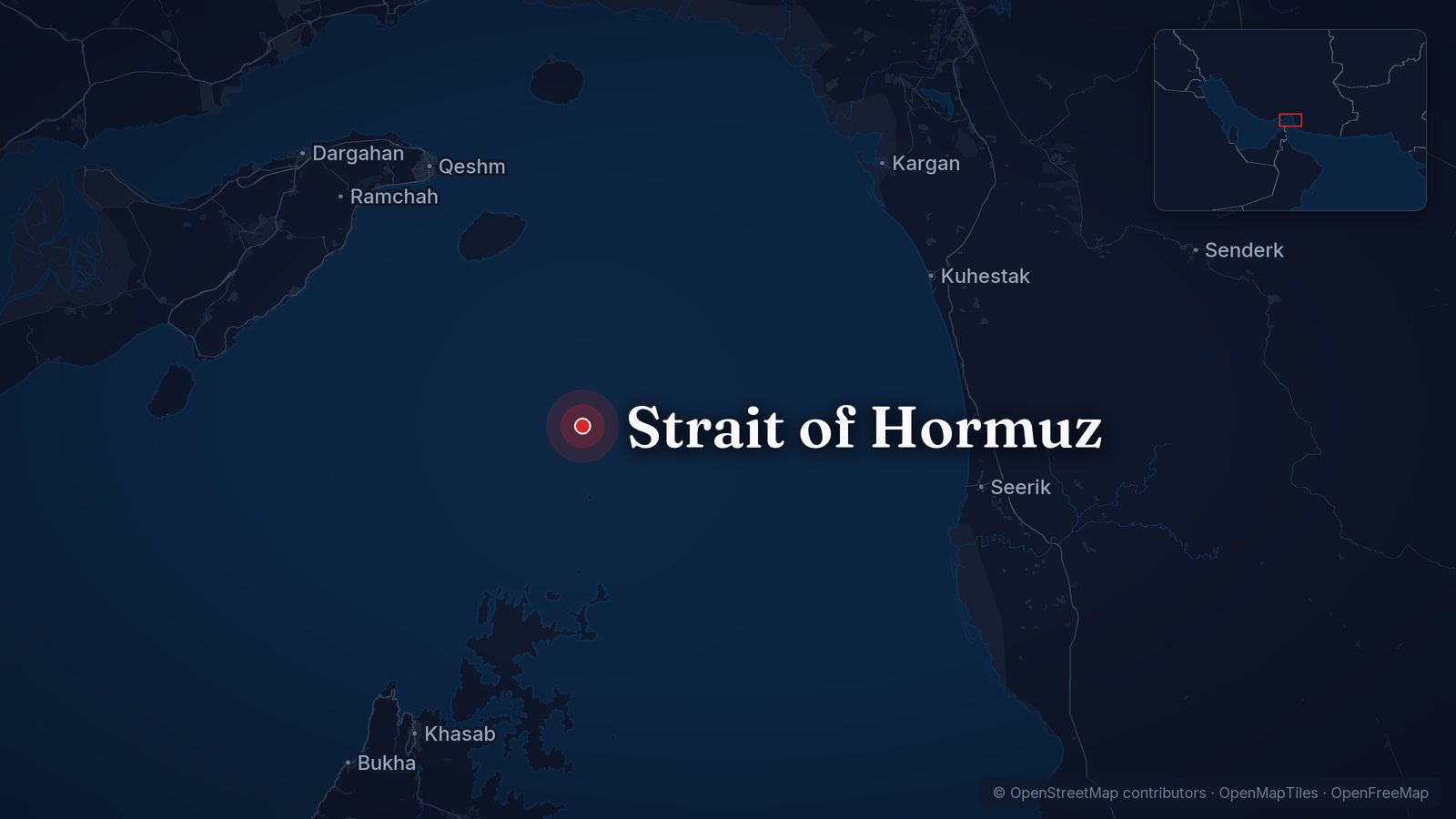
MapStrait of Hormuz Attacks Hit Highest Level Since U.S.-Israel-Iran War Began
“Iran’s navy said on Saturday that an oil tanker had caught fire after striking a naval mine”
“The attacks appear to be a bid to complicate U.S.-led efforts to keep oil flowing”
Map: © OpenStreetMap contributors, ODbL · Cropped for layout
This article is an automated aggregation of coverage from news outlets. Our editorials offer in-depth analysis curated by the NewsCord team.
Strait of Hormuz attacks reach highest level since the February start of the war. Tankers were struck near Oman as Iran tightens restrictions on Strait of Hormuz shipping.
Save coverage image
The Jerusalem Post was read line by line by the Watchdog: 6.0. See the score →
Hormuz attacks hit records
Attacks in and around the Strait of Hormuz rose to the highest level since the war between the U.S., Israel and Iran began in late February, with the UKMTO reporting 31 attacks in October and about 19 in November as of Nov. 18.
The International Maritime Organization confirmed 34 attacks in and around the Strait of Hormuz in October and November so far, while it tallied 138 attacks on vessels in total across the Middle East since the war began.
Noam Raydan, a senior fellow at the Washington Institute for Near East Policy, told ABC News that Iran aims to keep the Omani route “a very high-risk passage” and make energy recovery “inconsistent.”
Hamidreza Azizi, a senior Iran analyst at the International Crisis Group think tank, told ABC News that “Tehran now seems determined to make these arrangements more costly and less reliable.”
Tankers struck near Oman
British maritime authorities reported two incidents involving tankers struck by unidentified projectiles in the Strait of Hormuz on Saturday near Oman, with one tanker hit at its rear about 20km north of Khasab and another struck in its engine room about 31km east of Khasab. Al Jazeera’s correspondent in Tehran, Resul Serdar, said incidents involving tankers had increased sharply over the past week and called the trend “quite dramatic,” adding, “This is becoming a pattern.”
Serdar said Iran’s armed forces frame the Strait of Hormuz as under Iranian control, and he quoted the logic that “any ship that is passing through the Strait of Hormuz has to be in full coordination with the Iranian authorities.” Iran’s navy also claimed that an oil tanker caught fire after striking a naval mine in a restricted area east of the strait, and the Iranian account was described as not independently verified.
Convoy plans and blockade stakes
Iranian state media affiliated with the Islamic Revolutionary Guard Corps have threatened to strike energy facilities in the Gulf if American forces intervene, as reports said Iran is preparing to send a convoy of more than 14 oil tankers through the American maritime blockade in the coming days. The Jerusalem Post said the tankers were reportedly assembling near Kharg Island, the launching point for roughly 85% to 90% of Iran’s crude oil exports, and it said the Persian-language service of Euronews described the information as “unofficial reports.”
“We are pursuing every effort to export oil and advance negotiations, and the blockade must be broken.”
Samir Madani, a co-founder of TankerTrackers, told Reuters on Thursday that “If this tanker leaves the blockade area, it will be the first successful export of Iranian crude oil by sea since mid-July.” WANA framed the decision for Washington as a test of whether it will stop the vessels or allow them to pass, and it quoted Iranian Foreign Minister Abbas Araghchi saying, “We are pursuing every effort to export oil and advance negotiations, and the blockade must be broken.”