Iran09 September, 20263 min read
Benjamin Netanyahu Says Iran’s Regime Is Very Close to Collapse During Visit to Israeli Troops in Syria
This article is an automated aggregation of coverage from news outlets. Our editorials offer in-depth analysis curated by the NewsCord team.
Netanyahu said Iran's Islamic Republic is very close to collapse during Syria troop visit. He stated fighting in the six-month Iran war intensifies.
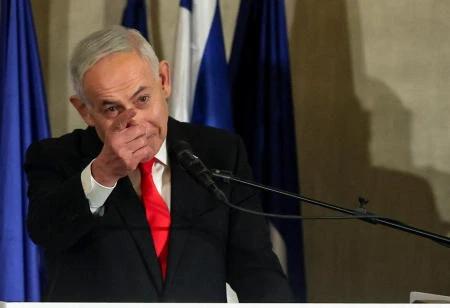
Netanyahu: Iran near collapse
Israeli Prime Minister Benjamin Netanyahu said during a visit to Israeli troops in southern Syria that Iran’s regime was on the verge of collapse as fighting in the six-month Iran war intensifies.
Netanyahu told reporters on the Syrian side of Mount Hermon on the Israel-Syria border that “We are very close to that. We know that the entire axis will ultimately collapse,” during a visit with Defence Minister Israel Katz.

The Reuters and AFP-linked reporting says Israeli forces have been stationed in a “security zone” in southern Syria since the fall of longtime ruler Bashar Assad in December 2024.
The same reporting says the security zone occupies what was previously a buffer zone patrolled by the United Nations that had separated Israeli and Syrian forces in the Israeli-occupied Golan since 1974.
Netanyahu also reiterated, “We will not allow any terrorist army to establish itself on our border,” as Katz’s earlier visit to the troops prompted condemnation from Damascus.
Stalemate and competing hopes
A Council on Foreign Relations virtual meeting framed the U.S.-Iran conflict as a six-month stalemate in which each side expects time to work in its favor.
Phil Gordon, a Sydney Stein, Jr. Scholar at Brookings Institution, described the situation as “a deep stalemate, in which each side thinks, or at least hopes, that time is on its side, and is waiting for the other to give in.”

Gordon said the United States believes the blockade on Iranian oil has “already devastated Iran’s military capacity,” while Iran believes it has shown resilience against U.S. military force and economic pressure.
The CFR discussion also tied the endgame to military, diplomatic, and economic variables, with Kim Ghattas presiding and asking panelists “How Will the Iran War End?”
In the same CFR exchange, Gordon said the United States hopes Iran will “have to collapse, or at least open the strait or capitulate,” while Iran sees the Trump administration as waging “a very unpopular war” with midterm elections coming up.
Economic strain and leadership change
IranWire’s analysis argues that Iran’s economic deadlock is not a sudden shock but the outcome of a 17-year structural deviation, describing inflation as unprecedented and the national currency as having plummeted roughly 150-fold across seven consecutive surges. The piece says the outward symbol of collapse is the “approximately 150-fold depreciation of the exchange rate across seven consecutive surges,” and links the current conditions to sanctions that culminated in a second maximum pressure campaign and a naval blockade. IranWire also says the “resistance yet” formula failed to resolve crises, and it points to the death of Seyyed Ali Khamenei on February 28, 2026, as a turning point in the balance of decisions.
In the CFR discussion, Phil Gordon referenced the strike that killed Ali Khamenei on February 28 as part of the war’s timeline, describing the conflict as beginning with “the strike that killed Ali Khamenei on February 28.” Together, the sources place Iran’s leadership and economic pressures alongside the military standoff, with Netanyahu insisting Iran is “very close” to collapse while IranWire depicts a prolonged economic trajectory shaped by blockade and sanctions.