Technology and Science03 September, 20262 min read
BepiColombo Begins Final Approach to Mercury After Two Spacecraft Separate
This article is an automated aggregation of coverage from news outlets. Our editorials offer in-depth analysis curated by the NewsCord team.
Two orbiters separated from the Mercury Transfer Module, entering arrival phase toward Mercury's orbit. Mission aims to study Mercury's formation, ice in pole craters, and magnetic field.
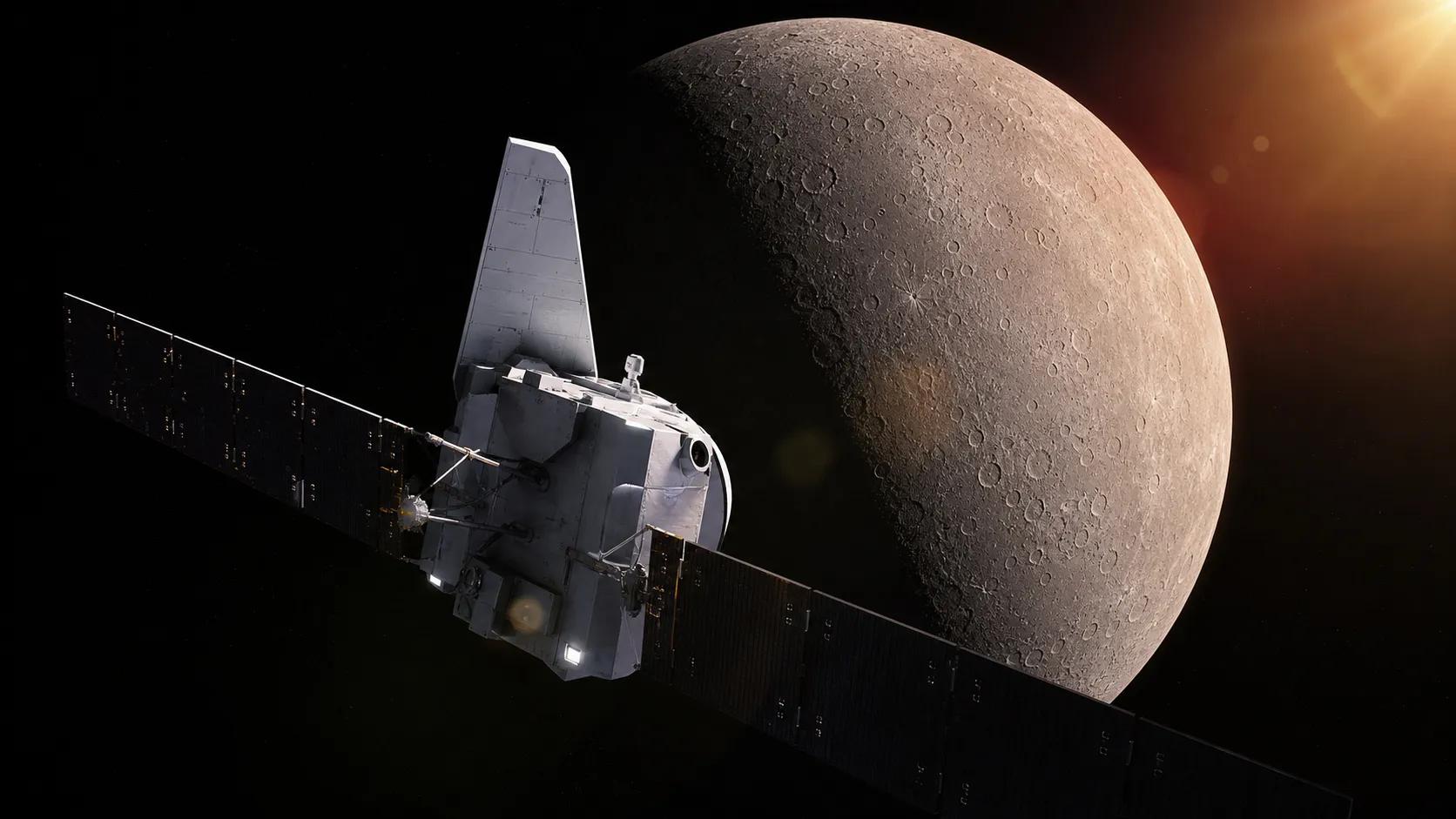
MTM separates for Mercury
BepiColombo, the European-Japanese mission to Mercury, began its final months-long approach after its two spacecraft separated from the transfer module that had propelled them following an eight-year journey. The separation occurred on Thursday, with the spacecraft traveling more than 10 billion km and conducting nine flybys to adjust speed and trajectory before the maneuver. ESA said the arrival phase begins with the separation of the Mercury Transfer Module (MTM) from the spacecraft stack on 3 September 2026, and that the composite spacecraft will enter orbit around Mercury on 21 November 2026.
“The 'arrival phase' begins with the separation of the Mercury Transfer Module (MTM) from the spacecraft stack on 3 September 2026.”
ESA’s update page said acquisition of signal via two Estrack deep space antennas in Cebreros (Spain) and Malargüe (Argentina) confirmed the successful separation of the MTM, with current telemetry indicating all systems are nominal. In parallel, AP reported that controllers had to wait two anxious hours to receive confirmation via radio signals after the linked European and Japanese spacecraft separated as planned from their cruiser.
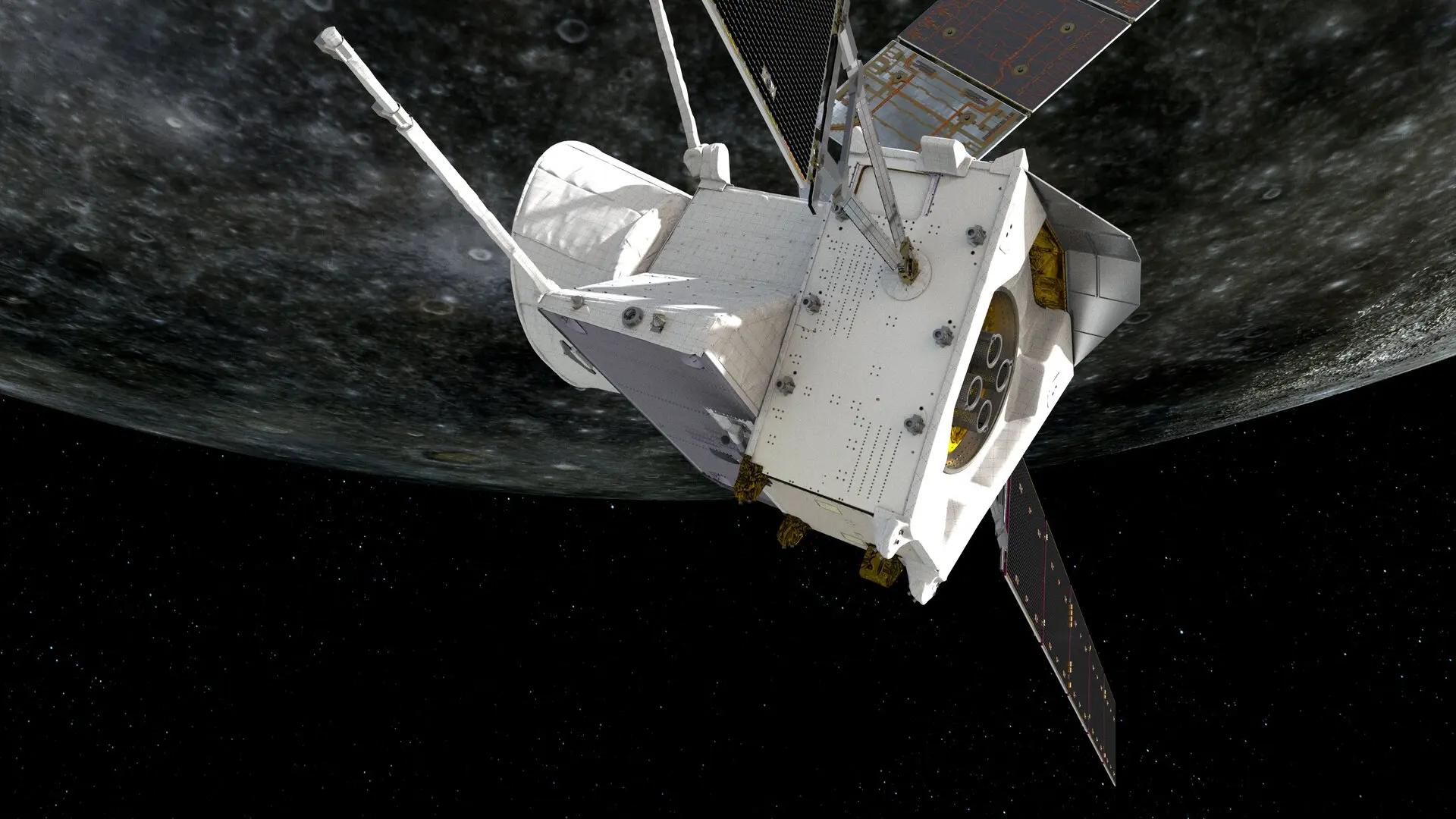
Orbit insertion and split
After the MTM separation, the mission’s next key steps are scheduled for December 9–10, when the European Mercury Planetary Orbiter and Japan’s Mercury Magnetospheric Orbiter Mio are to separate and move to their operational orbits. ESA’s arrival updates say MPO will power the spacecraft stack until Mio separates on 9–10 December 2026, and that the mission’s science phase is set to begin in April 2027. AP said that if all goes well, the conjoined spacecraft known as BepiColombo will enter orbit around Mercury in November and split from each other in December to map and study the entire planet from different altitudes.
ESA’s update page described the separation as a critical operation more than 200 million kilometres from Earth that required precise planning, navigation and commanding with no opportunity for real-time intervention. In the same reporting, AP quoted lead project scientist Geraint Jones saying, “It’s a brilliant moment,” as the spacecraft moved into the home stretch.
What the mission will study
The mission is designed to use two complementary orbiters to study Mercury’s magnetic field, iron core, and surface features, with the European orbiter planned to fly at a distance of 480 km from the surface starting in April. ESA’s update page says the composite spacecraft will enter orbit around Mercury on 21 November 2026, while the science phase is set to begin in April 2027, after the December separation of MPO and Mio. AP said the mission will study the magnetic field that envelops Mercury, the planet’s dense interior, and the geologic processes at the surface, including the hollows that scientists believe are being eaten away by minerals vaporizing from rocks.
“Starting in April, the European orbiter will study the planet closest to the Sun, flying at a distance of 480 km from its surface.”
AP also quoted mission manager Santa Martinez saying, “How tiny Mercury is and still it holds some of the biggest mysteries of our solar system,” and added Jones: “There’s a huge amount still left to be learned.” ESA’s arrival updates frame the sequence as the beginning of a chain of operations, with the MTM separation confirmed by Estrack antennas in Cebreros (Spain) and Malargüe (Argentina) and the orbit insertion and science start still ahead.