South America06 November, 20252 min read
Bolivian Supreme Court Frees Former Interim President Jeanine Áñez After Annuling 10-Year Sentence
This article is an automated aggregation of coverage from news outlets. Our editorials offer in-depth analysis curated by the NewsCord team.
Bolivian Supreme Court annulled Jeanine Áñez’s 10-year prison sentence. Áñez was released after nearly five years detained for alleged coup plotting.

4 outlets told this the same way.
Outlets did split on Brazil Police Kill Suspect After 13 Kindergarteners Held Hostage In Curitiba →
Bolivia Court Decision on Áñez
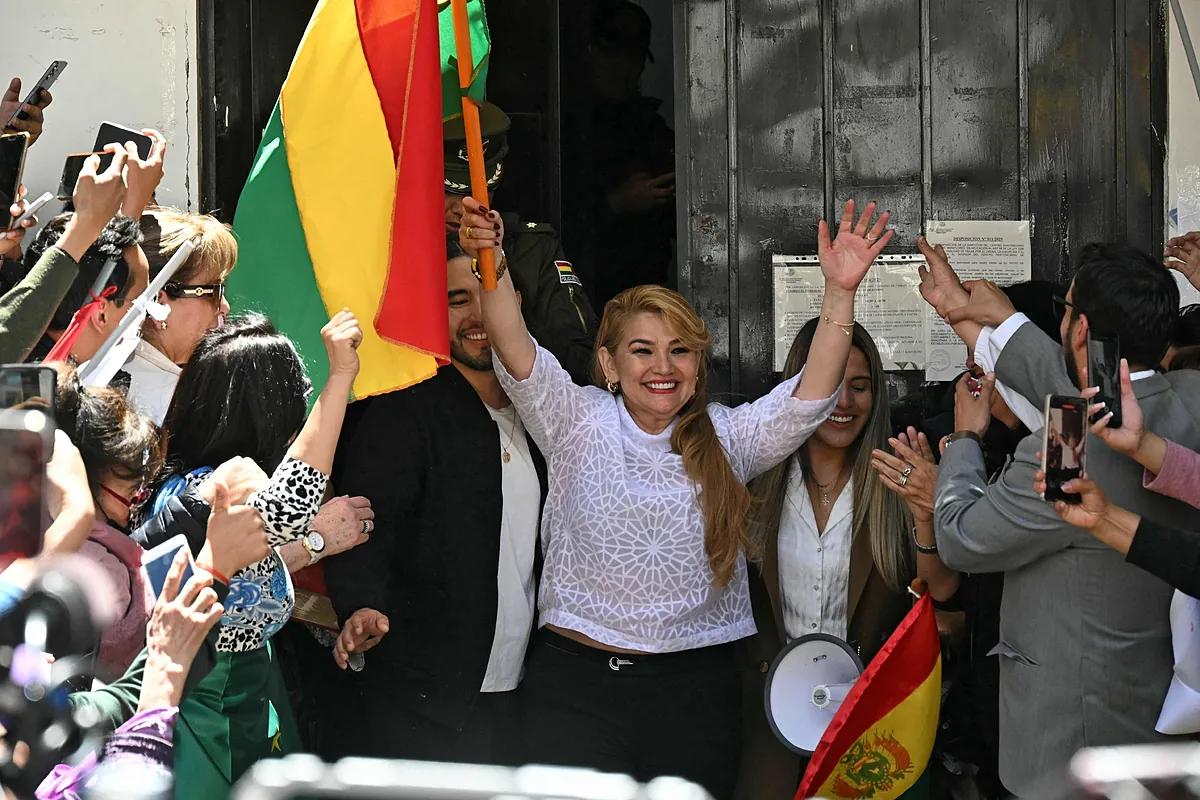
Bolivia’s Supreme Court of Justice annulled the 10-year prison sentence of former interim President Jeanine Áñez. The court ordered her immediate release, and Áñez left the Miraflores women’s prison in La Paz on November 6, 2025. Western mainstream sources reported both the court’s decision and her departure from prison.
“Bolivia’s Supreme Court of Justice annulled the 10-year prison sentence of former interim President Jeanine Áñez and ordered her immediate release.”
Digital Journal noted that the court ruled she should have been tried by a special court for lawmakers rather than in an ordinary criminal court. The West Asian outlet Evrim Ağacı attributed the annulment to violations of due process.
Evrim Ağacı also mentioned that the ruling was not unanimous and that the court ordered a political trial. This indicates that the case is not closed even though Áñez has been released.
Bolivia's 2019 Political Crisis
The decision caps a turbulent saga rooted in Bolivia’s disputed 2019 election. Evrim Ağacı recounts that the Organization of American States alleged fraud in Evo Morales’s victory. Unrest left at least 37 people dead, and Morales resigned.
In the vacuum, opposition senator Jeanine Áñez was controversially sworn in—seen by some as necessary for stability and by others as a coup. Digital Journal’s background stresses that Morales fled amid protests over disputed results and that Áñez was later convicted of illegally assuming the presidency. AP’s coverage in the snippets stays focused on the current ruling and release rather than retracing the full 2019 context.

Political Reactions and Legal Disputes
The immediate aftermath underscored competing narratives. AP News shows a celebratory and personal scene: Áñez waving a Bolivian flag and telling reporters, “It’s like coming back to life.” Digital Journal reports she denied a coup occurred and blamed the crisis on electoral fraud.
“Upon release, Anez denied a coup occurred, attributing the crisis to electoral fraud.”
Evrim Ağacı stresses that even as the sentence was annulled, the court also ordered a political trial. The case reflects deep political divisions, suggesting the legal and political reckoning is not over.
Bolivia's Political Developments
Beyond the courtroom, media outlets differ in their focus on the broader political implications of Áñez’s release. Digital Journal uniquely connects Áñez’s release to a national political shift, noting it occurs just before the inauguration of Bolivia’s new centre-right president, Rodrigo Paz. The outlet frames this event as marking the end of two decades of leftist governance.
AP News focuses primarily on the immediate event and the public's reaction to it. Evrim Ağacı highlights ongoing accountability through a political trial and emphasizes the non-unanimous nature of the ruling. These points suggest continued uncertainty for Bolivia’s institutions and political landscape.