Cryptoupdated 1h ago3 min read
Conduit Sues Tether In New York Over $2.76 Million USDT Treasury Wallet Freeze
Conduit filed SDNY suit alleging Tether froze $2.76 million in USDT without justification. The complaint cites asset unfreezing refusals and names four Tether entities.

Freeze Lands in Court
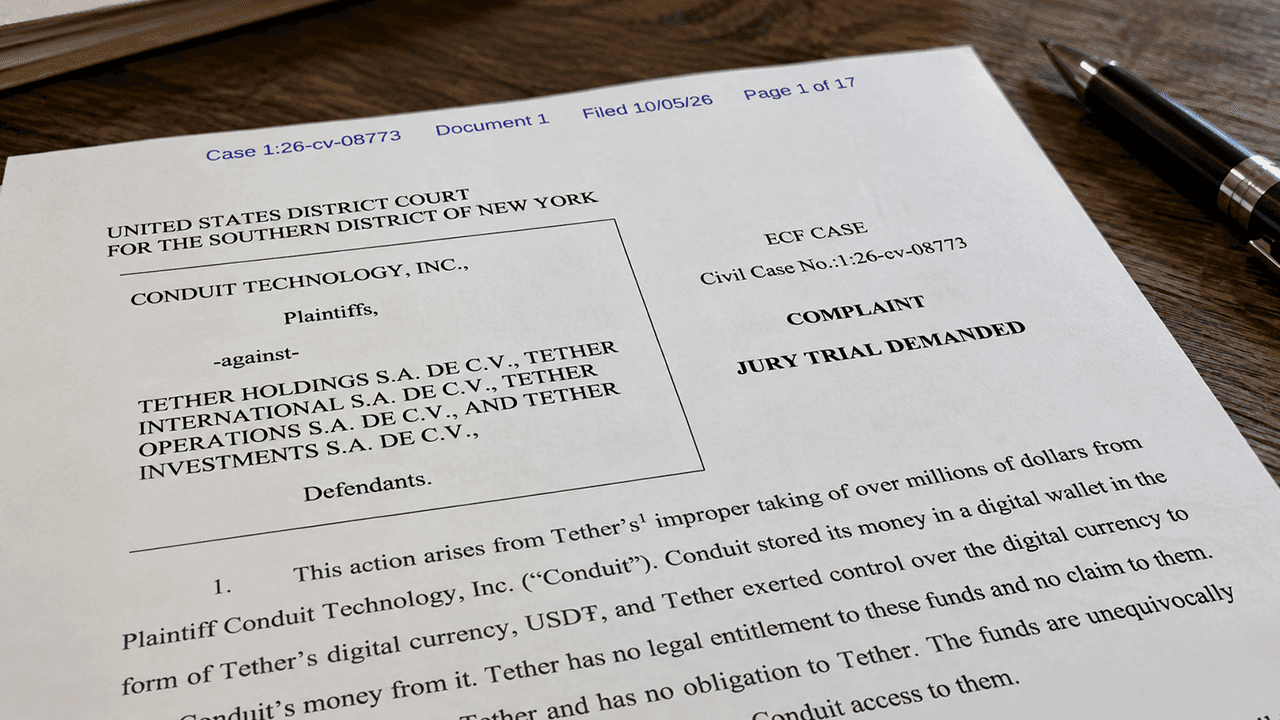
Conduit Technology sued Tether in the US District Court for the Southern District of New York after Tether froze Conduit's $2.76 million treasury wallet holding USDT without giving a reason, and Conduit said the funds stayed locked for over a year. Conduit said it created the disputed treasury wallet on May 20, 2025 to hold working capital in USDT, and it said it lost access to the funds on September 24, 2025. Conduit’s complaint named four Tether entities as defendants, including Tether Holdings, Tether International, Tether Operations and Tether Investments S.A. de C.V., and it said Tether’s freeze power reached beyond any compliance problem tied to Conduit itself.
Conduit alleged that Tether froze the wallet without authority and then refused to restore access, while Conduit argued the wallet functioned as the equivalent of its operating bank account. Conduit also pointed to Tether’s Terms of Service clause that says Tether may “freeze any tokens held by a user,” and it framed the dispute as a question of how far that discretion extends.
Competing Accounts of Cause
Conduit alleged that Tether’s T3 Financial Crime Unit acted without authority and without any compliance issue tied to Conduit, and Conduit said the unit selected the wallet using undisclosed criteria. Conduit said Brazilian Federal Police identified certain wallets linked to an investigation and gave those addresses to the T3 unit, but Conduit alleged its wallet was not among them and that police confirmed they did not identify its wallet for freezing. Conduit argued that Tether applied its freeze authority against the company’s holdings without a valid reason, and it said Tether rejected demands to unfreeze the tokens and return the funds.
Cointelegraph reported that Conduit alleged Tether froze USDt funds in a Conduit wallet tied to an investigation launched by Brazilian authorities in 2024, and it said Conduit claimed the freeze was connected to that probe. Conduit’s complaint also asserted that “Tether acted on its own initiative to freeze and seize control of Conduit's funds, based on its own undisclosed criteria,” while the dispute centers on whether that action fits within Tether’s contractual terms and governance powers.
What Conduit Seeks Next
Conduit said the freeze hindered its ability to pre-fund and settle client transactions, and it said it fired employees and closed offices as a result of losing access to the USDT. Conduit sought a declaratory judgment that Tether lacks the legal authority to freeze its assets, and it asked for court declarations that Tether has no authority to freeze or otherwise interfere with its USDT. Conduit also demanded relief that included the return of the wallet and damages, and it sought an accounting of revenues tied to the frozen USDT and the reserves backing the tokens.
Protos said Conduit was claiming conversion, unjust enrichment, breach of fiduciary duty, computer fraud, and it sought “an accounting of the reserves and any interest, profits, or income Tether may have made from the funds since the freeze.” BigGo Finance said no court ruling had been issued and that Tether had not publicly responded to the allegations, leaving the dispute unresolved as the court process moves toward Tether’s formal legal response and a schedule for proceedings.