South America29 September, 20262 min read
Delcy Rodríguez Requests Partial Reform Of Venezuela’s Law Against Hate
This article is an automated aggregation of coverage from news outlets. Our editorials offer in-depth analysis curated by the NewsCord team.
Delcy Rodríguez requested partial reform of the Law Against Hate. Reform seeks decriminalization of offenses and to correct its application.
Partial reform requested
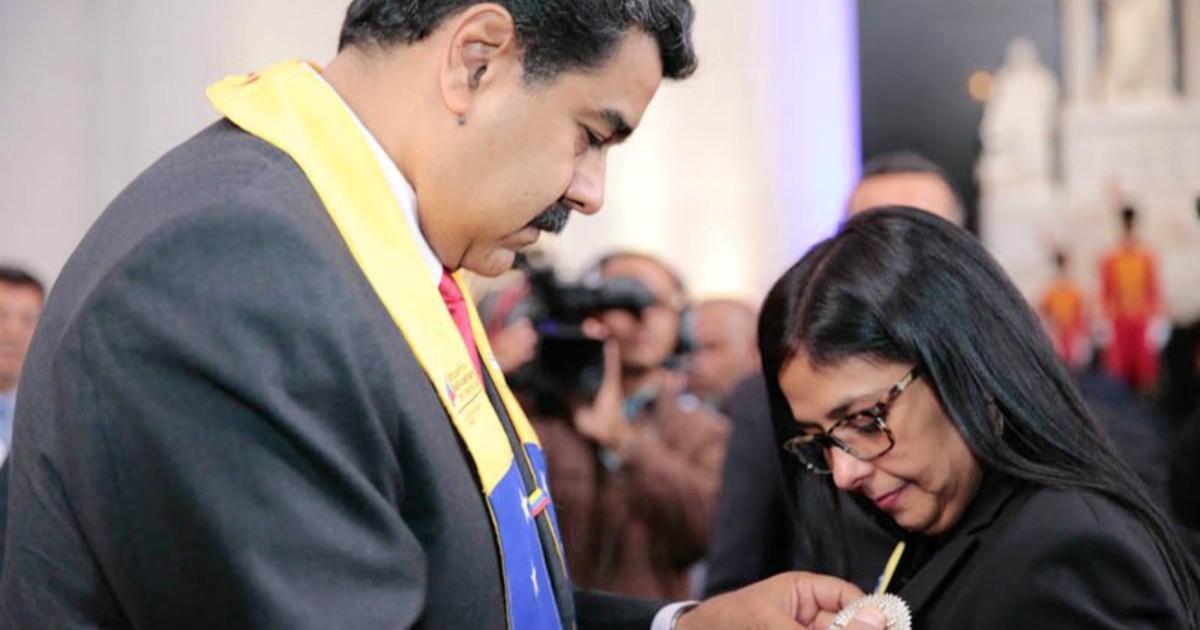
Delcy Rodríguez, interim president of Venezuela, requested the National Assembly a partial reform of the constitutional law against hate for peaceful coexistence and tolerance, and she defended the norm in 2017 when she presided over the chavista National Constituent Assembly. Delcy Rodríguez sent the request in a presidential letter dated Monday and addressed to Deputy Jorge Rodríguez Gómez, president of the National Assembly and Delcy's brother, and she posted the letter on her X account with the message: “We continue to make progress toward a new stage of citizen coexistence in Venezuela.”
Delcy Rodríguez argued in the letter that “the reform requested aims to advance the decriminalization of the behaviors provided for in said normative instrument,” as part of actions to transform Venezuela’s penal justice system and foster “the restoration of links and democratic coexistence.” Delcy Rodríguez’s request does not propose a total repeal of the law, but only a “partial reform,” and the proposal faced challenges from organizations demanding complete repeal of the norm.
Law details and criticism
The Constitutional Law against hate was approved on November 8, 2017 by the chavista National Constituent Assembly, and CiberCuba linked it to the political crisis after the government protests of that year that caused about 125 deaths. Nicolás Maduro presented the project and declared that it was time to “punish hate crimes, intolerance in all its forms of expression,” while CiberCuba said the norm provides for penalties of up to 20 years in prison for incitement to hatred or violence.
CiberCuba said the law requires the removal of messages on social networks within six hours under penalty of fines and gives the government the power to close media outlets and revoke the registration of political parties. Amnesty International warned that the repression mechanisms “have not structurally changed,” with between 379 and 500 people detained for political reasons and 64 new cases of torture documented since January 2026.
Debate over scope and impact
The National Assembly’s board will assess the legislative treatment of the reform as a priority after Delcy Rodríguez sent the communication to request, with “parliamentary urgency,” the partial reform of the Constitutional Law against Hate. Delcy Rodríguez told a meeting with coffee growers in the Portuguesa state that she believes in the law’s “principle of tolerance” and “the principle of love in relationships,” and she said, “hatred should not be imposed, but that we can coexist while respecting those who are diverse.”
The Program for Peace and Democratic Coexistence issued a public statement supporting the initiative and said the proposal represents a “strategic advance” by promoting the review and adjustment of existing punitive schemes. Mariano de Alba argued that “the entire repeal of the law should be considered,” and he added that opting only for decriminalization could leave “instruments of censorship and political exclusion in place through administrative sanctions.”