Full story
Economic D-Day Threats
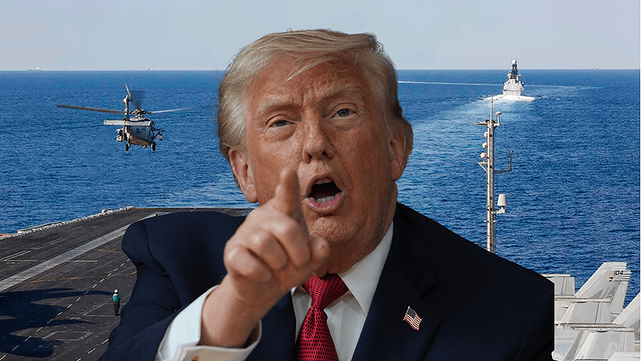
U.S. President Donald Trump announced new economic sanctions against Iran on Wednesday, calling them an "ECONOMIC D-DAY" and warning that "ANY country that allows its financial institutions, businesses, airports, or government entities to provide any type of lifeline to Iran will itself face TREMENDOUS Economic Consequences."
“"ECONOMIC D-DAY"”
In a separate post, Trump said the measures would be "the operation economic most crushing" and described them as "un día D económico," adding that the United States needed allies to help isolate Iran.
Iran’s Foreign Minister Seyed Abbas Araghchi dismissed the threat as a diversion, saying, "The so-called ‘Economic D-Day’ is a diversion from America’s own crisis: unprecedented debt & surging interest costs."
Araghchi also warned that "US economic terrorism threatens global economy and sovereignty worldwide," while Trump did not provide immediate detail on the nature of the expected sanctions.
The dispute is unfolding as the memorandum of understanding between the U.S. and Iran has expired, with analysis noting that there is "no other agreement to replace it."
Blockade, Pressure, and Pushback
The U.S. has threatened to maintain an “indefinite” naval blockade against Iran’s ports while also imposing new economic measures, with Al Jazeera reporting that Defense Secretary Pete Hegseth said the U.S. Navy can maintain a blockade "indefinitely".
Hegseth told reporters that the Navy would "rotate ships in and out" to enforce the blockade, while Treasury Secretary Scott Bessent said the U.S. would apply measures that have "never been seen in the history of economic isolation on a country."

Iran’s Persian Gulf Strait Authority rejected U.S. claims that the Strait of Hormuz is no longer blocked, posting on X that "The Strait of Hormuz remains blocked and will not be reopened until Iran’s conditions are accepted."
Iran’s parliament speaker and top negotiator Mohammad Bagher Ghalibaf said the strait would remain closed until the U.S. meets commitments from the now-expired memorandum of understanding, adding, "the strait will not be opened."
Al Jazeera also reported that since February 2025 the U.S. has sanctioned "more than 1,000 Iran-related persons, vessels, and aircraft," according to the Treasury’s Office of Foreign Assets Control.
Economic Stakes and Next Moves
Al Jazeera reported that Washington’s plan is to enact a new wave of restrictions on Iran targeting its economy, with Bessent saying the U.S. would inflict more economic damage on Tehran as early as this week.
“"never been seen in the history of economic isolation on a country"”
The same report said the naval blockade creates a situation where traditional sanctions packages are combined with military force to generate a physical shortage of goods, with Mohammad Reza Farzanegan warning that it raises questions in Tehran about whether to accept terms dictated by the Trump administration or continue armed conflict.
Farzanegan said, "It currently seems that Iran is leaning toward the second option," and added that if armed conflict resumes, "the costs will not be confined to the target of sanctions; the global economy will also pay a price."
Iran’s leadership has framed the blockade and sanctions as part of a broader pressure campaign, with Ghalibaf stating that until U.S. commitments are implemented—including "the lifting of the blockade" and "the lifting of oil sanctions"—the strait will not be opened.
Meanwhile, Al Jazeera reported that Iran’s government delegated authorities to border provinces to import essential goods and build inventories, and that during the MoU ceasefire period the blockade was lifted for several weeks in late June and early July before exports stopped again after the deal broke down.