Tourism04 October, 20252 min read
Egypt Reopens Tomb of Pharaoh Amenhotep III After 20 Years of Restoration
This article is an automated aggregation of coverage from news outlets. Our editorials offer in-depth analysis curated by the NewsCord team.
Tomb of Pharaoh Amenhotep III reopened to public after over 20 years of restoration Amenhotep III ruled ancient Egypt between 1390 B.C.E. and 1350 B.C.E.
9 outlets told this the same way.
Outlets did split on Houthis Strike Riyadh’s King Khalid International Airport, Injuring Terminal 3 and 4 →
Reopening of Ancient Egyptian Tomb
Egypt has reopened the tomb of Pharaoh Amenhotep III in Luxor's Valley of the Kings after more than 20 years of restoration. This significant cultural event marks the culmination of a long-term project aimed at preserving one of ancient Egypt's most important archaeological sites.
“Egypt has reopened the tomb of Pharaoh Amenhotep III in Luxor's Valley of the Kings after more than 20 years of Japanese-led restoration.”
The tomb, originally discovered in 1799, had been looted of many artifacts, including the sarcophagus, but still retains its elaborate wall paintings and inscriptions from the Book of the Dead. The restoration was led by Japanese experts and involved international collaboration, highlighting the global interest in Egypt's rich cultural heritage.
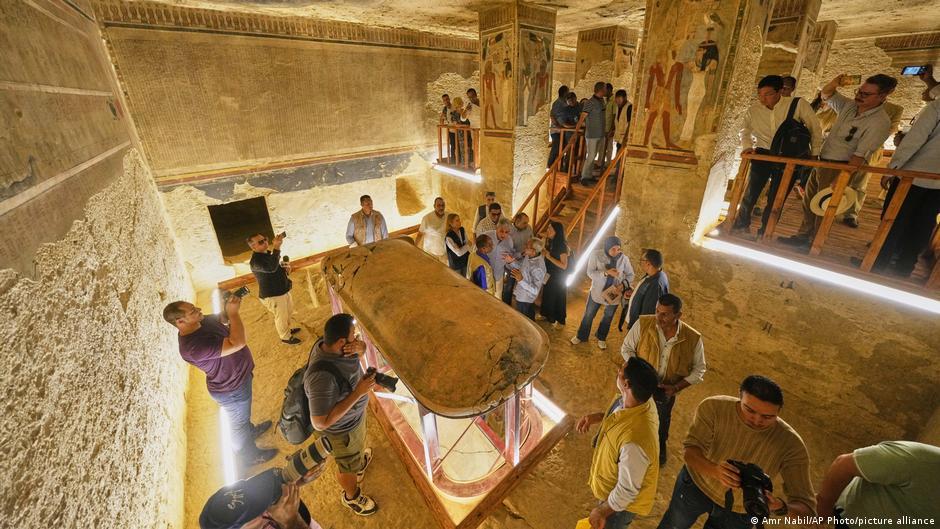
Tomb Restoration and Features
The restoration project was carried out in three phases between 2001 and 2024, involving experts in wall painting preservation and 3D laser scanning. This meticulous process aimed to restore the tomb's structural stability and enhance its visitor facilities.
The tomb features a long descending passage, a main burial chamber for the king, and two chambers for his wives, Queens Tiye and Sitamun. The vivid artwork inside the tomb depicts Amenhotep III’s journey through the afterlife, showcasing the artistic and cultural prosperity of the New Kingdom period.

Amenhotep III and Tomb Reopening
Amenhotep III, who reigned from 1390 to 1350 B.C., is considered one of Egypt's most significant pharaohs. His nearly 40-year reign was marked by prosperity and cultural achievements, which are reflected in the elaborate decorations of his tomb.
“The reopening allows visitors to view the restored tomb and its artifacts, marking a significant cultural event in the southern city of Luxor.”
The reopening of the tomb is expected to boost Egypt's cultural tourism, drawing visitors to the Valley of the Kings and the upcoming Grand Egyptian Museum near the Giza Pyramids. The tomb's reopening is seen as a major achievement in preserving Egypt’s ancient heritage.
Tomb Restoration and Praise
The tomb's reopening has been praised by Egyptian officials and international organizations alike. Egyptian Minister Sherif Fathy highlighted the collaboration between Egypt and Japan as a model of international cooperation in archaeology.
UNESCO representatives also praised the project for its contribution to research and cultural heritage preservation. The restoration included reassembling the king’s red granite sarcophagus lid and upgrading the tomb’s access and interpretive signage for visitors, making it more accessible and informative for tourists.
