Full story
Strikes despite disarmament
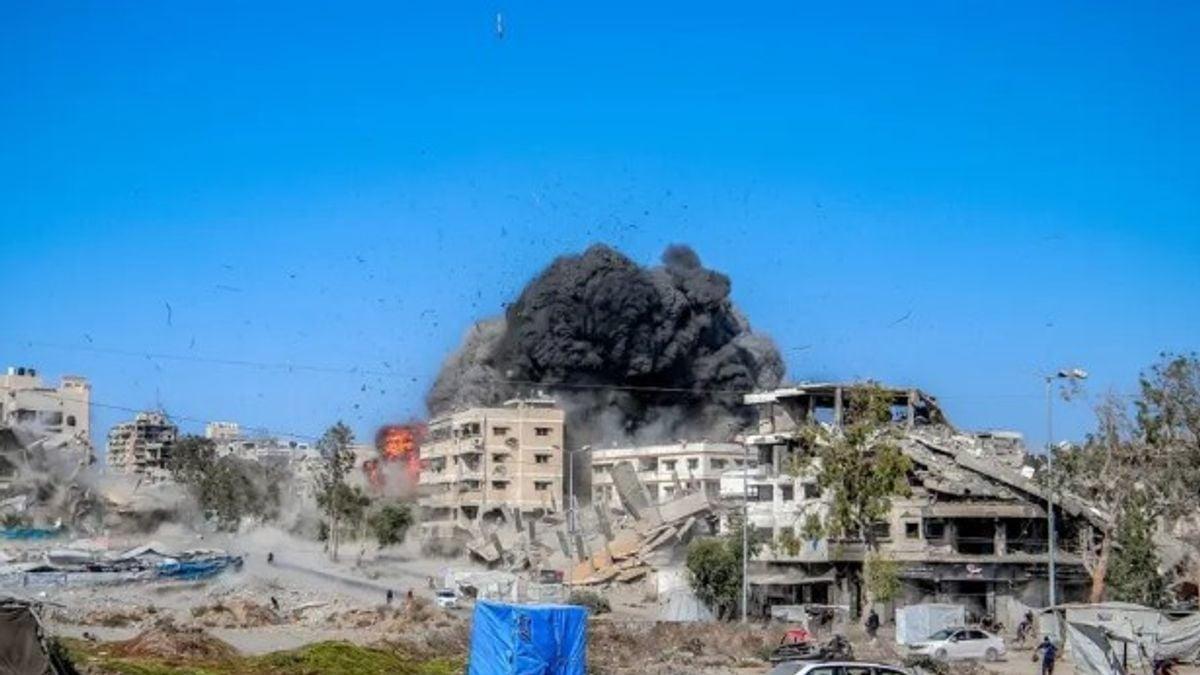
Israeli airstrikes overnight Saturday and into Sunday killed at least nine people in Gaza, according to local health officials, as a senior Israeli minister vowed that strikes in the territory will not stop despite a U.S.-backed disarmament plan.
“killed at least nine people”
Energy Minister Eli Cohen told Army Radio on Sunday that "there has not been a cabinet discussion [on the Gaza plan] in the past 72 hours," and he said Israel has not signed off on any agreement to halt attacks.

The fighting hit multiple areas including Gaza City, Deir al-Balah, and Khan Younis, where a father, mother, and their 9-year-old son were killed around dawn in a strike on a house in the Mawasi area.
In Deir al-Balah, a man and his wife were killed and four people were wounded in an airstrike on an apartment, while in Gaza City a couple and their child were killed in a strike on an apartment, medics said.
The Israeli military said the strikes in Deir al-Balah were targeting two commanders of Hamas’ elite "Nukhba" force, and it said the Gaza City and Jabalia strikes also targeted "military operatives" while it reviewed the situation.
Hamas, Israel, and the plan
The U.S. announced Friday that the terror group had agreed to the Board of Peace’s disarmament plan, which envisions Israeli strikes ending immediately once it is in place and the transfer of all weapons to a Palestinian police force under the authority of the new technocratic government in Gaza.
Israel’s Prime Minister’s Office spokesperson Doron Spielman told the Associated Press that Israel shared "serious security concerns" with the White House and said its intelligence assessment is that Hamas remains committed to rebuilding its military rather than genuinely demilitarizing.

Hamas said it had demonstrated "considerable flexibility" but accused Israel of seeking to impose a de facto situation on the ground by intensifying its strikes, with Basem Naim saying, "This escalation, coinciding with progress on the political track, clearly demonstrates that the occupation government is seeking to undermine efforts aimed at ending the war".
NBC News reported that on Sunday Israeli Energy Minister Eli Cohen told Israel’s Army Radio there was no deal to halt attacks on Gaza and that he was "very skeptical" Hamas would disarm.
In parallel, the Board of Peace published a 15-point roadmap on Friday, and Hamas said Israel must stop its attacks and pull its troops back before it will agree to hand over weapons to a new Palestinian body named to run Gaza.
What comes next
Israel’s position, as described by Doron Spielman, was that the IDF will not withdraw from Gaza—where it controls more than 60 percent of the territory—before Hamas disarms, and he said redeploying early would let Hamas "quickly expand its presence throughout Gaza".
“Disarming means physically giving up the weapons. Nothing less”
The Times of Israel also reported that Spielman said "Disarming means physically giving up the weapons. Nothing less," framing the next phase of the ceasefire around a specific condition for Hamas.
In Gaza, Al Jazeera reported that destroying supplies at medicine warehouses attached to Al-Aqsa Martyrs Hospital in Deir Al-Balah was described by Gaza Health Ministry’s Director-General Munir al-Bursh as turning medicine and illness itself into a tool of war.
Al Jazeera correspondent Nour Khaled said, "The strikes came without any warning or evacuation orders for the residents living in the targeted areas," and the outlet described the largest daily death toll in weeks as Israeli attacks continued across the enclave.
Meanwhile, Al Jazeera quoted an academic and expert on Israeli affairs, Mohanad Mustafa, saying, "Israel approaches agreements from a position of non-commitment," as the conflict’s next steps hinge on whether the roadmap and disarmament terms are implemented on the ground.