
Technology and Science · 29 July, 2026 · 3 min read
Environment Agency Declares Drought Across Seven English Regions After Record-Low Rainfall
Environment Agency declared drought across seven regions spanning central, eastern, and southern England. July set to be the driest on record due to heat and low rainfall.
How much England's drought coverage is quantified (half vs 51.4%).
9 of 10 outlets skipped it: agency aerated fish to save them from oxygen crash.
22outlets compared
Same story, two versions
tap a side to read it in full
The Independent
“Up to 28 million people – almost half of England’s population – live in the affected areas”Read the original ↗
Independent emphasises population affected; News Mobile uses a precise 51.4% coverage figure.
Half of England in Drought
The Environment Agency has declared drought across seven English regions after record-low rainfall and exceptionally high temperatures, describing the situation as a “flash drought” that develops quickly from very low rainfall and higher temperatures.
“Half of England has been declared in drought by the Environment Agency.”
The affected areas are East Anglia, Hertfordshire and the whole of London, Thames Valley, Hampshire and the Isle of Wight, Devon and Cornwall, the West Midlands, and Wessex, covering Dorset, Somerset, Wiltshire and Gloucestershire.

The Environment Agency said July is on track to be the driest month on record, with England receiving just 7% of expected rainfall and southern England seeing only 1% of what would normally be expected.
The declaration comes as parts of the UK endure a fourth heatwave of the summer, with temperatures climbing into the 30s, and the agency warned that the country is using water faster than nature can replenish it.
In its operational response, the Environment Agency said it is stepping up enhanced monitoring and controlling how much water can be taken from rivers and groundwaters, while water companies are prioritising fixing leaks.
Water Use, Wildfire Risk
The Environment Agency said the hot and dry weather means “we are currently using water faster than nature can replenish it,” and it warned that a second consecutive summer drought is “an exceptionally serious situation” with long-lasting impacts on the environment, wildlife and the economy.
The UK government announcement said rivers are running low, farmers are having to harvest crops early, wildfire risk is increasing, and millions of people are living under restrictions on water use.
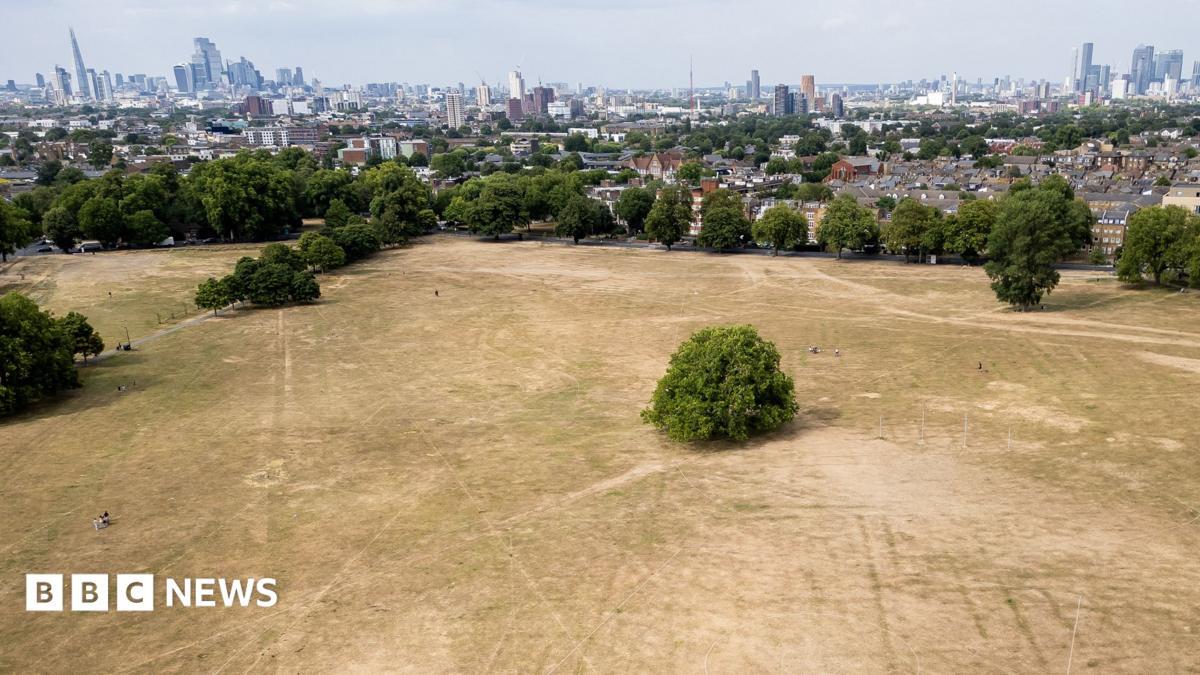
Reuters reported that seven water companies introduced water-use restrictions affecting about 23 million customers, while the Environment Agency said 78% of England’s rivers are below normal levels and reservoir storage has fallen to 75.3% of capacity.
The Environment Agency also tied the drought to heat-driven evaporation, saying the record temperatures mean water is evaporating from soils and vegetation, making wildfires more likely.
Forecasters cited in the reporting said there is little sign of widespread, sustained rainfall that would be needed to make a significant difference to the areas most affected by the dry weather.
Stakes for Wildlife and Agriculture
The drought announcement described impacts across rivers, agriculture, wildlife and public water supplies, with the Environment Agency warning that the “flash drought” is being felt across the environment and daily life.
“In England, 40% of the population are under a hosepipe ban”
In England, 78% of rivers are classified as below normal or lower and 17% are classed as “exceptionally low” for this time of year, with low river flows restricting the upstream migration of migratory fish such as Atlantic salmon.
At Tuckers Pond in Faringdon, Oxfordshire, the Environment Agency used chemical aeration to save fish from dying as algae that had flourished in the hot and dry weather caused a crash in oxygen levels.
The Environment Agency also reported that it has undertaken 38 fish rescue operations this year, relocating hundreds of brown trout, juvenile salmon, bullhead, grayling and lamprey from watercourses where oxygen levels and flows have fallen to critical levels.
Water Minister Emma Hardy said the climate is changing and droughts are becoming increasingly common, adding that the government is driving record investments in infrastructure including nine new reservoirs and expects water companies to follow drought plans to reduce leaks and ensure supplies are not disrupted even in the driest of weather.