Technology and Science28 October, 20263 min read
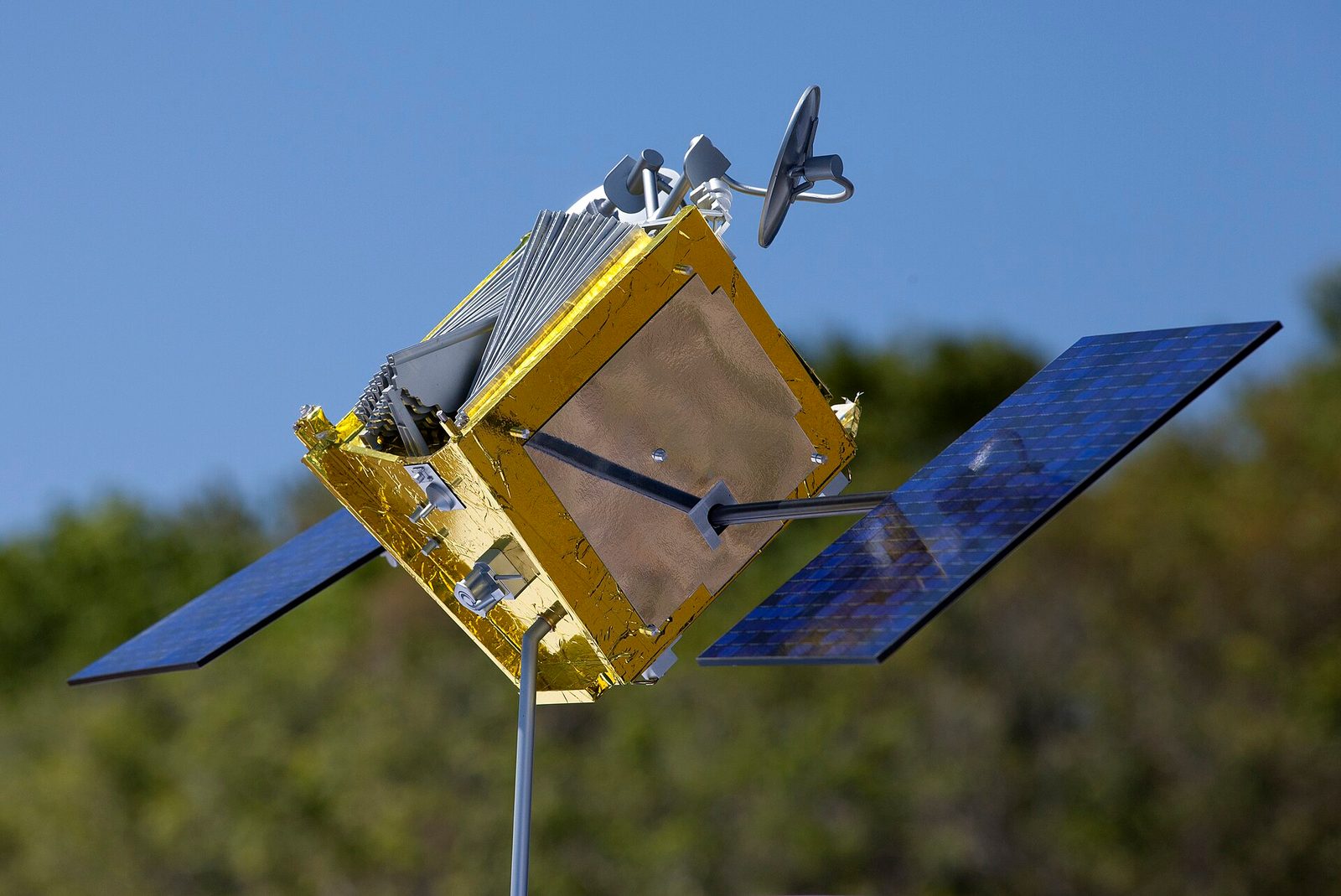
Archive photo · 16 March 2017European Governments Weigh Non-SpaceX Satellite Communications After Ukraine’s Starlink Restrictions
“shows how vulnerable a military can be to the whims of a single company or market dominator.”
“When communications restrictions hamper Ukraine’s ability to defend itself, the consequences reach far beyond a dispute over service terms.”
Photo: Kim Shiflett / US federal government, Public domain · Cropped for layout
This article is an automated aggregation of coverage from news outlets. Our editorials offer in-depth analysis curated by the NewsCord team.
Europe seeks alternatives combining continuity and cost as Starlink limits persist. Forty-nine Russian/Belarusian firms are developing Rassvet; 23 not under sanctions.
Save coverage image
Shared framing
Three headlines discuss alternatives to Starlink after service limits or concerns about reliance on one provider, across opinion, reporting and analysis. A separate report concerns firms building Russia’s Starlink alternative and sanctions, not Europe’s response to Ukraine’s service restrictions.
3 of 4 outlets · 3 of 4 headlines analysed
Includes opinion, analysis, reporting.
- yalibnan
No company is indispensable forever
- Axios
Starlink woes spur Europe to look for non-Musk alternatives
- annahar
future opportunities and challenges
See the headlines
Starlink reliance prompts discussion of alternatives
Three headlines discuss alternatives to Starlink in the wake of service limits or reliance on one provider: an opinion argues no company is indispensable, Axios reports Europe seeking non-Musk options, and An-Nahar discusses European opportunities and challenges. The pieces span opinion, reporting and analysis, and do not establish that alternatives are ready or that coverage was coordinated.
- yalibnanOpinion · ReactionTime to wake up, Musk: No company is indispensable forever
- AxiosReporting · ReactionUkraine's Starlink woes spur Europe to look for non-Musk alternatives
- annaharAnalysis · ReactionEuropean governments’ space communications: future opportunities and challenges
Translated headline (ar).
اتصالات فضائية للحكومات الأوروبية: فرص وتحديات مستقبلية
All 4 analysed headlines
- yalibnanOpinion · ReactionTime to wake up, Musk: No company is indispensable forever
- The Kyiv IndependentReporting · ReactionNearly 50 companies involved in producing Russia's Starlink alternative, 23 not under international sanctions, HUR says
- AxiosReporting · ReactionUkraine's Starlink woes spur Europe to look for non-Musk alternatives
- annaharAnalysis · ReactionEuropean governments’ space communications: future opportunities and challenges
Translated headline (ar).
اتصالات فضائية للحكومات الأوروبية: فرص وتحديات مستقبلية
Counts describe this collection. One headline may support more than one angle.
Analysed 28 Oct 2026.
Reviewed by Codex validator (AI) · 29 Oct 2026
Europe seeks control
European governments are weighing how much it is worth to have an additional satellite communications option they can control after restrictions on Ukraine’s Starlink and Starshield services, owned by SpaceX, highlighted the limits of relying on a single provider. Ukraine’s Ministry of Defense announced on October 24 that stable connection had been restored at speeds exceeding 400 km/h, while the European question remained focused on device speed and continuity rather than Internet speed. Eutelsat, which merged with the U.K.’s OneWeb in 2023, reported that for the year ending June 2026 its Group revenues reached about €1.236 billion, with revenue from its LEO satellite activities reaching €297 million and total capital expenditure amounting to about €594 million.
The article also tied Europe’s push for alternatives to the need for government contracts, with Eutelsat announcing a firm order valued at €350 million under the Nexos agreement with the French Ministry of the Armed Forces. In the longer term, European authorities announced in August an expansion of its main constellation to 348 satellites, adding 66 satellites in LEO under the IRIS 2 program, while the piece cautioned that delays can push revenues back and raise financing needs.
Non-Musk alternatives
Axios framed the Starlink episode as a spur for Europe to look for non-Musk alternatives after SpaceX’s restrictions on Ukraine’s Starlink service shook officials in Europe and the U.S.
ICEYE and Nokia pitched services with more urgency, and an ICEYE spokesperson told Axios that their initial satellites are "expected to launch in 2028".
Ukrainian President Volodymyr Zelenskyy said, "We must all rely on capabilities that we can control," as the announcement linked battlefield communications reliability to national security.
Rebecca Wasser, the defense lead at Bloomberg Economics, told Axios that the Starlink incident shows a "loss of faith" in a U.S. company’s ability to provide key services.
Sen. Richard Blumenthal wrote that "The events in Ukraine show how a single point of control can be turned against the forces that depend on it," as the article argued that satellite communications are no longer simply a support function.
Russia builds its own
Ukraine’s military intelligence (HUR) said on Oct. 28 that 49 Russian and Belarusian companies are involved in developing Russia’s low-Earth orbit satellite communications system, Rassvet.
HUR reported that 23 of the 49 companies and institutions identified, including Roscosmos, remain unsanctioned by any country in the international sanctions coalition, and it said Russian Starlink terminals have been blocked since February.
HUR said the Rassvet network could provide Russian forces with their own satellite link for controlling drones over long distances, and it added that Russia plans to integrate Rassvet terminals into command vehicles, including those used with the Iskander-M ballistic missile system.
Bureau 1440, part of Russia’s IKS Holding technology group, said it launched the first 16 satellites of its planned communications constellation on March 23 and a second batch on July 20.
HUR warned that the companies involved in Rassvet production "must be included on all 'blacklists'" and said Ukraine had previously sought U.S. sanctions to hinder Russia’s development of the Rassvet satellite network.