Technology and Scienceupdated 1h ago3 min read
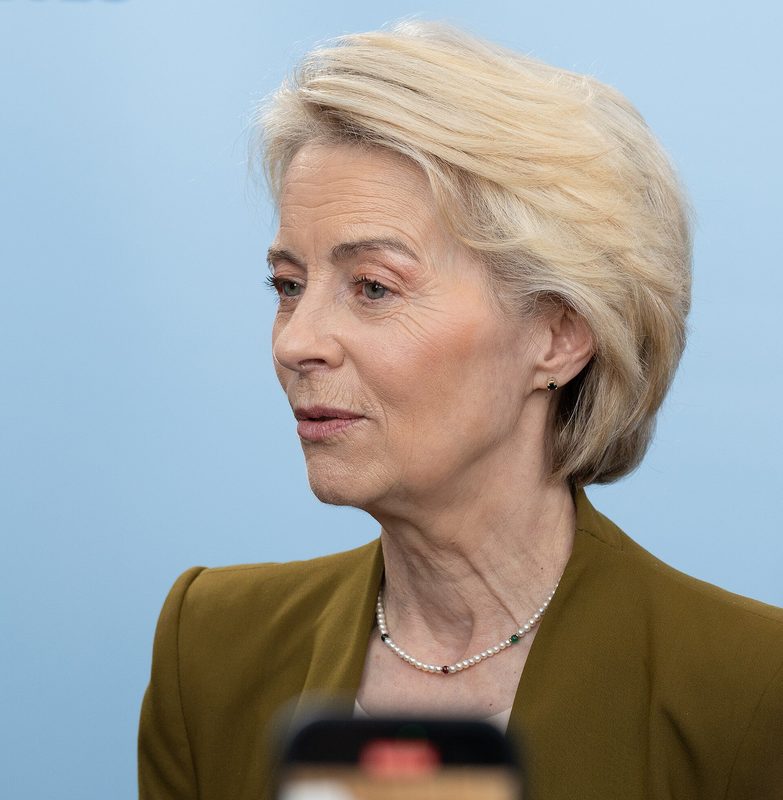
Archive photo · 27 March 2024Ursula Von Der Leyen Urges Europe To Rethink Arctic Strategy With Pan-Arctic Submarine Cable
“the EU is integrating active defense mechanisms directly into the cable architecture”
“Recipients need a subscription to read Copy link Print”
Photo: European People's Party, CC BY 2.0 · Cropped for layout
This article is an automated aggregation of coverage from news outlets. Our editorials offer in-depth analysis curated by the NewsCord team.
EU updates Arctic strategy focusing on Pan-Arctic submarine cable to secure data flows. Von der Leyen warns Russia's growing Arctic military presence and calls for strategic shift.
EU Arctic cable push
European Commission President Ursula von der Leyen called on Europe to change its strategic approach in the Arctic, stressing that sovereignty, territorial integrity, and the rules that have ensured stability in the region can no longer be taken for granted.
“The Bering Strait is only 82 kilometers (51 miles) wide.”
The European Union announced on Tuesday its comprehensive Arctic strategy, nine months after U.S. President Donald Trump’s threats regarding Greenland, and the strategy aims to connect Europe to Japan in the long term via a submarine cable passing through Greenland and Canada.
The strategy also seeks to strengthen the European fleet of icebreakers and to improve the monitoring system to track the Shadow Fleet’s ships, while the document does not specify any additional funding.
The EU’s submarine-cable concept is tied to Greenland’s role in the European sphere, with the Pan-Arctic cable described as a direct, deep-water submarine link connecting southwestern Greenland to mainland European landing stations.
The strategic assessment further argues that any trans-Arctic system must navigate the Bering Strait, where it says there are zero international waters because the Diomede Islands generate overlapping territorial seas.
Icebreakers, monitoring, and funds
The European Union said it would strengthen the European fleet of icebreakers and improve tracking of the Shadow Fleet’s ships, while the strategy also recommended intensified cooperation with non-EU countries such as Canada, the United Kingdom, and Norway. The strategy described Greenland’s plans to use new European funds to help implement projects such as improving internet access, and it said Brussels hopes to diversify Europe’s supplies of vital raw materials that currently depend largely on China. Ursula von der Leyen announced a €200 million allocation for Greenland during her visit to the autonomous Danish region in early September, and the strategy document did not specify any additional funding.
The strategic assessment described the Pan-Arctic cable’s financing as heavily subsidized by the Connecting Europe Facility (CEF-Digital) cross-border infrastructure allocations, the Global Gateway envelope, and European Investment Bank (EIB) framework facilities. The strategic assessment also described the system as mandating a trusted-vendor supply chain that systematically excludes Chinese marine manufacturers from both the wet plant and Submarine Line Terminal Equipment (SLTE).
Legal choke points and next steps
The strategic assessment argued that the Bering Strait creates a jurisdictional obstacle because it says the entire width of the chokepoint constitutes the sovereign territory of either the United States or the Russian Federation.
“The Commission also announced the creation of a Maritime Security Center to monitor maritime activity in the Arctic.”
The assessment added that executing marine route surveys or laying a physical cable on the seabed requires the express sovereign consent, environmental permitting, and security clearance of the coastal state.
The assessment further stated that routing the cable through the U.S. side subjects it to the U.S. Federal Communications Commission (FCC) licensing regime and potential U.S. surveillance jurisdiction, while routing through the Russian side violates Western sanctions and exposes the asset to direct GUGI sabotage.
In parallel, the European Commission’s updated Arctic strategy emphasized protecting underwater communications infrastructure, saying that any damage or disruption to undersea cables could have consequences beyond the borders of a single state.
The European Commission also described the creation of a Maritime Security Center to monitor maritime activity in the Arctic, and it said an initial phase would establish a framework to protect and repair undersea maritime infrastructure in northern latitudes, notably telecommunications cables.