
Europe · 02 September, 2026 · 2 min read
Tens of Thousands Protest Ceuta Migrant Crisis Across Spain, Including Madrid and Barcelona
EU approves 114.7 million euros emergency aid to Spain for Ceuta border management. Tens of thousands protested across Spain over Ceuta migrant crisis, including Madrid.
Who to blame for the crisis's cause.
4 of 5 outlets skipped it: court ordered expulsion of 11 Moroccan citizens tied to an attack on soldiers.
100outlets compared
Same story, two versions
tap a side to read it in full
BBC
“Opposition People's Party leader Alberto Núñez Feijóo accused the government of lying and a cover-up, and said the prime minister should resign.”Read the original ↗
Al Jazeera
“Spain’s territorial policy minister, Angel Victor Torres, has accused the conservative and far-right opposition of exploiting the crisis “to attack the government of Spain” instead of helping the city.”Read the original ↗
Al Jazeera foregrounds claims that opposition exploits the crisis. The BBC highlights partisan accusations against the government.
Ceuta border crisis peaks
Tens of thousands of people flooded the streets across Spain on Wednesday to protest the ongoing migrant crisis in Ceuta, with demonstrations also planned in cities including Madrid, Barcelona, Valencia and Seville.
“In Madrid, authorities said some 50,000 protesters turned out.”
In Madrid, authorities said some 50,000 protesters turned out, and demonstrators shouted “A united Ceuta will never be defeated,” “Sánchez to prison” and “Invaders — go home!” referring to the thousands of migrants still in the city.

The crisis began when about 72,000 people swam, scrambled or charged into the small Spanish territory neighboring Morocco in late July, with at least 90 dying in the effort to reach Europe, and Spain’s national government later said around 5,000 remained in Ceuta weeks later, including 1,200 minors.
Ceuta’s regional leader Juan Jesús Vivas said during an institutional act on Wednesday to mark the holiday that “What happened to us was not a migratory crisis,” adding “What happened was the violation of Spain's territorial integrity.”
Competing blame and denials
Spanish Prime Minister Pedro Sánchez told Cadena Ser radio on Monday that “There is no information from any of our intelligence services that points to the participation of Moroccan authorities,” while also saying a misinterpretation of a Supreme Court ruling and disinformation on social media encouraged people to rush the border.
Sánchez’s government denied that Morocco was behind the mass crossing, but the BBC reported that a Spanish police report highlighted the “total permissiveness” of Moroccan security forces, even as senior officials insisted it does not point to Rabat.B
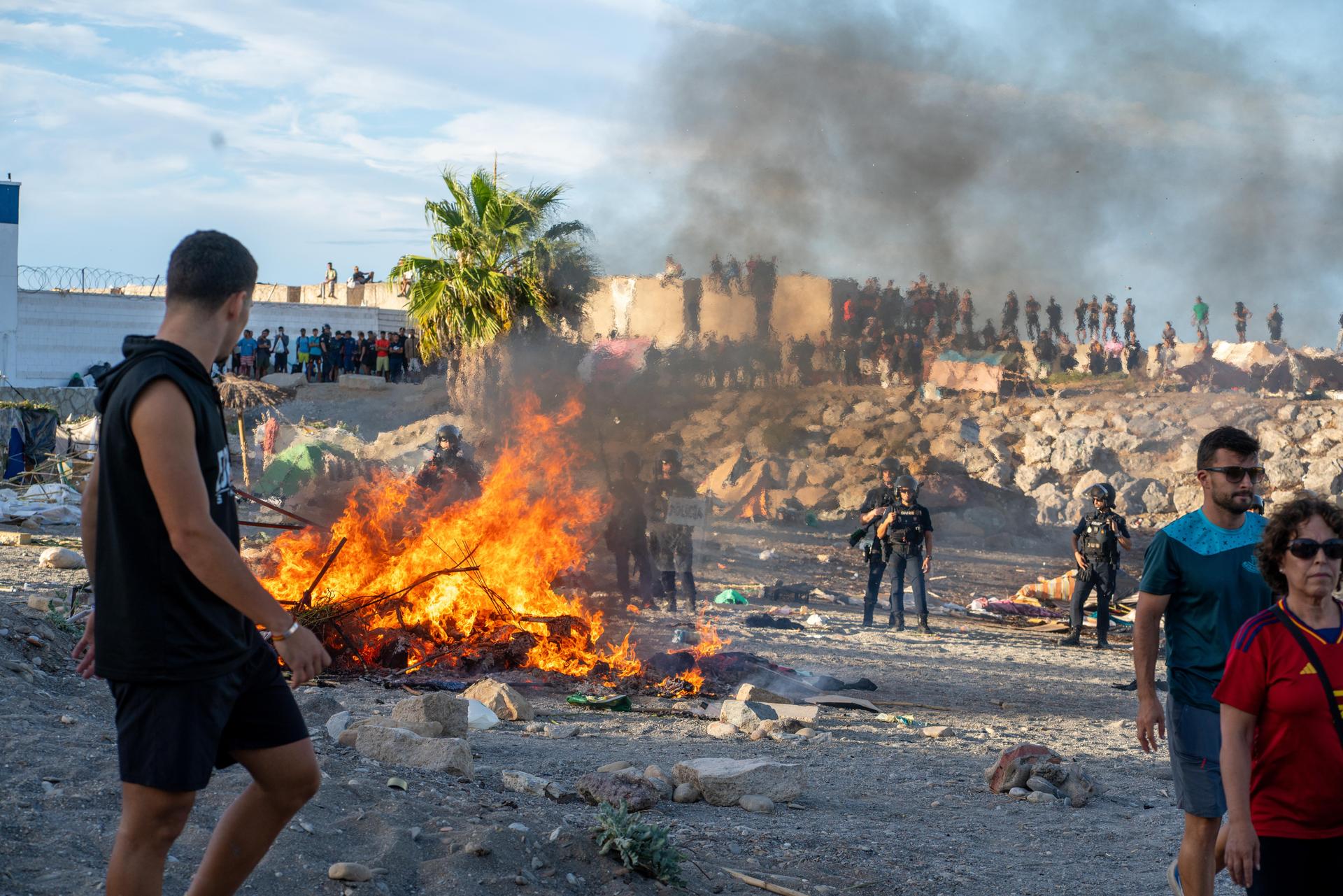
Opposition leaders pressed for accountability, with BBC reporting that People’s Party leader Alberto Núñez Feijóo accused the government of lying and a cover-up and said the prime minister should resign.B
In response to the dispute over who fueled the surge, Spain’s minister of territorial policy Ángel Víctor Torres said the protests were politically motivated, telling Spanish National Radio: “This is not to show support for the city of Ceuta or its residents; it is to attack the government of Spain.”
Humanitarian strain and next steps
As the protests continued, the Spanish government said it had earmarked 309 million euros ($357 million) to aid Ceuta’s social services, with special attention to housing migrants, its economy and security.
“This week, it earmarked 309 million euros ($357 million) to aid the city’s social services”
The BBC said that while most migrants returned to Morocco within hours, several thousand remain in Ceuta, many of them children, and many are sleeping rough on beaches or streets, after anti-migrant demonstrations became increasingly violent in recent days.B
The BBC also described incidents including locals preventing Red Cross personnel from distributing food and water, followed by some setting fire to migrant camps on Trampolín beach and clashes with police.B
Looking ahead, Spain’s Prime Minister Pedro Sánchez insisted the crisis could be resolved through cooperation, rejecting speculation that Moroccan authorities encouraged the rush and calling cooperation with Morocco “frankly very positive,” while Ceuta’s mayor Juan Jesús Vivas said “The dignity of Spain is a stake right now in Ceuta.”