Sudan · 03 June, 2026 · 2 min read
Fatou Bensouda Urges ICC To Stop Exonerating Crime Perpetrators, Citing Libya And Sudan
Bensouda, ICC's new prosecutor, calls to stop exonerating perpetrators and protect African victims. She argues the ICC is not serving Western interests, emphasizing accountability for African victims.
How the ICC views African targeting and case scope.
3 of 4 outlets skipped it: seif al-Islam trial in The Hague faces Libyan refusal..
12outlets compared
Same story, two versions
tap a side to read it in full
RFI frames ICC as balanced, countering “Western targeting” accusations.
ICC, Sudan, and Libya
Fatou Bensouda, the Gambian elected as the new prosecutor of the International Criminal Court (ICC), told RFI that “It's time to stop exonerating the perpetrators of crimes and to think of the millions of African victims.”
“It's time to stop exonerating the perpetrators of crimes and to think of the millions of African victims”
She said the ICC does not target African leaders, adding that “In the cases of Libya and Sudan, the UN Security Council referred the matter to the ICC.”
Bensouda also said the ICC stands with African victims and described how African states on the UN Security Council voted for ICC decisions, naming Nigeria, South Africa, and Gabon.
She contrasted that with Syria, saying the ICC cannot act unless the UN Security Council refers the situation to the ICC because Syria is not a signatory to the Rome Statute.
In the same RFI interview, Bensouda said she wants to make the ICC “as humane as possible,” while arguing that propaganda and misunderstandings have politicized ICC decisions.
Sudan displacement and Port Sudan
A VOA/AFP report in the Africa Center for Strategic Studies press review said the conflict in Sudan has driven mass displacement, with “more than eight million internally displaced” and “more than 3 million” who fled the country.
The same press review said the UNHCR records “210,000 Sudanese refugees in Libya,” and described how between 400 and 500 Sudanese nationals cross into Libya each day.
In Port Sudan, RFI reported that “Dozens of Sudanese protested Tuesday in Port Sudan” against the government’s decision to carry out a partial replacement of banknotes in areas it controls.
RFI quoted the government’s rationale that the exchange is aimed at “protecting the national economy and combating criminal activities,” while also warning that the measure risks creating a new fracture between sectors and areas held by the RSF.
The press review added that Khartoum, in central Sudan, is split between the two forces, and that on Monday the previously set deadline for the exchange, commerce and transport in Port Sudan were paralyzed.
Journalists in Libya at risk
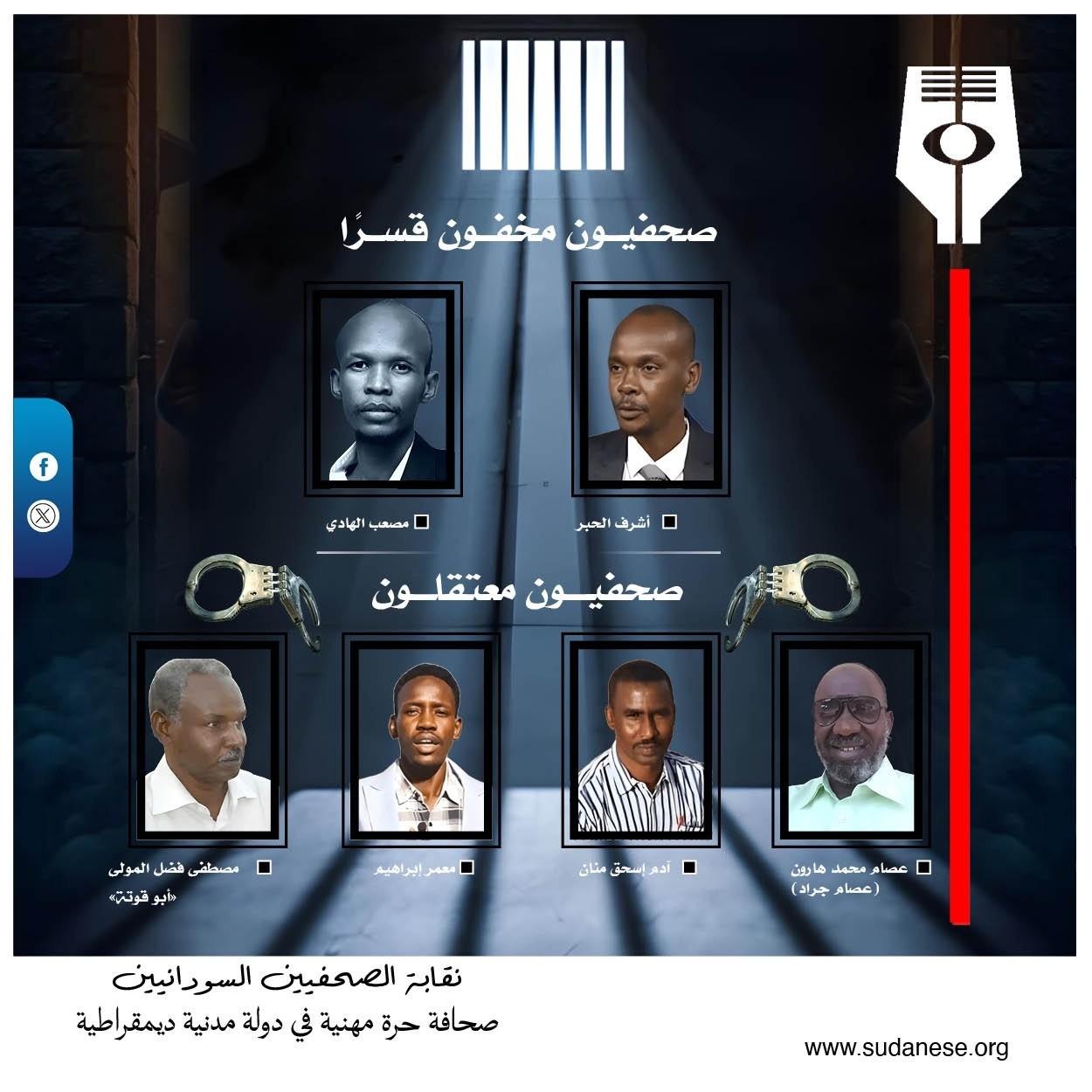
The Sudanese Journalists Syndicate called on the UN Refugee Agency to strengthen urgent protection mechanisms for Sudanese journalists at risk in Libya, including “rapid resettlement for cases facing imminent threats.”
“rapid resettlement for cases facing imminent threats”
In a report issued during the first week of June 2026, the union documented a dangerous escalation in hate speech, threats, and harassment targeting Sudanese journalists residing as refugees in Libya.
The syndicate said the Freedoms Secretariat documented testimonies from “39 Sudanese journalists who fled the war and violations in Sudan,” and reported that “23 of the journalists monitored were male (59 per cent), while 16 were female (41 per cent).”
It also said 28 journalists (72 per cent) were officially registered with UNHCR, while 11 (28 per cent) were unregistered and at risk of deportation and arrest.
The union warned that the continuation of the atmosphere in Libya will lead to professional and humanitarian isolation and expose lives to imminent danger, while urging the Libyan authorities to instruct the Ministry of the Interior to open an investigation into incidents of hate speech.