
Europe · updated 1h ago · 2 min read
Finland Joins France’s Advanced Nuclear Deterrence Initiative, Defense Minister Antti Häkkänen Says
Finland joins France's advanced nuclear deterrence initiative, becoming the tenth European participant. Helsinki says it does not intend to station nuclear weapons on its territory in peacetime.
21 outlets, one story, no spin found.
9 of 10 outlets skipped it: cooperation may include observing drills, conventional contributions, or temporary deployments.
21outlets compared
Finland joins France’s deterrence
Finland decided to join France’s “advanced nuclear deterrence” initiative, with the Élysée Palace publishing a joint statement saying that “Today Finland has made the decision to join the concept of 'advanced deterrence.'”
“Today Finland has made the decision to join the concept of 'advanced deterrence.'”
The statement said that “In the coming months, a steering group on nuclear issues will be created,” to begin implementing the cooperation between the two countries.

Finnish Defense Minister Antti Häkkänen said the initiative “does not imply collective defense obligations of the NATO type,” and Finland’s Ministry of Defense said the move “does not violate the international obligations of the member countries.”
Finnish President Alexander Stubb said Finland “does not intend to deploy nuclear weapons on its territory in peacetime,” while ABC reported Stubb stressed Helsinki “has no intention of deploying... nuclear weapons on its territory in times of peace.”
No NATO overlap, no costs
Both the joint statement and Finnish officials framed the arrangement as separate from NATO’s nuclear deterrence, with Häkkänen saying “The French initiative differs from NATO's nuclear deterrence concept.”
Häkkänen also said, “The countries that join will not be assigned obligations similar to NATO's collective defense obligations,” and that France “will not require other countries to participate in the costs of maintaining nuclear deterrence.”
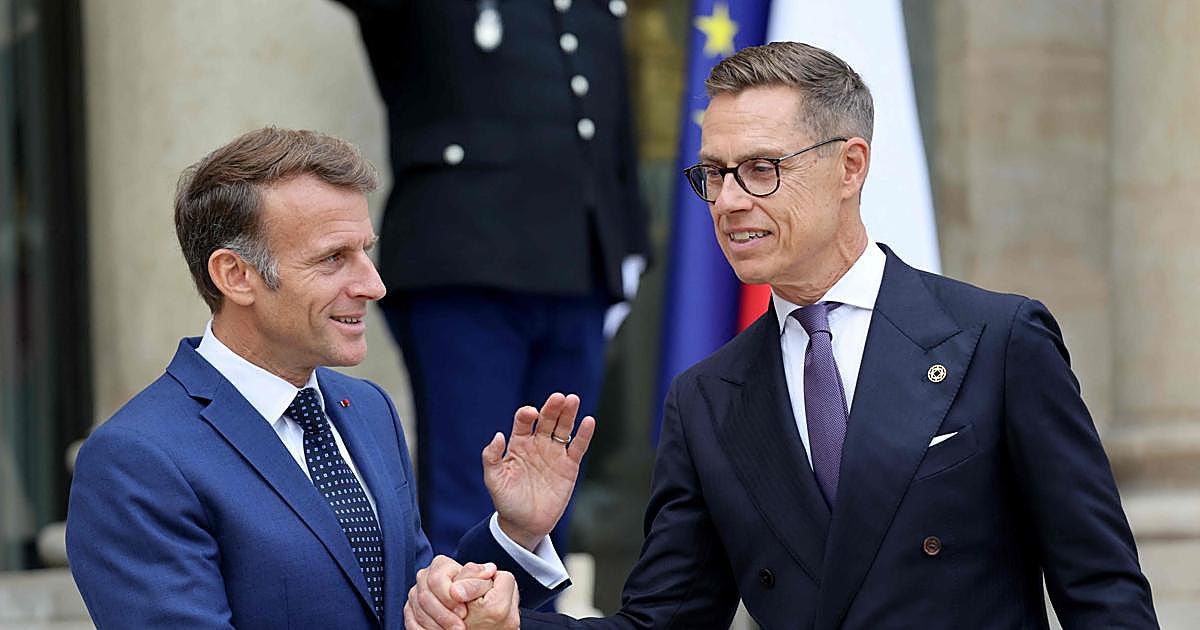
ABC reported Stubb said “The French initiative does not replace NATO’s nuclear deterrence nor does it overlap with it,” and described the decision as “a new step forward” that “complements Paris's recent announcement on deploying troops for NATO's Advanced Ground Forces in Finland.”
The Anadolu Ajansı account similarly quoted Stubb confirming that “Finland does not intend to station nuclear weapons on its territory in peacetime,” while recalling that the initiative is bilateral cooperation between Finland and France.
European security and implementation
The initiative was presented as part of a broader European security effort, with the joint statement saying it would open opportunities for sending “strategic signals” and “make it possible to manage the escalation of a conflict at a level below the nuclear threshold.”
“make it possible to manage the escalation of a conflict at a level below the nuclear threshold”
Boursier, citing the Élysée, said Finland’s decision brought the number of countries involved to ten, and that “A nuclear steering group will be established in the coming months to begin implementing this cooperation.”
In describing possible cooperation, Häkkänen said “Examples of possible forms of cooperation include dialogue on the French nuclear doctrine,” joint exercises where the joining country is an observer or contributes conventional capabilities, and “the temporary deployment of elements of French strategic air forces in the allied country.”
Lignes de défense reported that the initiative aims to involve other voluntary European states “but without any sharing of the ultimate decision to strike a nuclear target,” and quoted Stubb on X that the priority framework for action remains “NATO and the European Union.”