Africa22 October, 20253 min read
Fuel Tanker Overturns and Explodes in Niger State, Nigeria, Killing 35 Villagers Scooping Spilled Petrol
This article is an automated aggregation of coverage from news outlets. Our editorials offer in-depth analysis curated by the NewsCord team.
At least 35 people died and over 40 were injured in the tanker explosion. The explosion occurred after villagers scooped fuel from the overturned tanker.

9 outlets told this the same way.
Fuel Tanker Explosion Casualties
A petrol tanker overturned along the Bida–Agaie/Agaie–Bida Road in Niger State and exploded after villagers rushed to scoop spilled fuel. The incident killed about 30–35 people and injured at least 40–46. BBC reports around 30 dead and at least 40 injured, with severe burns leaving many victims unrecognizable.
The crash is located near Essan and Badeggi. Other outlets such as The Nation, aljazirahnews, and gtvnewshd report at least 35 people were killed.
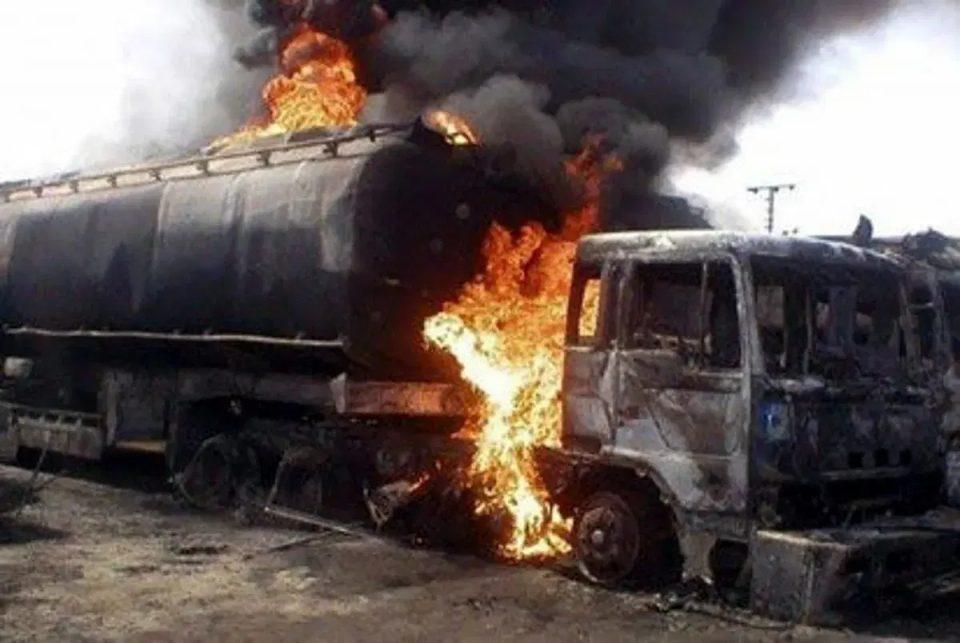
Arise News similarly cites 35 deaths and 40 serious injuries. NSEMA’s search-and-rescue efforts continued, with the injured taken to Bida and Lapai General Hospitals.
Causes of Tanker Tragedy
Multiple sources cite poor road conditions and risky fuel scooping as key drivers of the tragedy, but they differ on structural versus local causes. BBC (Western Mainstream) reports poor road conditions as a factor and situates the event within a pattern of deadly blasts despite repeated public warnings. The Nation (Other) echoes road-quality concerns and adds that local union leaders counted over 30 tanker accidents on this corridor this month, prompting urgent calls for repairs.
gtvnewshd (Other) widens the lens to national infrastructure, noting reliance on road tankers due to a lack of pipelines and weak safety measures. aljazirahnews (Local Western) and Arise News (African) stress official caution and safety concerns around storage and transport of combustible materials.

Response to Niger State Crash
Officials reacted with condolences and operational updates following the incident. The Nation reports Niger State Governor Mohammed Umaru Bago’s sorrow and calls for caution, along with condolences from the Nigeria Governors’ Forum. The report also notes the Federal Road Safety Corps confirmation of the crash.
“President Tinubu launched a national campaign to raise awareness about the dangers... of collecting fuel from fallen tankers.”
Arise News quotes the Nigeria Governors’ Forum chairman praising emergency responders and details NSEMA’s ongoing search-and-rescue efforts with patients in Bida and Lapai hospitals. BBC reports varying casualty figures from different agencies and says the governor lamented persistent risky behavior. The Witness adds national context by mentioning that after a January catastrophe, President Tinubu launched a campaign warning against collecting fuel from fallen tankers.
Tanker Explosion Incident Overview
The blast fits a deadly national pattern. BBC (Western Mainstream) cites a 153-death tanker explosion in Jigawa last year and another lethal crash in Niger State earlier this year, framing the incident within a broader recurrence of fuel scooping-related disasters. The Witness (Other) recalls that at least 98 people died in Niger State in January while gathering fuel, and another 10 died near Abuja in March after a tanker fire.
The Nation (Other) localizes the trend, reporting over 30 tanker accidents on the Agaie–Bida corridor this month alone. gtvnewshd (Other) attributes the frequency of such tragedies to structural issues: dependence on road tankers because of limited pipelines, combined with poor roads and weak safety practices.
Fuel Spill Risks and Responses
Across outlets, there is consensus that scooping spilled fuel is deadly and widely condemned, but prescriptions vary. The Nation (Other) reports authorities and community leaders condemning fuel scooping and calling for urgent road repairs. BBC (Western Mainstream) underscores repeated warnings and the governor’s lament about persistent risky behavior.
“Following the January tragedy, President Tinubu launched a national campaign to raise awareness about the dangers... of collecting fuel from fallen tankers.”
aljazirahnews (Local Western) relays the FRSC’s call for increased caution. Arise News (African) flags broader safety risks in storing and transporting combustibles and praises responders.

The Witness (Other) points to a federal public-awareness campaign after January’s mass-casualty blast. Collectively, the coverage portrays an emergency rooted in behavior, infrastructure, and safety governance.