
Technology and Science · 10 August, 2026 · 3 min read
Gavin Newsom Launches AI Cyber Defense Program To Protect California’s Critical Infrastructure
California launches first-in-nation AI Cyber Defense Program to protect critical infrastructure. Programs housed within the California Cybersecurity Integration Center; AI cybersecurity officers designated.
OpenAI sells Daybreak as trusted defender help.
8 of 10 outlets skipped it: openAI expands Daybreak into Blue and Red tiers.
10outlets compared
Same story, two versions
tap a side to read it in full
OpenAI
“Our answer is to put frontier intelligence in the hands of trusted defenders everywhere”Read the original ↗
OpenAI sells Daybreak as trusted defender help; other outlets emphasise governance and trust limits
California’s AI defense push
California Governor Gavin Newsom announced a first-in-the-nation AI Cyber Defense Program aimed at strengthening protection of state assets and critical infrastructure against emerging artificial intelligence-enabled cyber threats. The initiative directs state agencies to establish an AI Cyber Defense Program within the California Cybersecurity Integration Center and to designate “AI cybersecurity officers” across all agencies, while also expanding access to “advanced cybersecurity capabilities for local governments and critical infrastructure partners, including AI-enabled defenses.” Government Operations Agency Secretary Nick Maduros said, “California is taking a proactive approach — harnessing AI to strengthen our defenses while preparing for the emerging threats these technologies can create,” as the program is framed around vulnerability detection, network hardening, and incident response.
Caroline Thomas Jacobs, California Governor’s Office of Emergency Services Director and state Homeland Security Advisor, said the program will help “detect threats sooner, share information more efficiently, strengthen defenses and respond faster,” to keep essential services secure, resilient, and reliable. The announcement also ties the new direction to earlier California actions, including Executive Order N-12-23 in 2023 and Executive Order N-5-26 in 2026, which directed agencies to assess AI threats and review state AI procurement and supply chain issues.
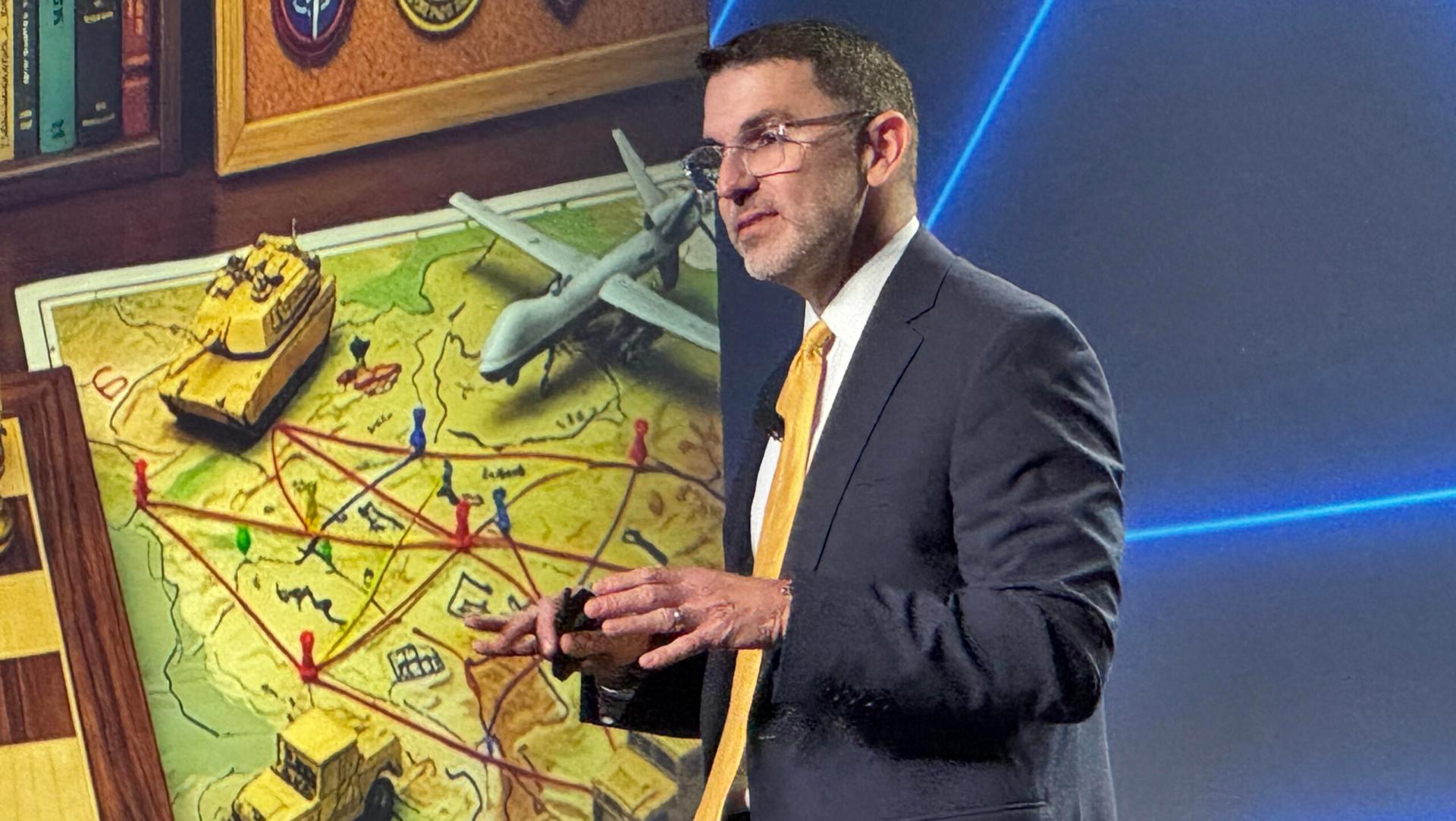
Zero Trust meets agentic AI
At the Defense Intelligence Agency’s DoDIIS conference in Tampa, IC Chief Information Officer Douglas Cossa said agentic AI is forcing the Defense Department and Intelligence Community to rethink how it implements Zero Trust at the enterprise level.
Cossa warned that agentic AI “has completely spun ZeroTrust on its head,” moving from least-privileged access toward giving an AI model and agent “everything it needs to be operating independently.”

He said the government does not currently have a unified identity system across agencies for non-human users like autonomous bots, and described the emerging requirement as a “digital birth certificate” for people and devices and also for AI agents.
Cossa said Zero Trust in the Intelligence Community is being redefined as “identity and policy enforcements of fine-grain attributes,” and he described cybersecurity as shifting from friction to mission enablement.
US Special Operations Command commander Adm. Frank Bradley said future cyber defenses cannot depend on people manually reviewing logs during a crisis and called for systems that can auto defend with “agentic defense against agentic offense.”
OpenAI expands Daybreak tiers
OpenAI said it is expanding Daybreak as the cyber defense window narrows, introducing two access tiers—Daybreak Blue and Daybreak Red—designed to give approved defenders access to cybersecurity models with safeguards tailored to authorized defensive security work. OOpenAI’s blog says Daybreak Blue is the “recommended starting point for most defenders,” while Daybreak Red provides “purpose-trained cybersecurity models” for authorized vulnerability research, exploit validation, and security testing, including access to GPT‑5.6‑Cyber. OIn its internal evaluation, OpenAI reported that GPT‑5.6‑Cyber completes 95.0% of advanced cybersecurity requests involving scenarios such as exploit-chain development, compared with 1.5% for GPT‑5.6 Sol and 2.0% when used with Daybreak Blue access.O
TechCrunch reported that OpenAI said Monday Daybreak would now consist of two tiers, with Blue offering services including incident response, malware analysis, and patch validation, and Red offering a broader toolkit with GPT‑5.6‑Cyber only available at that tier. OOpenAI framed the expansion around the idea that “threat actors will increasingly use AI to conduct cyberattacks at unprecedented speed and scale,” while defenders face “a narrowing window to prepare.”O