
Technology and Science · updated 1h ago · 2 min read
Balendra Shah Proposes Himalaya Climate Resilience Mechanism at UNGA After August 26 Flood
Balendra Shah proposed a regional Himalaya climate resilience mechanism with India and China. floods killed about 1,400–1,450 and thousands remain missing.
Whether the key emphasis is fossil-fuel responsibility or Nepal’s domestic impl….
5 of 6 outlets skipped it: pressure to end fossil fuel expansion driving destruction.
11outlets compared
Same story, two versions
tap a side to read it in full
Ratopati
“However, expert Chhetri warned that the country's development and reconstruction will not move forward solely on the sympathy shown”Read the original ↗
Oil Change International
“Wealthy, high-emitting countries must urgently fill the Loss and Damage Fund”Read the original ↗
Oil Change International frames the UN push as fossil-fuel accountability and funding demands, while Ratopati emphasises Nepal’s implementation homework.
UN plea and glacier flood
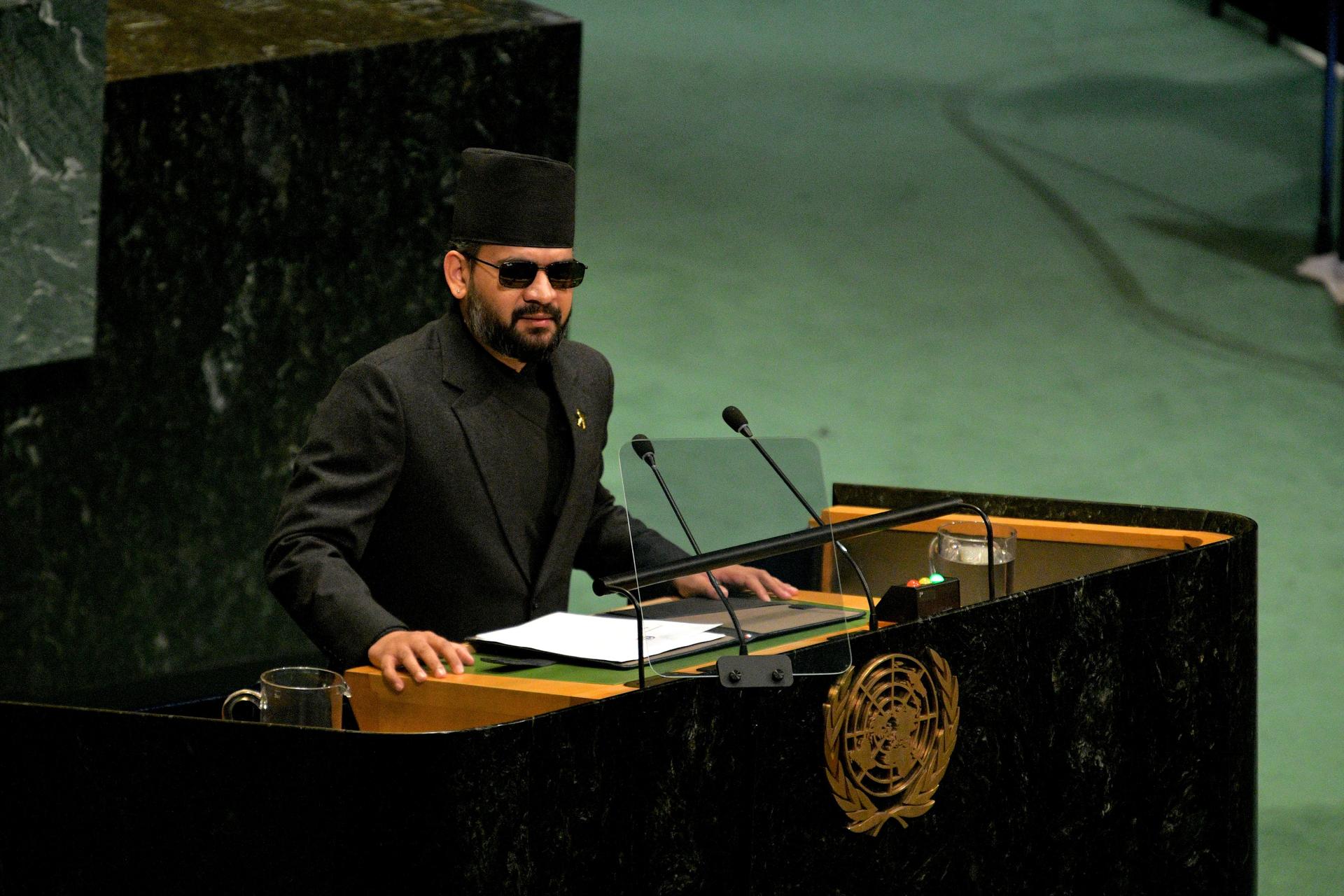
Nepal’s prime minister Balendra Shah urged “climate justice” and proposed a “Himalaya Climate Resilience Mechanism” at the 81st session of the United Nations General Assembly in New York. Shah said the August 26 catastrophe, which he described as a sudden flood comparable to a tsunami caused by the massive collapse of a high-altitude glacier, illustrated the destabilizing effects of climate change on the Himalayan ecosystem. Shah told the General Assembly that “We did not create this crisis, and yet we are paying a colossal price,” and he said Nepal accounts for less than 0.1% of global greenhouse gas emissions.
Shah said the August 26 disaster killed more than 1,400 people and left thousands missing, while he described economic losses and material damages as in the billions of dollars. Shah argued that the proposed mechanism would allow sharing satellite data and scientific knowledge, monitoring glacier lakes posing risks, strengthening cross-border early warning systems, and coordinating aid when a disaster strikes.
Funding, war logistics, and quotes
Balendra Shah told the General Assembly that Nepal is affected by a climate emergency that it did not cause and by wars that it did not start. Shah said the floods have also devastated Tibet, and he argued that Nepal cannot be forced to incur debt to rebuild infrastructure destroyed by a climate crisis to which it has contributed minimally. Shah urged wealthier countries to increase climate funding in the form of subsidies, and he said mechanisms such as the Loss and Damage Fund and the Global Environment Facility remain insufficient.
Shah contrasted what he called “perfect war logistics” with what he described as deficient food supply, saying, “We have built a world with immaculate logistics for war and poor logistics for food.” Shah also told the General Assembly, “Climate justice cannot remain a pretty phrase in United Nations documents,” as he pressed for relief, rehabilitation, and reconstruction alongside responsibility, redress, and resilience.
Regional mechanism and what’s at risk
Balendra Shah proposed that the Himalaya Climate Resilience Mechanism be led by Nepal, India, and China, and he said it would strengthen joint early warning systems and coordinate rescue operations beyond national borders.
“‘Therefore, as an urgent first step, we propose creating a Climate Resilience Mechanism for the Himalaya, led by Nepal, India, and China,’ he announced.”
Shah framed the floods as more than a local tragedy, saying “The Bhotekoshi-Trishuli catastrophe has not been merely a local tragedy: it has been a warning to the world.”
Shah argued that climate finance should not become a bureaucratic labyrinth, and he said, “When the house is on fire, we do not ask the family to fill out fifty forms. We act.”
Scientists and survivors described the disaster as a composite crisis and a development emergency, and SWI swissinfo.ch reported that Nepal estimates reconstruction could cost $4.78 billion.
Karma Lama, a 17-year-old victim in Rasuwa district, told AFP, “We need housing, we need livelihoods (…) The major countries of the world must know our situation,” as helicopters continued delivering food and medicines to isolated communities.