Climateupdated 28m ago2 min read
Archive photo · 14 January 2026EU Climate Monitor Says 2026 Likely Second-Hottest Year as El Nino Boosts Warming
“For skiers, this year’s powerful El Niño could mean abundant snow in some regions”
“It’s a triple whammy of high fertilizer costs, high energy costs, and now massive droughts across the tropics”
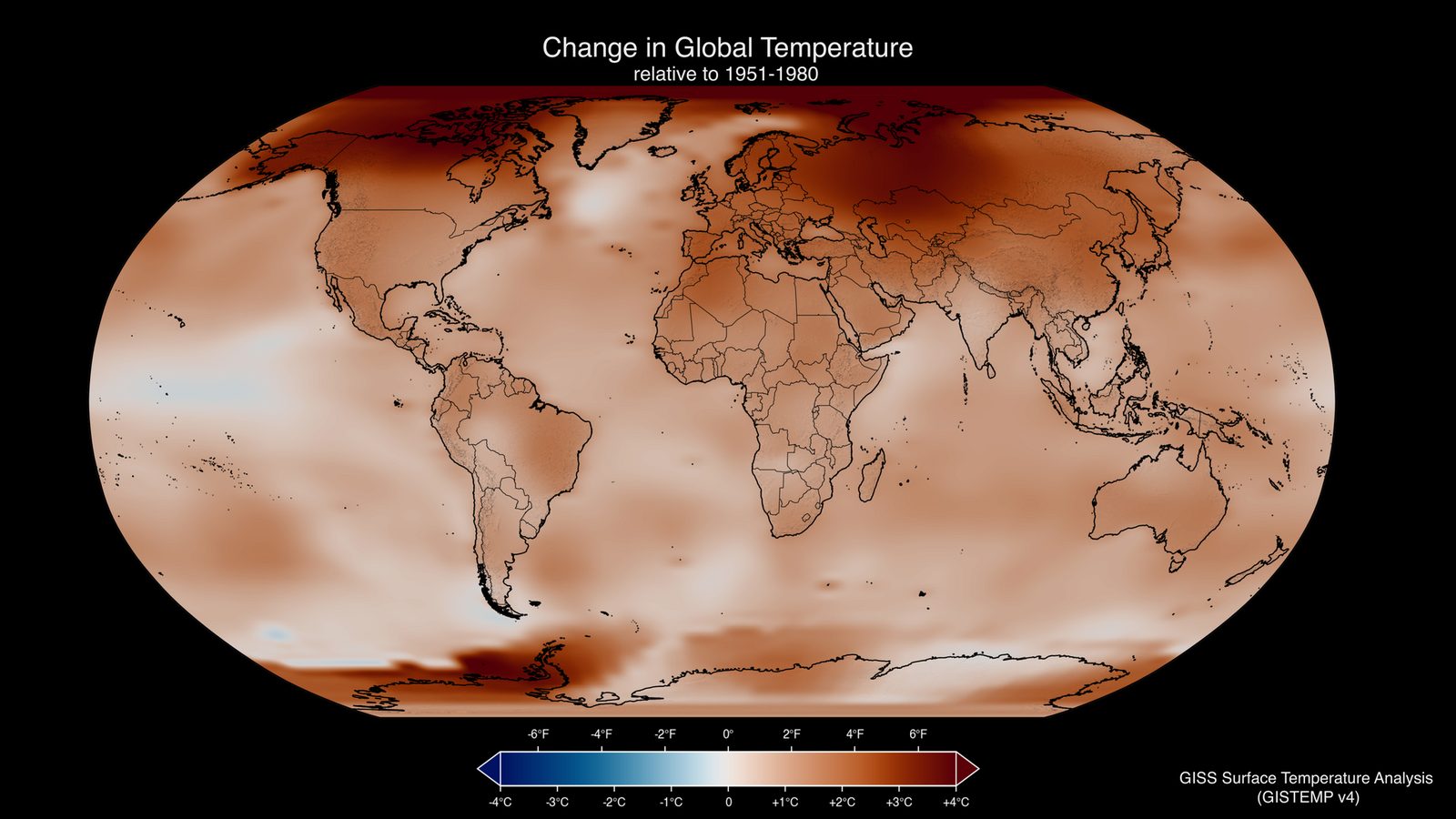
Photo: NASA's Scientific Visualization Studio - NASA/GSFC GISS/Gavin A. Schmidt, SIGMA Space Partners, LLC./Robert B Schmunk, Public domain · Cropped for layout
This article is an automated aggregation of coverage from news outlets. Our editorials offer in-depth analysis curated by the NewsCord team.
2026 is poised to be the second-hottest year on record. El Niño is boosting global warming, intensifying temperatures worldwide.
Save coverage image
The New York Times was read line by line by the Watchdog: 0.0. See the score →
Record warmth and COP31
The EU’s climate monitor said 2026 is on track to be the second-hottest year on record as an exceptionally strong El Nino turbocharges human-driven global warming. Copernicus Climate Change Service said 2026 has a “20 per cent chance of tying or exceeding” 2024 as the warmest ever seen, and it said global temperatures are “virtually certain” to exceed 1.5C above pre-industrial levels in 2026. Copernicus added that the world experienced its warmest October on record, with average global surface air temperatures 1.75C above pre-industrial times defined as 1850-1900.
Samantha Burgess, strategic lead for climate at the European Centre for Medium-Range Weather Forecasts, said “An exceptionally strong El Nino is adding further heat to a climate already warmed by human activities.” The latest bulletin came as nations prepared to meet on Monday for the UN’s two-week COP31 climate summit in Turkey after a year marked by deadly floods in Nepal, searing heatwaves in Europe and major wildfires in Indonesia.
Super El Niño and snow
A “super El Niño” forecast is predicted to shatter records and reshape global snowfall patterns across the U.S. and Canada this winter. A super El Niño typically strengthens the southern storm track and weakens the northern one, and NOAA is cited for heavier precipitation more likely from California to the Gulf Coast with warmer and drier air expected to dominate the Midwest. El Niños occur every two to seven years, typically peaking from November to January, and the season is framed as a mix of abundant snow in some regions and warm temperatures, rain or drought in large expanses of North America.
The National Weather Service Climate Prediction Center has declared the super El Niño likely to be “a historic event” that will break previous records, and ocean temperatures more than 2 degrees Celsius above normal have already been recorded in the eastern Pacific. The National Oceanic and Atmospheric Adminstration changed the index it uses to measure very strong El Niños, and it says there have been six very strong El Niños since 1950.
Food, drought, and resilience
This year’s super El Niño will worsen global hunger by adding strains to high fertilizer costs, high energy costs, and “massive droughts across the tropics.” El Niño years are marked by unusually warm waters in the tropical Pacific that weaken winds across that patch and alter global patterns of rising and falling air pressure. The results are complicated and variable, but dry conditions in some tropical areas including the Amazon and parts of Australia and Africa are described, while rain to other places including Florida is described.
Yale E360 also said Richard Choularton, director of climate and resilience for the World Food Programme in Rome, warned that “The confluence of drought and conflict drives some of the worst outcomes we see.” Yale E360 said this year’s super El Niño will worsen global hunger by adding strains to high fertilizer costs, high energy costs, and “massive droughts across the tropics.”