Techonology and Science10 October, 20252 min read
Health Secretary RFK Jr. Spreads Baseless Autism Claims Linking Circumcision and Tylenol at White House Meeting
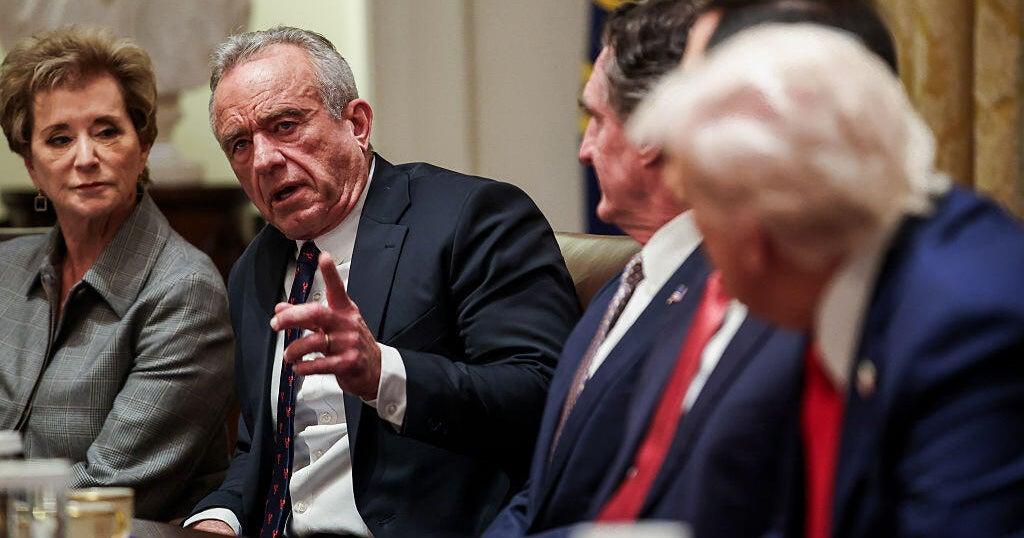
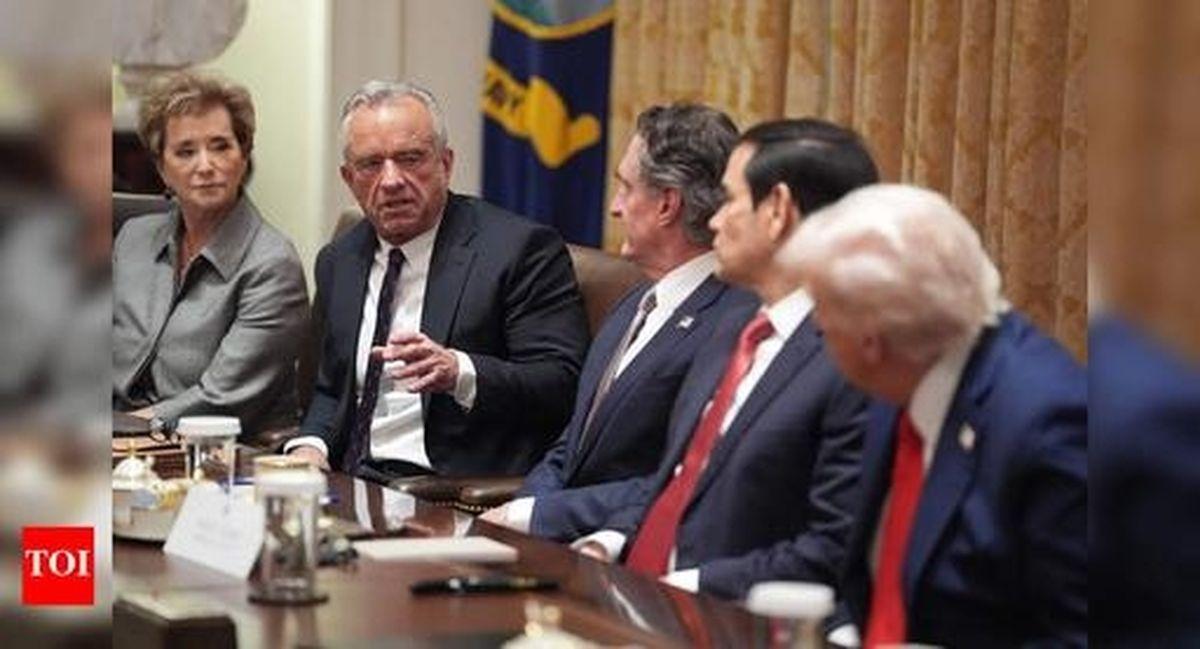
Health Secretary RFK Jr. claimed circumcision doubles autism risk due to Tylenol use. RFK Jr. made these claims during a White House Cabinet meeting on October 9, 2025.

15 outlets told this the same way.
Claims on Autism and Tylenol
At a televised White House Cabinet meeting, Health and Human Services Secretary Robert F. Kennedy Jr. asserted that early circumcision and Tylenol (acetaminophen) use are linked to higher autism rates.
“At a recent Cabinet meeting, President Donald Trump reiterated his warning that pregnant women should avoid Tylenol and not give it to infants.”
He claimed that “two studies” show circumcised children have “double” the autism rate and attributed that to Tylenol.
.jpg&w=1920&q=75)
President Donald Trump also reiterated warnings that pregnant women should avoid Tylenol and not give it to infants.
Scientists and medical experts broadly pushed back, saying there is no solid evidence for these claims and warning that such statements are misleading and anxiety‑inducing.
Coverage across outlets consistently notes the controversy and widespread criticism of the assertions.
Critique of Autism Study Claims
Much of Kennedy’s argument was anchored to a 2015 Danish study. However, multiple outlets note he misrepresented or over-extended its findings. The study observed a correlation between early circumcision and autism diagnoses but did not establish causation.
It also did not provide data on painkiller use, so linking the correlation to Tylenol is speculative. Some reports add that the study was not peer-reviewed.
Other research contradicts any firm connection between circumcision and autism. Researchers have attributed the correlation to procedural pain and trauma rather than acetaminophen.
Tylenol Safety and Autism Claims
Major medical and public health authorities rejected the asserted Tylenol–autism link and cautioned against depriving pregnant people or infants of appropriate pain relief. Outlets report that ACOG, SMFM, WHO, and autism advocacy groups reject the claims. FDA and leading organizations maintain acetaminophen is safe when used properly.
“Medical experts and major health organizations, including the FDA and the American College of Obstetricians and Gynecologists, maintain that acetaminophen (Tylenol) is safe during pregnancy and infancy, emphasizing that correlation does not imply causation.”
Scientists see no solid evidence of causation between Tylenol use and autism. One report says the FDA plans to update Tylenol labeling to flag potential associations but emphasizes that no causal link is established. Others highlight the drug manufacturer’s denial and the broader consensus that correlation is not causation.
Media Reactions to Controversy
Political context influenced the media coverage of the issue. HuffPost reports that HHS defended Kennedy by referencing his social media post citing a 2025 review that supposedly supports his claims. HHS also described his remarks as part of a pattern of promoting false links between Tylenol and autism.
The Mirror US highlights Kennedy’s lack of scientific qualifications and his history as a vaccine skeptic. NewsBreak presents his narrative as politically motivated and harmful.

Mainstream outlets like the New York Post document the controversy and note expert criticism. They also mention that Trump’s warnings against Tylenol preceded and aligned with Kennedy’s message.
Media Reactions to Kennedy's Claims
Public and media reactions also diverged in focus and detail. OregonLive spotlighted practical clinical context, quoting a former labor and delivery nurse that newborns typically receive local anesthesia and sugar water during circumcision—not Tylenol afterward—and cataloged humorous, sarcastic social-media responses. Evrim Ağacı highlighted that Kennedy confused the placenta with the uterus while referencing a TikTok video, compounding skepticism.
“A former labor and delivery nurse clarified that newborns typically receive local anesthesia and sugar water during the procedure, not Tylenol afterward.”
NewsBreak’s piece folded in unrelated items about protests and presidential health checkups. UNILAD stressed that Kennedy failed to specify the studies he cited—illustrating how coverage branched into procedure practice, public ridicule, off-topic add-ons, and evidentiary gaps.