Full story
Ali al-Taher taken
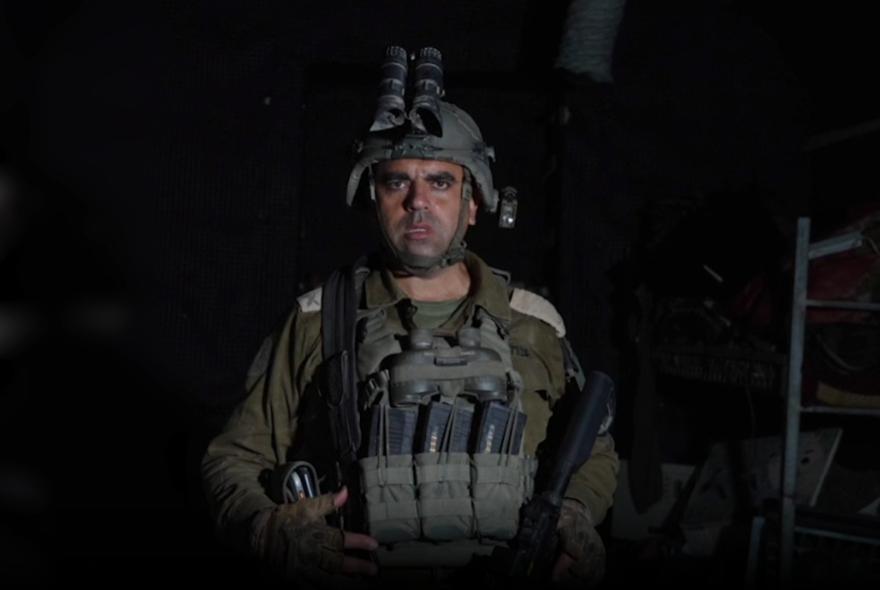
The Israeli military said on Thursday that it took over the strategic Ali Taher Ridge in southern Lebanon, where Iranian army personnel are reportedly holed up alongside Hezbollah fighters, in what the IDF says are large underground command-and-control centers.
“took over the strategic Ali Taher Ridge in southern Lebanon”
Reuters reported that Iran warned the United States it would respond forcefully to an Israeli offensive on the mountainous ridge, with the message delivered last month and described as highlighting Iran's continued direct involvement in ground fighting in southern Lebanon.

The Jerusalem Post said the IDF cleared Hezbollah tunnels on the Ali al-Taher ridge after a months-long operation, announcing it completed clearance of two Hezbollah underground infrastructures and that forces are now working to neutralize them.
The Jerusalem Post added that the infrastructures were built over a period of about two decades and were planned and funded by Iran, while the IDF said the operation lasted several months and involved forces from the IDF’s 36th Division.
Naharnet said Israel claimed taking “operational control” of the strategic Ali al-Taher ridge area, saying troops had cleared Hezbollah fighters from two underground routes, killing some while others fled, and that operations were ongoing.
Threats and competing claims
Reuters said Hezbollah declined to comment on whether Iranian forces were present in Ali al-Taher, while Hezbollah's media office told Reuters that it was a “natural conclusion” that such a warning would have been sent about the ridge.
In the same Reuters report, a White House official said, "this is not accurate," in response to Reuters questions about whether the U.S. had put pressure on Israel not to attack Ali al-Taher.
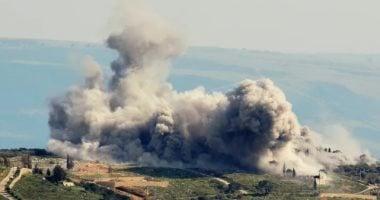
Naharnet quoted an Israeli military statement that there was no immediate comment from Hezbollah, and it said the Ali Taher hill overlooks several villages as well as main roads leading to the city of Nabatiyeh.
Naharnet also reported that an Israeli military source criticized the Lebanese Army’s performance in the so-called pilot zones, saying “it has not entered private property” there and that its search operations are “partial.”
The Jerusalem Post described Hezbollah's position as saying it controls the hill and will confront any Israeli advances, while Israel said the ridge is a major operational focus and has included it within an expanded buffer zone under Israeli military control.
What comes next
Reuters said that despite Iran's warning, a Lebanese source briefed by Hezbollah and a senior Lebanese security official said an Israeli military operation to capture the ridge was still possible in the coming weeks, with Hezbollah saying any large-scale attack would mean a return to full-blown war.
“"take all necessary measures to prepare for a long-term presence."”
The Jerusalem Post said the IDF emphasized that operations in southern Lebanon are continuing and that the IDF remains committed to the ceasefire agreement in Lebanon, while also stating that once tunnel neutralization is completed, the IDF will redeploy for defensive operations.
La Revista Peninsular reported that the Israeli army has established nine bases on Lebanese territory and that authorities in that country report more than 5,000 violations of the ceasefire agreement signed in June, with Israeli Defense Minister Israel Katz instructing the armed forces to "take all necessary measures to prepare for a long-term presence."
La Revista Peninsular added that UNIFIL said Israel established four new bases in the territories it invaded, bringing the total number of positions to nine, and it said the prolonged occupation threatens to become a fait accompli that blocks the return of hundreds of thousands of displaced Lebanese.
Naharnet said Israel's Israeli source argued that a return to normal life is only possible through Lebanon's effective implementation of the framework agreement, and it charged that Hezbollah is undermining that agreement by “violating the ceasefire and continuing to use force within the security zone in southern Lebanon.”