Financeupdated 1h ago3 min read
IMF Forecasts 3.1% Global Growth in 2026, Warns AI Boom and Debt Threaten Outlook
This article is an automated aggregation of coverage from news outlets. Our editorials offer in-depth analysis curated by the NewsCord team.
IMF projects global growth 3.1% in 2026, up from 3.0% in July. AI investment boosts growth, but rising debt risks threaten macro stability.
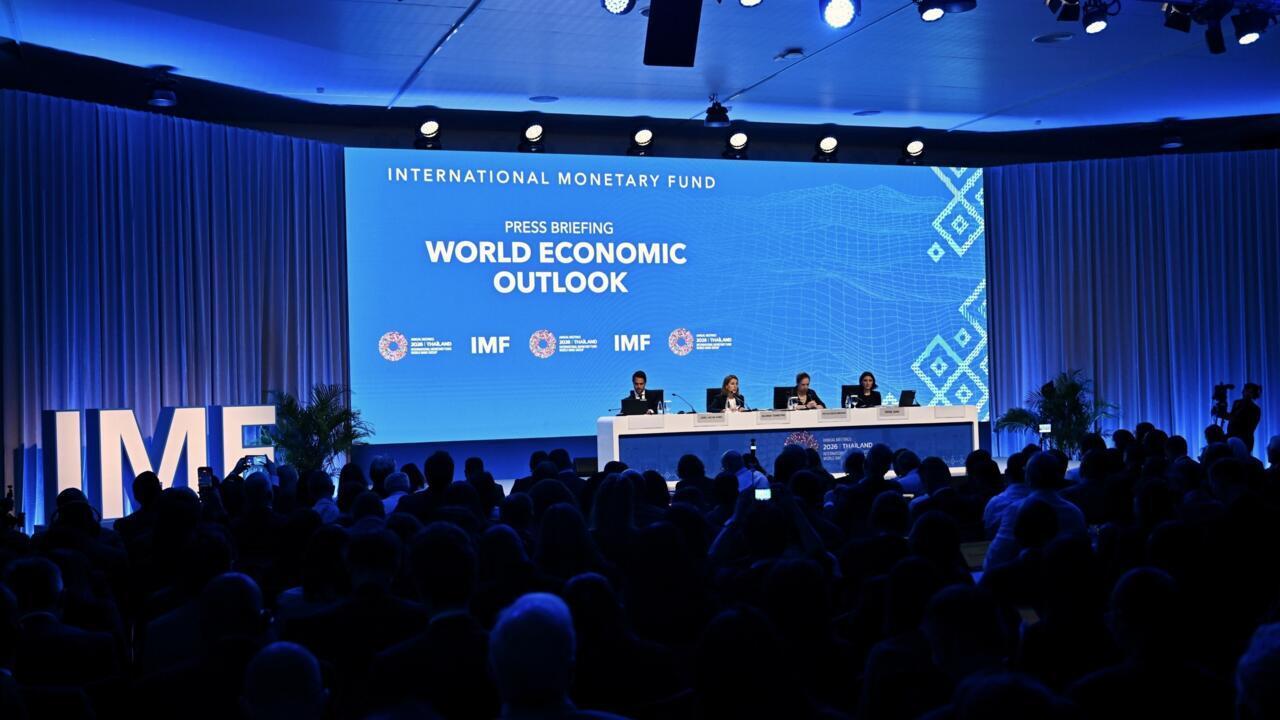
IMF lifts growth, flags risks
The International Monetary Fund forecast global growth of 3.1% for 2026 and 3.4% for 2027, while warning that the outlook is threatened by a potential ending of the AI investment boom, growing debt levels, and a prolonged Middle East conflict. Silvana Tenreyro told journalists in Bangkok that "The global economy has been resilient, but that resilience is under strain, with risks tilted to the downside," as the IMF said advanced economies were buoyed by AI investment while other countries faced energy shocks and mounting debt. Kristalina Georgieva warned that "We have to recognise that the world that used to value only one thing, economic efficiency ... now is a world in which security considerations have to be factored in," linking the IMF’s growth view to war-fuelled energy prices and financial stability concerns.
The IMF said its World Economic Outlook assumptions included that the Strait of Hormuz reopens by March and that shipping conditions return to the pre-war situation by October 2027, and it warned that a more protracted war keeping oil prices above $130 through the first quarter of 2027 would cut growth next year by half a percentage point. Reuters reported that the IMF said trade in AI goods grew 29% between 2023 and 2025, more than triple the 8.3% growth rate of global trade over the same period, and it said the AI boost was offsetting higher oil prices caused by the war in the Middle East.

AI correction and bond stress
The IMF warned that a steep drop in AI investment could lead to a sharp fall in asset prices, ultimately cutting global GDP by 1.1% by 2028, including a 1.8% drop in US output.
Kristalina Georgieva told a Bretton Woods Committee event, "We now have an economy that is standing on one leg, the AI leg," and she asked, "What if it wobbles? What if there is disappointment and that leads to potentially a more difficult environment?"

Jason Wu told a press conference in Bangkok that "If there are questions about the monetization of AI, the equity investments will deplete in value, the debt may be difficult to service, and the revenue commitments in the future may not materialize," tying an AI market correction to debt servicing and future revenue commitments.
Athanasios Vamvakidis warned that an ensuing AI market correction would feed back through the real economy, dragging down broader asset prices and overall demand through a wealth effect reduction.
Quartz reported that the IMF said hyperscalers now account for 10% of global investment-grade bond issuance, up from under 1% in 2024, and it said the fund counted 14 publicly disclosed circular financing arrangements since 2023 involving about $300 billion in equity and $650 billion in debt.
Debt, jobs, and policy choices
The IMF said elevated public debt levels and rising bond yields could be driven higher by war-driven inflation pressures, eating up budgets to service debts and sapping growth. Taiwo Oyedele, who chairs the Group of 24 developing nations, warned that estimates showed developing countries were paying $500 billion more for their debt than developed countries, even as they contend with growing deficits. The IMF urged countries to begin politically painful steps to bring budgets under control, and Reuters said it singled out Britain for praise as the only major advanced economy to have set out clear plans to reduce government borrowing over the coming years.
Kristalina Georgieva described AI’s employment impact as "a slow-moving tsunami, but a tsunami nonetheless," and the IMF said it estimated the impact over time on jobs globally to be around 40%. The IMF also warned that AI supply chain concentration could create chokepoints and that cybersecurity threats linked to AI could weigh on growth and add to financial stability risks, with Silvana Tenreyro cautioning that "Global trade would have grown at a far slower rate without the AI boost," as she spoke at the IMF and World Bank annual meetings in Bangkok.