Financeupdated 1h ago2 min read
Royal Swedish Academy Awards 2026 Nobel Prize in Economic Sciences to Robert Hall and Michael Woodford
This article is an automated aggregation of coverage from news outlets. Our editorials offer in-depth analysis curated by the NewsCord team.
Hall and Woodford awarded 2026 Nobel Prize in Economics for microeconomic foundations of macroeconomic stabilization. Their work develops models used by central banks and governments to stabilize economies during shocks.

27 outlets told this the same way.
Nobel Economics Award
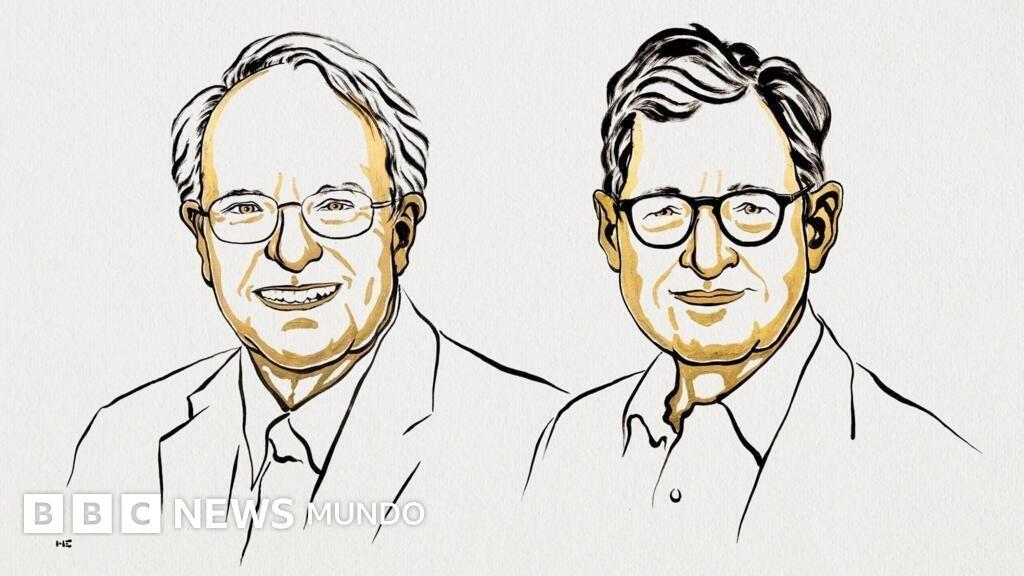
The Royal Swedish Academy of Sciences awarded the 2026 Nobel Prize in Economic Sciences to US academics Robert Hall and Michael Woodford for work on how monetary and fiscal policy can help stabilize fluctuations in the economy. John Hassler, chair of the Committee for the Prize in Economic Sciences, said the laureates’ work provided “a stable theoretical foundation for the models that are now used by central banks and governments around the world.” The prize recognized their contributions to “the study of how monetary and fiscal policies can help stabilize economic fluctuations.”
Woodford told by telephone that it was “a tremendous honor” to receive the award, and Hall and Woodford were awarded this Monday. The prize, formally known as the Sveriges Riksbank Prize in Economic Sciences in Memory of Alfred Nobel, came with a $1.2m cheque and a diploma and a gold medal, according to Al Jazeera and the BBC.
Micro Foundations, Forward Looking
The Royal Swedish Academy of Sciences said Hall and Woodford developed new macroeconomic models that improve people’s ability to implement effective stabilisation policies by building on a microeconomic foundation. Al Jazeera quoted the academy saying the laureates “chose to build them on a microeconomic foundation,” and it described that approach as encompassing how the total mass of individual households and businesses affect the economy through their actions. Hall and Woodford pursued a microeconomic approach focused on understanding how the decisions of households and firms influence the economy as a whole.
Both households and firms take into account their expectations about the future when making decisions, such as how much to save or what prices to set for their products. The academy described the laureates’ work as helping governments and central banks stabilize their economies to minimize the impact of external shocks, and it quoted the academy saying “The laureates have helped us smooth out the economy’s peaks and troughs.”
Prize Money and Policy Use
Hall was born in 1943 in California and is a professor at Stanford University, while Woodford was born in 1955 in Massachusetts and is a professor of Political Economy at Columbia University. Both will receive a total of 12 million Swedish kronor, about (US$1.2 million) to be shared equally, and it also quoted the academy’s statement that “the laureates have helped us smooth the ups and downs of the economy.” The two Americans would each receive 6 million Swedish kronor, or $598,000, and the prize was described as being awarded in Stockholm on Monday.
The Nobel Prize in economics was awarded on Monday in Stockholm and the Nobel committee explained that “fiscal and monetary measures taken at the right moment can mitigate the ups and downs of economic activity.” The economics prize is not part of the five original awards created in the 1895 will of Alfred Nobel, but was instead established by Sweden’s central bank, and the economics prize first awarded in 1969 is the final prize to be given out this year.