Asia21 January, 20262 min read
Indonesian and Australian Researchers Date Sulawesi Cave Handprints to At Least 67,800 Years, Identify World’s Oldest Rock Art
Researchers dated a Sulawesi hand stencil to at least 67,800 years ago The hand stencil's fingers were reworked into a claw-like motif indicating symbolic behavior

10 outlets told this the same way.
Outlets did split on Avalanche Strikes Himlung Himal Base Camp In Nepal, At Least 10 Missing →
Oldest dated rock art
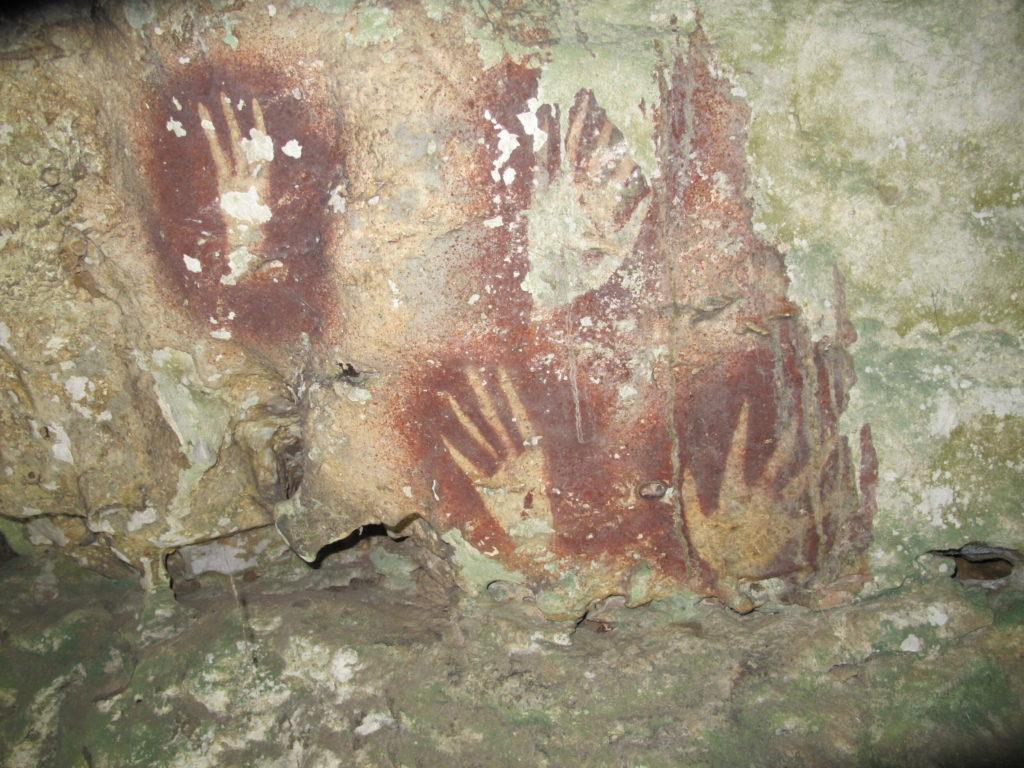
Researchers from Indonesia and Australia have reported a faded ochre hand stencil on the limestone cave walls of Muna, a satellite island off Sulawesi, that is dated to a minimum of about 67,800 years ago and is the oldest reliably dated rock art yet identified. Teams used uranium–thorium dating of thin calcite and mineral crusts and of microscopic calcium‑carbonate deposits that formed on top of the paintings to establish a minimum age.
“Archaeologists working in a limestone cave (Liang Metanduno) on Muna Island off Sulawesi, Indonesia, have found human-made rock art — eerie hand stencils with pointed fingers — that are at least 67,800 years old, making them the oldest reliably dated examples known.”
The study appears in the journal Nature. The imagery consists of tan hand stencils with intentionally narrowed or pointed fingertips produced by blowing pigment around hands, and it was found among a wider local tradition of paintings spanning thousands of years, indicating repeated use of the same sites.
Uranium-series dating summary
The age estimate is a conservative minimum derived from uranium-series/uranium-thorium dating of mineral crusts—calcite deposits or "cave popcorn"—that formed on top of the pigment. Because the dated crust post-dates the painting, the measured ages provide a secure minimum age for the underlying art, and outlets note the technique carries uncertainties so archaeologists report minimum ages rather than exact creation dates. Different reports stress technical details with varying emphasis: some emphasize the method's reliability for establishing a minimum age, while others highlight dating uncertainties and advise caution in interpretation.
Muna hand stencil dating
The new minimum age places the Muna hand stencil ahead of previously dated examples elsewhere. Several outlets note it is about 1,100 years older than the prior record-holding Spanish hand stencil, which some reports attribute to Neanderthals.
“Archaeologists have found what they believe is the world’s oldest rock art — a hand stencil in a cave off Sulawesi, Indonesia — dated to at least 67,800 years old.”
Other reporting situates the find relative to older regional dates, for example earlier Indonesian and Bornean images with minimum ages exceeding 40,000 to 51,000 years. This underlines that Wallacea and nearby islands now host a growing set of very ancient rock-art dates.
Sulawesi dates and migration
Many outlets draw broader archaeological and anthropological implications. Several reports link the Sulawesi dates to early human occupation and migration across Wallacea toward Sahul (Australia-New Guinea). They also suggest cultural continuity or long-lived artistic traditions in prehistoric Indonesia and propose a connection with the ancestors of Indigenous Australians.
Some coverage references genetic evidence and excavation results from northern Australia that support human presence there by roughly 60,000-68,000 years ago. These findings strengthen the possibility that the same expanding populations carried symbolic practices across island Southeast Asia.

Wallacea cave art overview
Researchers and reporters highlight open questions and ongoing work. A hand stencil was found among many later images, some dated to roughly 4,000–32,800 years, indicating the cave’s use across millennia. Specialists caution that dating estimates are conservative and call for additional fieldwork across Wallacea to corroborate and expand the record.
“‘There’s a lot of rock art out there but it’s really difficult to date,’ said Prof. Maxime Aubert.”
Several studies note distinctive technical features such as pointed fingers and fragmentary stencils and raise the possibility of recovering DNA from pigment application methods. Commentators emphasize dating difficulties and the need for more samples before drawing firm species-level or cultural conclusions.