Full story
Munir in Tehran
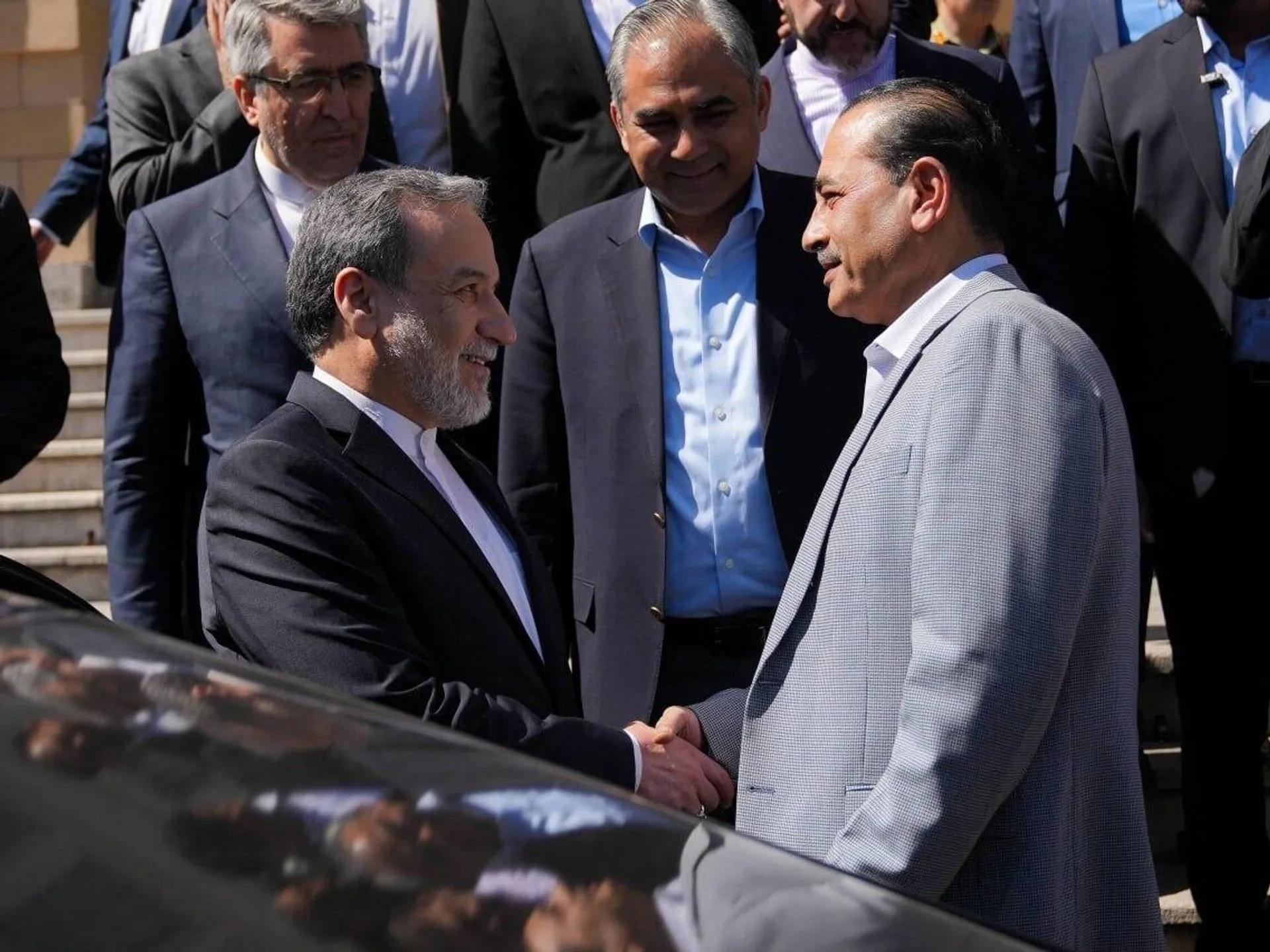
Pakistani Field Marshal Asim Munir spent Monday moving through the power corridors of Tehran, meeting Iranian President Masoud Pezeshkian and Parliament Speaker Mohammad Bagher Ghalibaf as he sought to break deadlock in talks with the United States to end their now six-month-long war.
“Pakistani Field Marshal Asim Munir spent Monday moving through the power corridors of Tehran”
The visit unfolded as Iranian President Masoud Pezeshkian told a gathering of doctors in Tehran that “It is better that we bring the war to an end now as we are in a position of power and dignity,” while hours later Major-General Ali Abdollahi promised “revolutionary, crushing, regret-inducing and devastating” responses to any American miscalculation.

Al Jazeera reported that Munir’s most significant meeting on Monday might have been with General Mohsen Rezaei, described as a representative of Iran’s Supreme Leader Mojtaba Khamenei and the newly appointed secretary of the Supreme National Security Council.
The same Al Jazeera account said Pakistan’s Inter-Services Public Relations (ISPR) described the one-day visit as producing “comprehensive discussions” on reopening the Strait of Hormuz and ending the war, with Pakistan’s Interior Minister Mohsin Naqvi calling the talks “very positive and productive.”
Hormuz corridor talks
On Tuesday, Iran and Oman held talks in Tehran on managing ship traffic through the Strait of Hormuz, which remained largely shut down nearly six months after the Iran war began, after an oil tanker was disabled in an attack off the coast of Oman.
In a joint statement, Omani Foreign Minister Badr al-Busaid met Iranian counterpart Abbas Araghchi, and the statement said the proposed framework includes a “joint temporary navigational corridor” and work to clear mines from the waterway.

The Associated Press reported that Iranian Deputy Foreign Minister Kazem Gharibabadi told state TV that the two countries had reached an understanding on a temporary route, with traffic into the Persian Gulf from the Gulf of Oman passing entirely through Iranian waters.
AP also said the Iranian and Omani plan would be followed by negotiations over 30 to 60 days to “reach an understanding on a new permanent and sustainable route,” while U.S. President Donald Trump had threatened to bomb Oman if it “gets in the way” of American efforts to reopen the strait.
Sanctions and shipping risk
As the Strait of Hormuz diplomacy advanced, the United States expanded economic pressure on Iran, with Al Jazeera reporting that US Treasury Secretary Scott Bessent unveiled “Operation Economic Outcast,” targeting Iran’s digital assets, gold, aviation, technology and shipping networks.
“Operation Economic Outcast”
Al Jazeera also quoted Defense Secretary Pete Hegseth saying, “If we need to use kinetic strikes, we’ll use them,” while it reported that Bessent acknowledged that imposing penalties on countries trading with Tehran would “blow up the global financial system.”
In parallel, China’s Foreign Ministry warned it was closely following plans announced by Bessent to expand sanctions to entities and individuals linked to Iran, and Foreign Ministry spokesperson Lin Jian said China-Iran cooperation “should not be disrupted or undermined.”
The National reported that tanker traffic through the Strait of Hormuz fell to just two vessels on Monday, well below the 10-day average of 14, as it described the diplomatic push by Pakistan and Oman to ease US-Iran tensions and address the strait crisis.