Full story
Partial restoration, tiered control
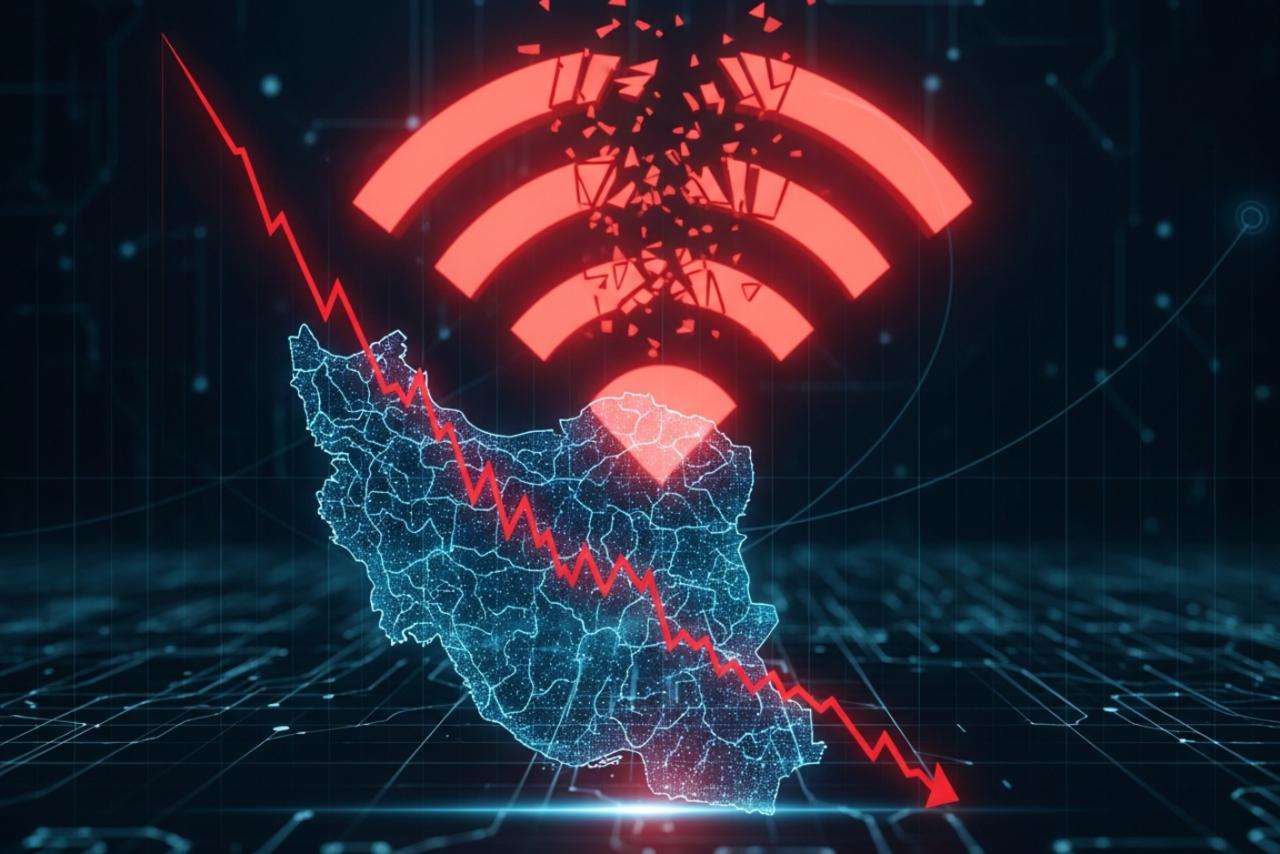
Internet access in Iran has been partially restored after an 88-day nationwide internet disruption, but cyberspace remains heavily restricted and far from free, with connectivity still lower than before January’s nationwide protests.
Regime authorities justified the shutdown on security grounds after the US and Israeli attacks on Iran on February 28, while critics described the measure as part of a longer pattern of using internet restrictions to suppress information and control society.

DW reported that President Masoud Pezeshkian ordered the restoration of internet access, while NetBlocks and Cloudflare data showed a significant increase in web traffic compared to recent weeks.
Cybersecurity expert Amir Rashidi said, "Web traffic is still lower than it was before January. Back then, it was around 50%."
Rashidi also argued that the goal is for the internet to function "in principle" while data traffic is manipulated so that hardly any data can leave the country and information about the war and protests cannot be freely disseminated.
Costs, VPNs, and surveillance
Alhurra reported that global internet access returned to Iran this week, but activists and opposition figures said most users still rely on costly VPNs and specialized anti-filtering software sold through networks they say are tied to the Islamic Revolutionary Guard Corps.
Jafar Bakhtiari, who runs a small leather workshop in Tehran, told Alhurra that the "subscription alone, together with anti-filtering software, cost me nearly 30 million tomans this month," about $170.
Nasser, a pseudonym used by a craftsman from the northwestern city of Urmia, said he could not get the internet access he needed inside Iran and chose "Iraqi Kurdistan as a temporary base" to manage customer orders and promote ceramic products online.
NPR said users reported service was slow and spotty in some areas, with apps like YouTube and Instagram heavily restricted as they were before the cutoff began during nationwide protests in January.
Amir Rashidi wrote on X, "It's too early to say the shutdown is over," as NPR reported that widespread disruptions continued even after authorities ended the monthslong shutdown.
Economic and rights stakes
The DW report said the internet blackout had significant economic repercussions, especially for small businesses, including women-led online ventures that were destroyed by the shutdown.
Solmaz Eikder from Filterbaan, also known as Filterwatch, told DW that "This income was essential for many families — but this opportunity has now been taken away from them."
NPR reported that the cutoff made it difficult for Iranian families to communicate through months of unrest and war, and it said the internet cutoff cost an estimated $30-40 million daily, with indirect losses likely twice that much.
NPR also quoted Communications Minister Sattar Hashemi saying "About 10 million people have jobs that depend on internet connectivity," while describing how senior government officials receive SIM cards granting access to the global internet.
A collective statement published by the Center for Human Rights in Iran on May 21, 2026 called for "Free and equal access to the internet" and said deprivation from the global internet "significantly reduces the quality, diversity, and richness of educational resources."