Iranupdated 35m ago3 min read
MapIran Says It Will Use All Available Means Against U.S. Blockade as Tankers Hit Mines
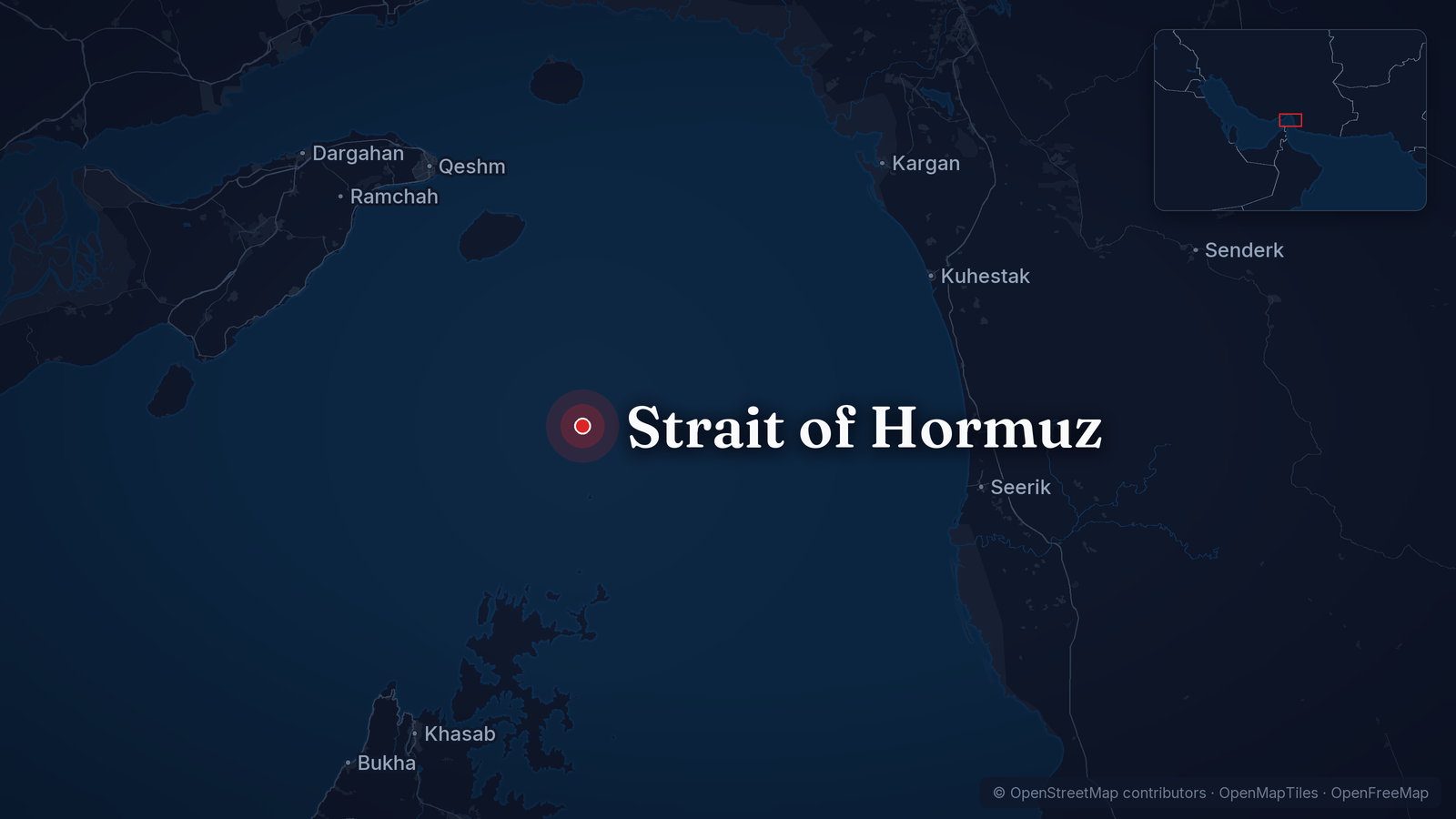
3 Western Mainstream1 Asian1 Israeli2 Other source typesMap: © OpenStreetMap contributors, ODbL · Cropped for layout
This article is an automated aggregation of coverage from news outlets. Our editorials offer in-depth analysis curated by the NewsCord team.
Iran vows to use all available means to counter the U.S. blockade of its ports. Several tankers in the Strait of Hormuz were struck and caught fire.
Save coverage image
The Jerusalem Post was read line by line by the Watchdog: 0.0. See the score →
Hormuz shipping, sanctions, cyber
Iran said it would use "all available means" to counter the blockade of its ports as the United States investigated potential Iranian involvement in cyberattacks that targeted tankers carrying oil and other explosive substances.
The U.S. Treasury Department issued new sanctions against a group of Iranian nationals and entities, describing them as front companies and exchange houses, and Treasury Secretary Scott Bessent said, "Iran's economy is underwater, and its leaders are panicking."
The Iranian navy said three oil tankers hit naval mines in the Strait of Hormuz on Monday, resulting in "explosions and massive fires," while there were no immediate reports of casualties.
The Islamic Revolutionary Guard Corps said "three violating oil tankers in the Strait of Hormuz suffered severe explosions and fires" after striking naval mines, while US Central Command (CENTCOM) had not responded to the claims.
In parallel, the CBS report said the Wall Street Journal cited sources saying as many as 50 ships carrying oil, chemical products and other explosive substances were believed to have been attacked, with some ships also receiving bomb threats.
Iran rejects U.S. talks
Iran’s chief negotiator and parliament speaker Mohammad Bagher Qalibaf said Tehran would not negotiate with the United States "until Iran’s seven conditions are met," according to Iranian state television. Iran’s conditions were described by Iranian state media as including the lifting of sanctions, the ending of the U.S. naval blockade of Iranian ports, and the release of seized Iranian assets, while the report said Iranian authorities had not publicly stated what the seven conditions are. The Revolutionary Guard’s navy said the Strait of Hormuz "is not a place to test unauthorized routes or to disregard maritime warnings," and it said the tankers were "engulfed in flames" after hitting mines despite being under U.S. aerial escort.
The same IRGC statement carried by IRNA claimed the tankers were being escorted and protected by the US military, but US support "failed to prevent the incidents from occurring." The same CBS update placed the diplomatic context alongside President Trump’s social media claim that Iran had "launched more drones and missiles in the last week than at any time" while also saying the increasing attacks had "done no damage."
Escalation risks and maritime counts
Two more tankers were hit by projectiles in the Strait of Hormuz on Saturday, and UKMTO said an outbound tanker was hit in the stern about 11 nautical miles north of Khasab at about 0500 UTC. Vanguard Tech said a second outbound tanker was hit in the engine room about 17 nautical miles east of Khasab at about 0550 UTC and that the strike started a fire on board, while it said no casualties were reported in either incident. The number of attacks reported to the Royal Navy-affiliated UK Maritime Trade Operations Centre in an area comprising the Strait of Hormuz, the Persian Gulf, and the Gulf of Oman was over 30 in October and at least 22 in November so far.
The Joint Maritime Information Center identified two vessels as the Hong Kong-flagged Torkel and Arina, and it reported that Torkel was struck on its stern approximately 11 nautical miles north of Khasab, Oman, early on Saturday, sparking a fire. Lewis Pugh, UNEP patron of the oceans, said, "The flames were enormous," as he described his three-day, 15 km swim through the Strait of Hormuz from Musandam Island to the Cape of Hormuz.