Iran07 September, 20262 min read
Iran Warns South Korea Against Military Role in Persian Gulf and Strait of Hormuz
This article is an automated aggregation of coverage from news outlets. Our editorials offer in-depth analysis curated by the NewsCord team.
Iran warns South Korea of serious consequences if it deploys militarily in Strait of Hormuz. Such deployment would be seen as direct support for US aggression in the region.

6 outlets told this the same way.
Outlets did split on Iran Reviews US Negotiation Proposals As Pakistan And Qatar Mediate Strait Of Hormuz Dispute →
Anadolu Ajansı was read line by line by the Watchdog: 1.7. See the score →
Hormuz warning escalates
Iran warned South Korea against any military role in the Persian Gulf and Strait of Hormuz, with Esmaeil Baqaei saying Tehran would regard “the military presence or participation of any other country in operations in the Persian Gulf and Strait of Hormuz” as direct support for the party responsible for aggression. Baqaei said Iran’s relations with the Republic of Korea have “a history of more than 64 years,” and he stressed that Tehran “attaches great importance to its friendly ties with Seoul.”
The warning came after Seoul said it was reviewing options for contributing to freedom of navigation in the strategic waterway, while stressing that “no final decision has been made.” In the same context, Iran’s foreign ministry spokesman said no sovereign and responsible country should “succumb to US pressure and threats” and become complicit in “acts of aggression and horrific crimes against the Iranian people.”
Tankers and legal claims
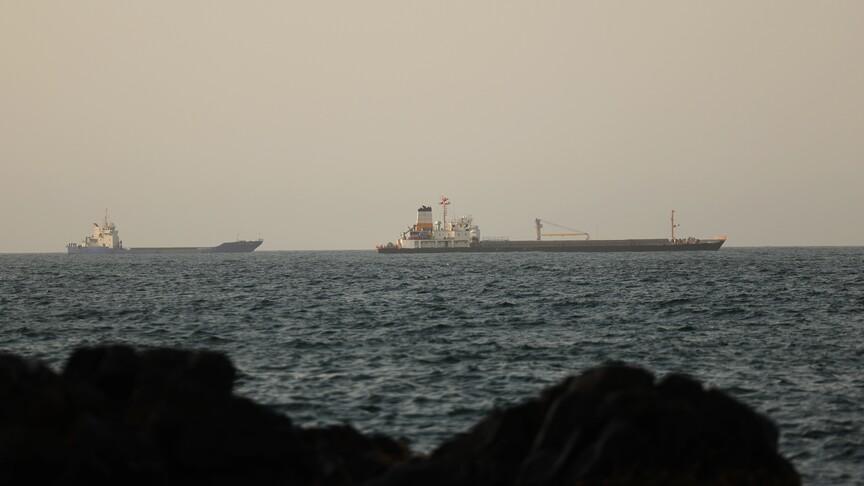
Iran condemned US strikes on three Iranian crude oil tankers as “illegal and aggressive,” saying the attacks were carried out as part of “its naval blockade and economic war against our homeland.” In a statement, Iran’s Foreign Ministry said the actions “constitute a clear violation of Article 2, Paragraph 4 of the UN Charter, a war crime, and a clear threat to international peace and the security of commercial shipping.”
The Anadolu Ajansı account tied the strikes to US Central Command (CENTCOM), which said its forces struck and disabled three Iranian crude oil tankers after Iran’s Islamic Revolutionary Guard Corps (IRGC) launched ballistic missiles toward two US Navy warships in regional waters. The Tribune-Democrat report added that Iran accused the U.S. of attacking an Iranian tanker near Kharg Island in the Persian Gulf, and it noted that the U.S. did not immediately comment.

Broader war and diplomacy
Iran’s foreign ministry spokesman also framed the Strait of Hormuz as unsafe due to US attacks and a naval blockade, saying “Hormuz Strait has become unsafe due to US attacks, naval blockade orchestrated against Iran.” He described the US economic war as “a new wave of coercive, illegal action,” and he said the US-European anti-Iran IAEA draft resolution is based on “the agency director's politicized and politically-motivated reports.”
On negotiations, Baqaei said “Negotiation is absolutely neither bad nor good, but rather a tool for advancing the country's affairs,” and he said diplomacy “supports the Armed Forces, and keeps pace with the national interests of the Iranian nation.” He also warned that “any participation in the US's aggressive action is complicity,” adding that Iran had issued the warning to all countries not to become a “tool for the US's aggressive action against Iran.”