Iranupdated 45m ago2 min read
MapIranian Leaders Vow To Break U.S. Naval Blockade After CENTCOM Disables Pacific Archer
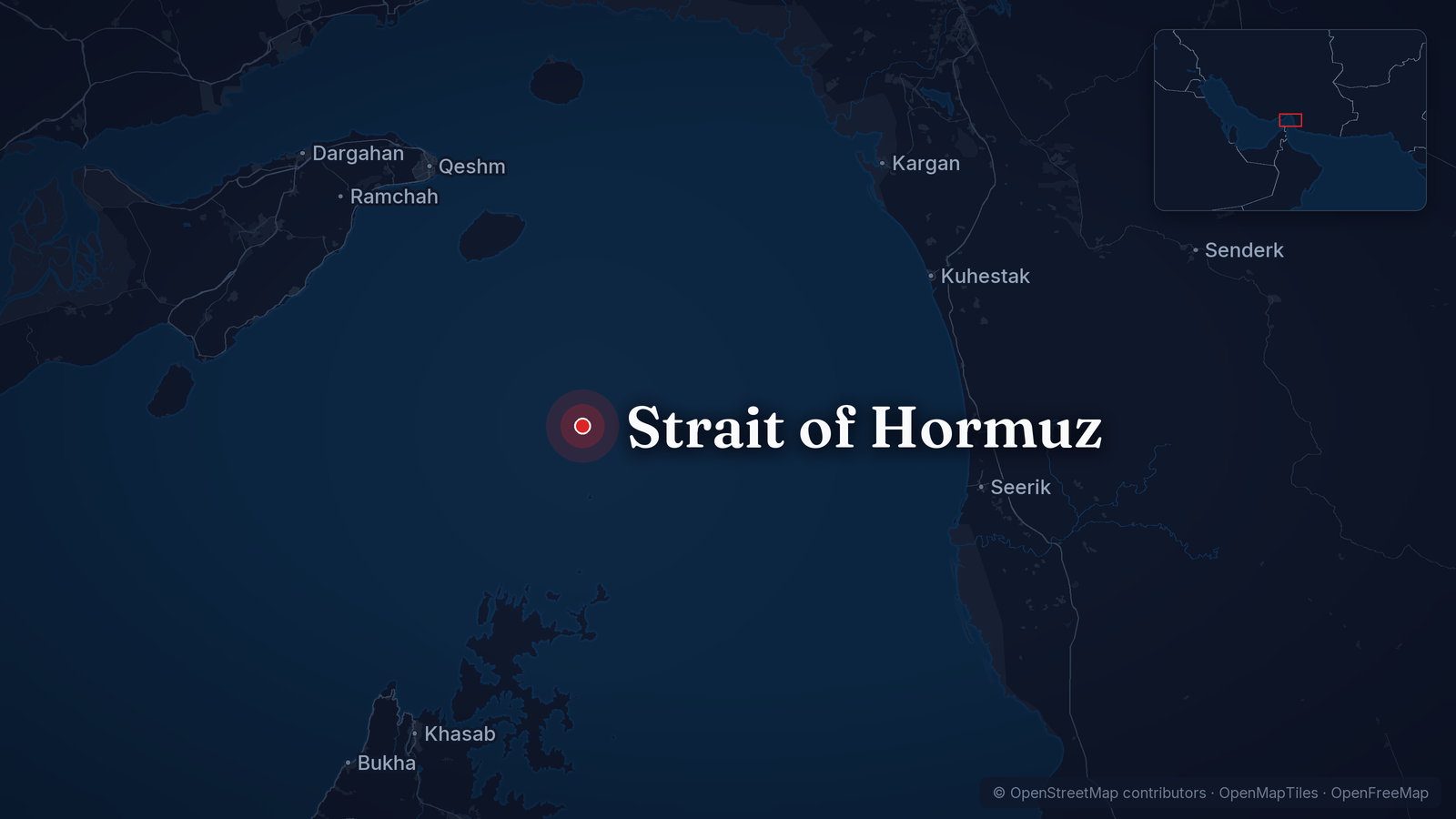
6 West Asian1 OtherMap: © OpenStreetMap contributors, ODbL · Cropped for layout
This article is an automated aggregation of coverage from news outlets. Our editorials offer in-depth analysis curated by the NewsCord team.
Iran's armed forces will break the U.S. naval blockade of the Strait of Hormuz. Iranian naval forces control the Gulf and Strait of Hormuz, threatening maritime influence.
Save coverage image
Tehran Times was read line by line by the Watchdog: 0.0. See the score →
Blockade, threats, and targeting
Iranian military leaders escalated threats in response to a U.S. naval blockade imposed on Iranian ports, with the Iranian Army saying it was monitoring the east of the Strait of Hormuz and the north Indian Ocean. Mohammad Akrimi Nia said the Iranian Navy had imposed its control over and monitoring of those two regions, and Brigadier General Kyomarth Haidari warned that Iran would target any site in the world from which a threat against it emerges. CENTCOM said a U.S. aircraft fired precise munitions at the stern of the vessel Pacific Archer on Thursday evening in the Gulf of Oman, disabling the ship's propulsion with no injuries among its civilian crew.
CENTCOM also said it redirected 158 merchant ships and disabled six others for refusal to comply, while it warned mariners operating in the Gulf of Oman and the approaches to the Strait of Hormuz not to ignore U.S. military warnings. Majid Mousavi, the IRGC Aerospace Force commander, said confronting the American blockade represents a fixed mission for Iran and wrote on X that breaking the blockade reflects an unwavering resolve.
Iranian officials on Hormuz
Gholam Hossein Haqqani-ye Eiji, head of the Iranian judiciary, said on Navy Day that the Iranian naval forces extend their dominance from the east of the Strait of Hormuz to the northern Indian Ocean. Haqqani-ye Eiji added that the Americans will not be able to return to presence or roam in the Persian Gulf, and he said the region has come under the control of Iranian forces loyal to the leadership in Tehran.
Iranian MP Esmaeil Kowsari told IRIB that Iran's armed forces would break the U.S. naval blockade of the Strait of Hormuz, and he warned that the use of European airspace to attack Iran will not go unanswered. Kowsari also said any country that provides its capabilities and territory to the United States for action against Iran would bear consequences, while he deferred operational decisions to the military by saying timing and method remain “at the discretion of the armed forces.”
Response plans and naval control
Iran's navy chief, Rear Admiral Shahram Irani, warned that Iran's armed forces will no longer be constrained by geographical boundaries in responding to hostile actions, and he said any further enemy miscalculation will trigger a series of military operations. Irani said Iran's Armed Forces had prevented the enemy from advancing toward Iran's maritime zones and kept forces at a distance in the Arabian Sea and the northern Indian Ocean, while he accused the enemy of seeking to impose a maritime blockade under different labels.
The operational deputy commander of the Iranian Army's Navy, Rear Admiral Farhad Fattahi, said the Armed Forces had developed plans to break the naval blockade and were awaiting orders to implement them. Fattahi stressed that the Strait of Hormuz remains closed to the country’s adversaries and that maritime traffic through the strategic waterway is subject to strict controls, as Iran's officials continued to frame their posture as control from the eastern Strait of Hormuz to the northern Indian Ocean.