Gaza Genocideupdated 1h ago3 min read
Iraqi PM Ali Faleh al-Zaidi Opens OIC Foreign Ministers’ 52nd Session in Baghdad
This article is an automated aggregation of coverage from news outlets. Our editorials offer in-depth analysis curated by the NewsCord team.
Ali Faleh al-Zaidi opened the OIC Foreign Ministers' 52nd session in Baghdad. He urged unity and proposed linking energy networks among Islamic world.
9 outlets told this the same way.
Outlets did split on Judiciary Dismisses Complaint Against Ambassador Nada Hamadeh Moawad Over Contact With Israeli Envoy →
OIC meets in Baghdad
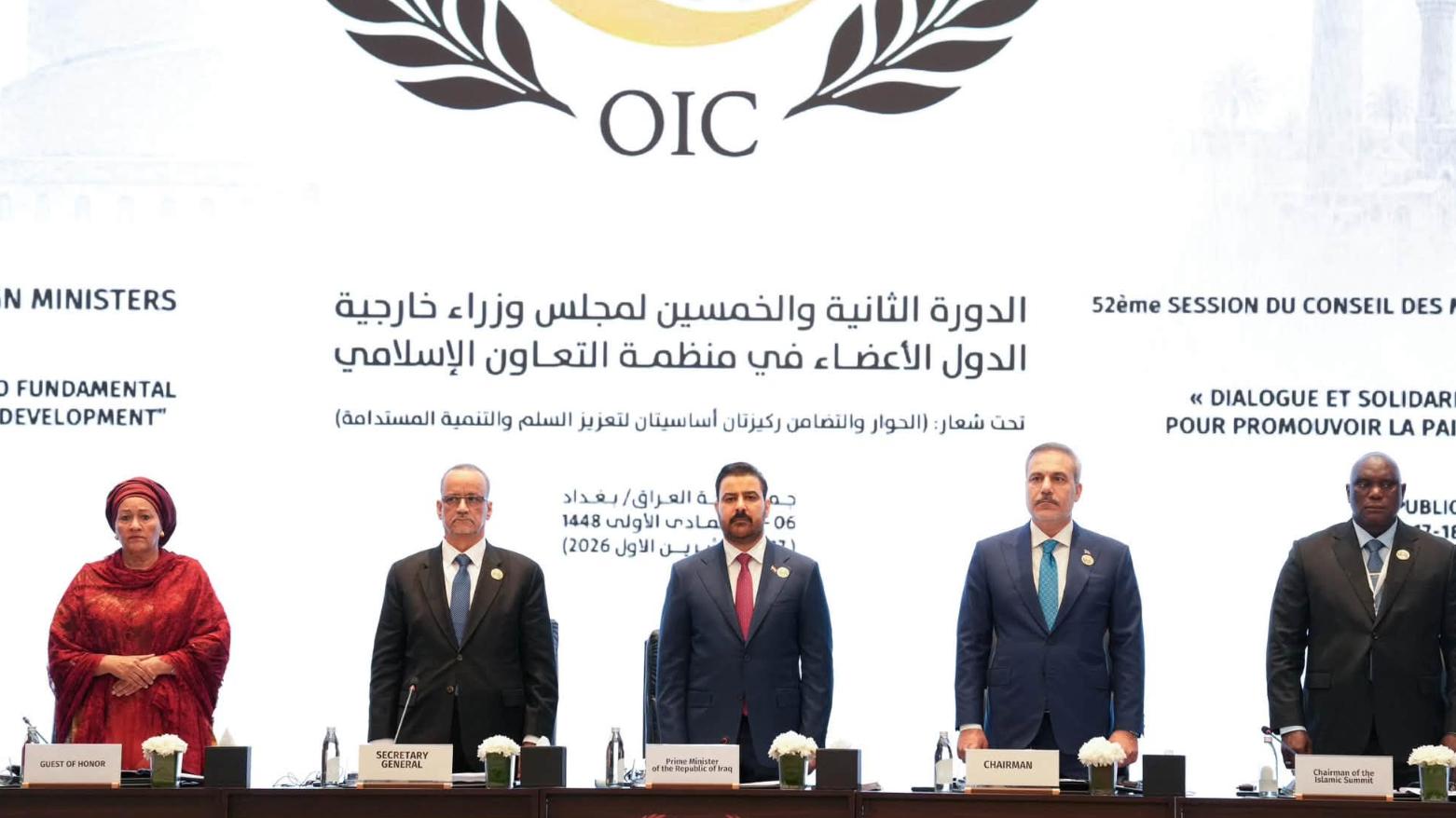
The Organization of Islamic Cooperation held its 52nd session of the Council of Foreign Ministers in Baghdad, Iraq, with regional crises and Palestine high on the agenda. Iraqi Prime Minister Ali Faleh al-Zaidi opened the meeting and told delegates, “What we are witnessing in terms of crises at the regional and international levels calls for greater joint action to protect the interests of our peoples,” while reaffirming Iraq’s position that the Palestinian issue remains at the core of the conflict in the region. OIC Secretary-General Ismail Ould Cheikh Ahmed condemned recent attacks on Saudi Arabia as a “blatant violation” of the kingdom’s sovereignty and said they threaten the safety of Islamic holy sites and regional stability.
“The meeting is expected to conclude with the adoption of the ‘Baghdad Declaration.’”
The meeting, held under the theme “Dialogue and Solidarity: Two Essential Pillars for Promoting Peace and Sustainable Development,” addressed Israel’s ongoing attacks in Gaza and developments in other crisis zones across the Islamic world. Türkiye transferred the organization’s rotating presidency to Iraq during the Baghdad gathering, with the session expected to conclude with the adoption of the “Baghdad Declaration.”
Fidan’s Gaza and aid push
Turkish Foreign Minister Hakan Fidan was set to attend the OIC foreign ministers’ meeting in Baghdad on October 17-18 and was expected to describe Israel’s aggressive and expansionist policies as the biggest security threat to the Middle East. Fidan was expected to urge OIC members to coordinate their response with responsible international actors and to call for steps to protect Jerusalem’s status, oppose further moves by countries to relocate their embassies there, and reaffirm that a two-state solution is the only path to a just and lasting peace. Fidan was also expected to stress the need to ensure uninterrupted humanitarian aid reaches people in Gaza.
The Turkish foreign minister was expected to address rising tensions in the Gulf and around the Strait of Hormuz, emphasizing safe and free navigation through the Strait of Hormuz and Bab al Mandab for regional stability and global trade. Türkiye’s foreign ministry said the meeting would see Türkiye transfer the organization’s rotating presidency to Iraq, which it had held since June 2025, and that discussions were expected to cover Israel’s actions in Gaza and across the occupied Palestinian territories.

Diplomacy, declarations, and pressure
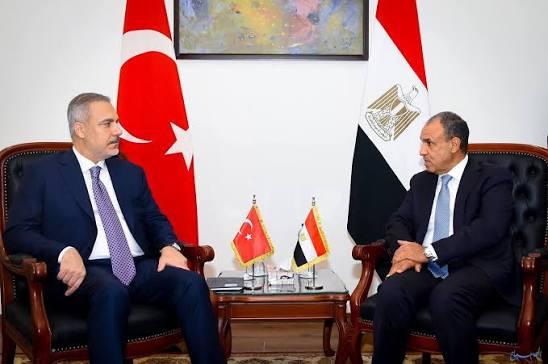
Egyptian Foreign Affairs and Migration Minister Dr. Badr Abdelatty met Turkish Foreign Minister Hakan Fidan on the sidelines of the 52nd session in Baghdad to exchange perspectives and coordinate initiatives aimed at de-escalating regional tensions.
Ambassador Nader Zaki said Abdelatty emphasized the importance of continuing diplomatic efforts and supporting political solutions, while Abdelatty also rejected the use of maritime corridors and straits as tools for pressure and escalation.
Abdelatty and Fidan reviewed proposals for containing the Iranian crisis and emphasized the need for a return to negotiations and diplomacy between the United States and Iran to reach understandings that would end the current escalation.
The OIC meeting also placed Israel’s actions in Gaza at the center of the agenda, with Anadolu reporting that the two-day session was addressing Israel’s ongoing attacks in Gaza and developments in other crisis zones across the Islamic world.
The meeting’s diplomatic framing linked regional security to Palestinian rights, as Iraqi Prime Minister Ali Faleh al-Zaidi said ensuring justice for the Palestinian people and guaranteeing their rights were essential to regional security and stability.