
Iran · 05 July, 2026 · 3 min read
IRGC Missile And Air Strikes Hit U.S. Bases In Kuwait And Bahrain, CENTCOM Confirms
IRGC struck eight U.S. sites, including Kuwait's Ali Al-Salem Base and Bahrain's Fifth Fleet. CENTCOM confirmed attacks on targets in Iran; alert sirens activated in Kuwait and Bahrain.
Whose broader agenda dominates the article.
7 of 8 outlets skipped it: acting defense minister says Strait must not be exploited.
13outlets compared
Same story, two versions
tap a side to read it in full
خبرگزاری فارس
“If you haven't registered yet, sign up now to see news you would like.”Read the original ↗
ایران آنلاین
“New American aggression against Iran and violation of the ceasefire”Read the original ↗
Many outlets reuse IRGC/foreign-ministry claims but one unrelated Fars piece adds noise.
Ceasefire turns to strikes
The Arabian Gulf entered what عين ليبيا described as the “fiercest and worst cycle of military escalation since the United States and Iran signed a ceasefire about two weeks ago,” as the Islamic Revolutionary Guard Corps launched missile and air strikes that hit American bases and facilities in neighboring countries.
The U.S. Central Command (CENTCOM) confirmed that fighter aircraft from the Navy and the Air Force conducted strikes “tonight targeting 10 Iranian military sites inside and near the Strait of Hormuz,” after CENTCOM said Iran had an opportunity to comply with the ceasefire but chose not to.

CENTCOM said the strikes came in direct response to Iranian aggression against commercial shipping, and it added that they targeted Iranian facilities for military surveillance and communications, air defense, storage of drones, and mine-laying facilities.
On the Iranian side, the IRGC stated in a communiqué that it targeted early Sunday morning eight major facilities belonging to the American military in the Al-Salem base in Kuwait and at the headquarters of the Fifth Fleet in the port of Salman in Bahrain.
The IRGC also stressed that “Tehran will respond with greater force to any further American violation of the ceasefire,” while the U.S. side framed its actions as a response to the drone attack that hit the tanker KiKo at 4:30 a.m. Eastern Time.
Threats and competing narratives
In a separate account, اليـوم السابع said the IRGC stated it “targeted eight sites of the U.S. Army” at Ali Al-Salem Base in Kuwait and the Fifth Fleet in Bahrain, describing the operation as “a decisive response to the American aggression that targeted five coastal sites south of the country.”
The same report said the IRGC confirmed that “the necessary arrangements to control navigation in the Strait of Hormuz” are in Iran’s hands under the memorandum of understanding, and it warned that any new aggression “will be met with a crushing response.”
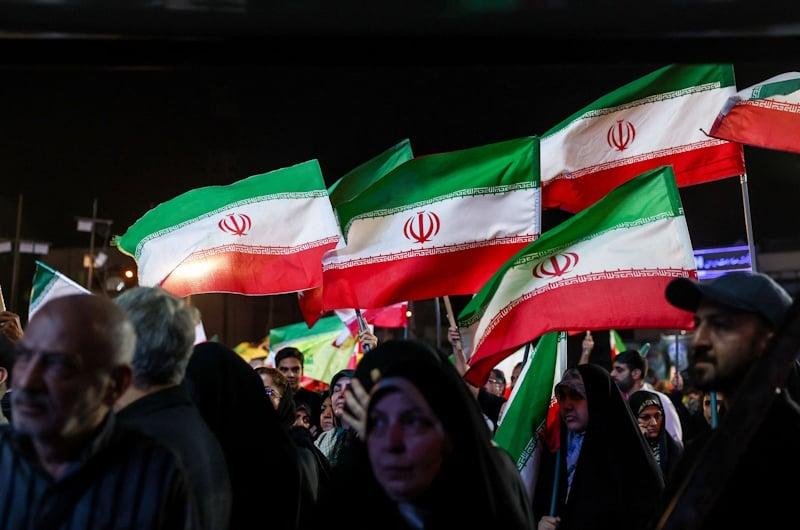
On the American side, the same عين ليبيا report quoted President Donald Trump delivering direct warnings, saying “American aircraft have just bombed missile and drone storage sites and coastal radar facilities in Iran.”
Iranian officials also framed the confrontation as a matter of leverage and exit from the region, with وكالة القدس للأنباء citing IRNA’s claim that “its control of the Strait of Hormuz could form a security mechanism that gradually leads to the United States being driven out of the region.”
Together, the sources present a reciprocal escalation in which each side ties its next move to the other’s ceasefire violations, with the IRGC emphasizing navigation control and Trump emphasizing strikes on missile, drone, and radar sites.
What is at stake next
The sources frame the immediate stakes around the Strait of Hormuz and the ceasefire’s enforceability, with عين ليبيا saying the IRGC stated that arrangements to control navigation in the Strait of Hormuz are “in Iran’s hands under the Memorandum of Understanding.” خبرگزاری میزان reported that CENTCOM said U.S. forces, after Iran’s latest attack on a merchant ship, were launching more attacks, and it added that “Commercial shipping continues to move through the Strait of Hormuz.” In the same report, Kuwait and Bahrain were placed on alert, with Bahrain’s Ministry of Interior announcing that “the danger siren has sounded nationwide,” and Kuwait’s Ministry of Interior urging citizens to avoid standing by windows and exposed locations and to stay in a safe place.
For Iran, the consequences are also described in terms of deterrence and escalation control, with خبرگزاری فارس quoting Sardar Ibn al-Ridha saying “A ceasefire violation will be met with a decisive response.” خAcross the accounts, the next phase is portrayed as contingent on further ceasefire violations, as the IRGC repeatedly tied its response to “Clause One of the Islamabad Agreement” and CENTCOM tied its strikes to Iranian actions against commercial shipping and the continued movement of vessels.