Iran · 17 August, 2026 · 3 min read
Iran Foreign Ministry Spokesman Esmaeil Baqaei Rejects 60-Day US Deadline for Nuclear Talks
Iran rejects a 60-day deadline, says the memorandum has no such provision. Tehran says it does not negotiate under pressure and US violated the understanding.
Meaning of the 60-day deadline after it expires.
4 of 5 outlets skipped it: qatar found one pilot’s remains and invited review of search.
The New York Times was read line by line by the Watchdog: 3.6. See the score →
11outlets compared
Same story, two versions
tap a side to read it in full
The New York Times
“missed their 60-day deadline to reach a deal to curtail Iran’s nuclear program”Read the original ↗
TRT World
“the 60-day period outlined in a June 17 memorandum of understanding with the US had ‘lost its relevance’”Read the original ↗
NYT frames it as a missed nuclear-deal deadline; Tasnim and TRT treat it as irrelevant.
Deadline passes, talks stall
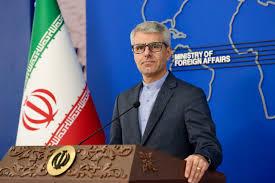
Iran’s Foreign Ministry spokesman Esmaeil Baqaei said on Monday that there was “no provision in the text of the memorandum” establishing a 60-day deadline, arguing the document only envisaged negotiations on the nuclear issue within 60 days. Baqaei said, “We did not start any negotiations at all, and the US violated the understanding from the very beginning; therefore, the 60-day issue is not relevant,” as the United States and Iran missed their 60-day deadline to reach a deal to curtail Iran’s nuclear program under the terms of the cease-fire agreed in June. The New York Times reported that the expiration of the deadline was “largely symbolic,” with both President Trump and Iran’s leaders saying the deal was “basically dead,” while the conflict entered its sixth month.T
The New York Times also said the June memorandum failed to reopen the Strait of Hormuz, which Iran effectively blockaded after Israel and the United States attacked in late February. TIn parallel, the Jerusalem Post reported that the 60-day window established in the June MoU expired on Monday with no breakthroughs between Washington and Tehran, leaving them divided over the Strait of Hormuz and Iran’s nuclear program.
Competing narratives and quotes
Baqaei told reporters that Iran would make decisions based on national interests rather than being compelled by a deadline, saying, “Iran is not a party that adjusts its policies under pressure and deadlines.” The New York Times quoted Esmail Baghaei saying the negotiations on the nuclear deal “never began,” adding that the 60-day period was “fundamentally no longer relevant.” TThe Jerusalem Post described President Donald Trump’s position after the MoU’s expiration, saying he announced on Truth Social that the “number one Goal” was to prevent Iran from having “in any way, shape, or form, a Nuclear Weapon.”
The Jerusalem Post also reported that an Iranian official told reporters, “There are no talks about an extension,” responding to a report by Turkey’s Anadolu news agency that cited sources in the Pakistani government claiming Tehran and Washington had agreed to extend the period. TRT World framed Iran’s stance by quoting Baqaei that the 60-day US talks deadline “has lost relevance” following what he called “flagrant” violations by Washington.T

Hormuz, sanctions, and next moves
As the 60-day window passed, the New York Times said the United States and Iran appeared to be gearing up for a protracted campaign of economic attrition that could tip into renewed warfare, with Iran wielding control of the Strait of Hormuz to choke global energy markets. TThe New York Times reported that there have been no publicly reported U.S. strikes on Iranian targets since late July, while the expiration of the deadline left the sides at risk of further military conflict. TArab News PK reported that the Pakistan-brokered deadline for the United States and Iran to negotiate a final agreement ending their war expired today, Monday, with talks stalled and no publicly confirmed extension of the framework.
Arab News PK also said the 14-point agreement declared an immediate and permanent termination of military operations and laid out commitments covering the Strait of Hormuz, the US naval blockade, sanctions, Iran’s nuclear program and frozen Iranian assets. In the same context, The New York Times said the original deal provided for the 60-day period to be extended if necessary, but the milestone nonetheless showed how Trump struggled to achieve his war aims and how emboldened the Iranian government felt, with both sides at risk of further military conflict.T