Iran28 April, 20265 min read
IRGC Navy Deputy Mohammad Akbarzadeh Says It Will Confront U.S. Aggression With Surprise Tactics
This article is an automated aggregation of coverage from news outlets. Our editorials offer in-depth analysis curated by the NewsCord team.
IRGC Navy vows to confront U.S. aggression with surprise tactics. Emphasizes asymmetrical warfare using fast boats and drones.

Minab, Hormuz, and retaliation
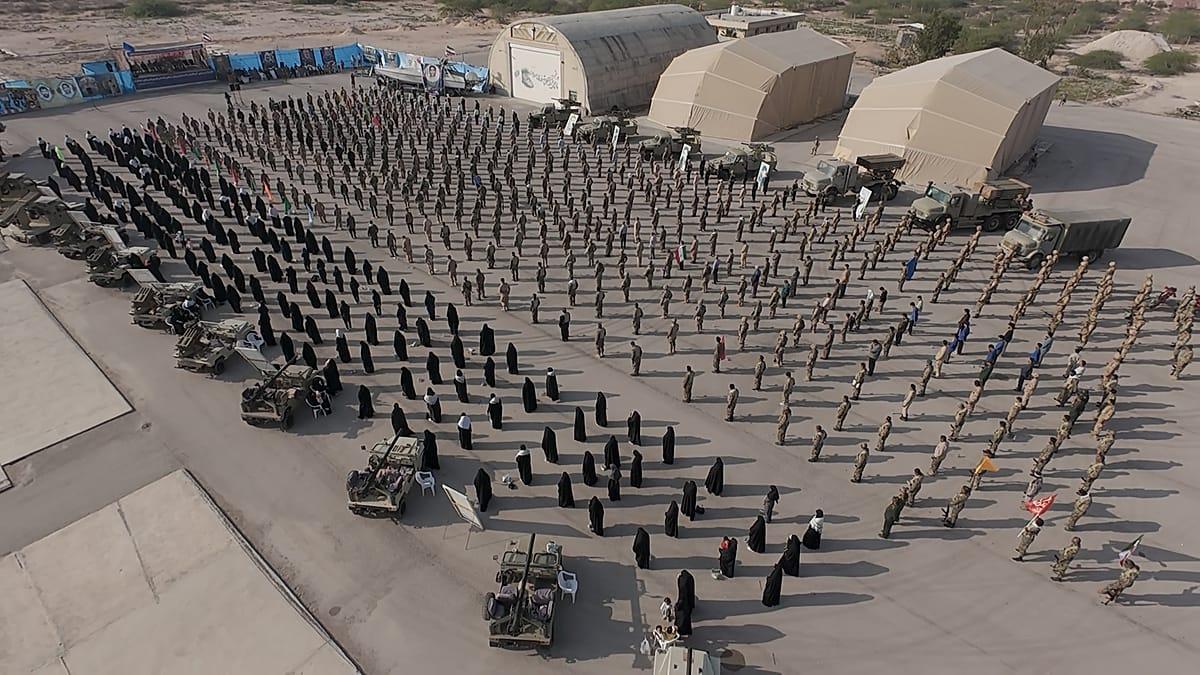
Iran’s IRGC Navy leadership said it would confront any fresh American aggression with “surprise tactics,” framing the response as both operational and strategic. PressTV reported that Mohammad Akbarzadeh, the IRGC Navy’s deputy for political affairs, made the remarks on Tuesday in the southern Iranian city of Minab, where “more than 170 schoolchildren and staff were martyred” on the first day of the latest bout of “the US's and the Israeli regime's unprovoked aggression” on February 28. Akbarzadeh said, “In the event of any [fresh] military action by the United States against Iran, the IRGC Navy will deploy its new capabilities,” and added that the Navy would “employ its new cards, including in the field of smart targeting.”
PressTV further quoted him saying the IRGC Navy would “set the massive vessels of the criminal regime ablaze with its fury and take them out of operation.” The same report asserted that Iran’s Armed Forces faced the aggression with “at least 100 waves of decisive and retaliatory counterstrikes” against “sensitive and strategic American and Israeli targets.” PressTV also said the reprisal was “partly conducted in cooperation with regional resistance groups” and that the US announced “a two-weak lull” on April 7 before extending the ceasefire upon its expiry.
Mines, speed, and the Strait
Across Iranian and regional reporting, the Strait of Hormuz is presented as the focal point for maritime pressure, with multiple outlets describing a mix of threats, tactics, and potential disruption. In Khabaronline’s account, it says the Supreme Leader Ayatollah Ali Khamenei responded to statements by Donald Trump, including a claim that “we sent a carrier toward Iran,” and Khamenei said, “Well, a carrier is indeed a dangerous platform, but more dangerous than the carrier is the weapon that could drive this carrier to the depths of the sea.” The same report frames Hormuz mining as a “hard blow,” quoting that “Laying mines in the Strait of Hormuz will deal a hard blow to the U.S. military.”
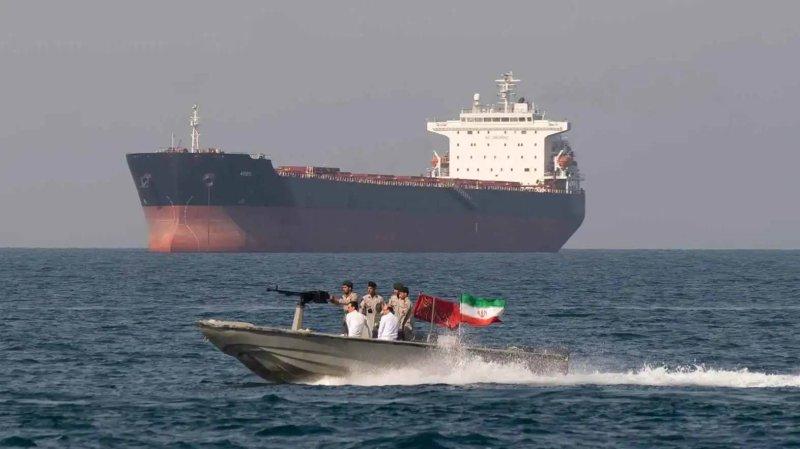
It also cites Admiral Alireza Tangsiri, saying, “The decision to close the Strait of Hormuz rests with the nation’s leaders, and as a soldier I say we are ready to do this whenever our leaders instruct us.” Tabnak’s description of IRGC Navy doctrine emphasizes “asymmetric tactics and innovations,” arguing the force uses “fast boats” and “naval drones” alongside “short-range cruise missiles.” Tabnak says fast boats “can reach speeds in excess of 70 kilometers per hour,” and it describes how drones “monitor the routes of enemy ships and relay data to commanders in real time.”
Assassinations and a task map
Other reporting describes the conflict as a division of labor between Washington and Tel Aviv, with each side pursuing different objectives inside Iran.
الجزيرة نت says “data has emerged indicating a 'division of tasks' plan that has turned Iranian territory into 'zones of military influence,'” and it characterizes the United States as pursuing “what could be described as a 'strategic destruction' of logistical and naval capabilities,” while Israel undertakes “assassinations and attempts to 'dismantle the security apparatus' in the country.”
The outlet attributes to U.S. Central Command commander Admiral Brad Cooper the aim “to 'undermine Iran's ability to halt navigation in the Strait of Hormuz.'”
It further states that Central Command announced it “struck more than 6,500 targets in the first ten days of the war,” and that it “destroyed or damaged at least 50 Iranian ships.”
For Israel, الجزيرة نت says the New York Times reported that Israeli attacks “target the country’s internal security apparatus as part of Prime Minister Benjamin Netanyahu’s strategy to destabilize the government and create conditions for a popular uprising.”
The outlet then lists Israeli military announcements of assassinations, including “Supreme Leader Ali Khamenei (February 28)” and “Secretary of the Supreme National Security Council Ali Larijani (March 17).”
Tangsiri targeted in Bandar Abbas
A separate thread in Western mainstream reporting centers on the IRGC Navy commander Alireza Tangsiri and claims about his death, while also tying him to the “de facto closure strategy” for the Strait of Hormuz. Euronews reports that “Israeli press reports on Thursday” said “the assassination of the IRGC Navy Commander Alireza Tangsiri was carried out in an airstrike targeting him in Bandar Abbas, southern Iran.” It says “The official Hebrew media quoted an unnamed Israeli source” and that the strike “resulting in the death of Admiral Alireza Tangsiri in Bandar Abbas on the Persian Gulf.”
Euronews adds that “The Israeli Broadcasting Authority confirmed that Tangsiri oversaw strengthening the IRGC's naval capabilities,” including “developing fast-boat tactics, coastal missiles, and drones.” The report also says “Iranian authorities did not comment on the reports,” while “activists circulated on social media a video showing the destruction of a building in Bandar Abbas after an airstrike.” It further states that Tangsiri “has been the commander-in-chief of the IRGC Navy since 2018,” and it describes him as “the architect of the de facto closure strategy of the Hormuz Strait.”
Shipping, food, and next moves
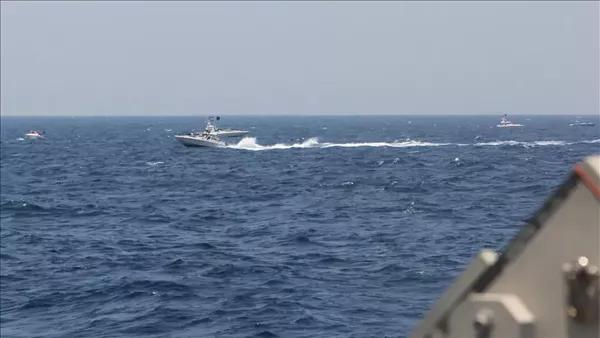
The sources also describe immediate economic and logistical consequences tied to Hormuz traffic, alongside competing claims about what comes next for navigation and energy. شبكة قدس الإخبارية says MarineTraffic data shows “a noticeable decline in cross-traffic density through the Strait of Hormuz,” with the strait “almost empty of ships” after Iran imposed “a ban on passage for all vessels.” It says the expected decline in ships entering the UAE, Qatar, and Bahrain was “confirmed by Abu Dhabi Ports Group,” and that the group said it “activated crisis management and business continuity procedures” to keep services uninterrupted at Khalifa Port.
The same report says the British Financial Times warned of “rising food prices in Gulf countries and worldwide due to disruptions to the Hormuz Strait,” and it adds that “disruptions to maritime navigation through the Hormuz Strait pose a serious threat to food supplies to Gulf states.” PressTV asserts that “Post-war transit through Hormuz only possible under Iran's security protocols,” and it says American officials admitted Iran “continues to maintain substantial military capabilities.” Lebanon Debate adds that even after Trump affirmed destruction of much of Iran’s naval fleet, “Tehran continues to threaten closing the Strait of Hormuz,” and it says the “mosquito fleet” still poses a “real threat” despite “heavy losses.”
