Full story
Ali al-Taher standoff
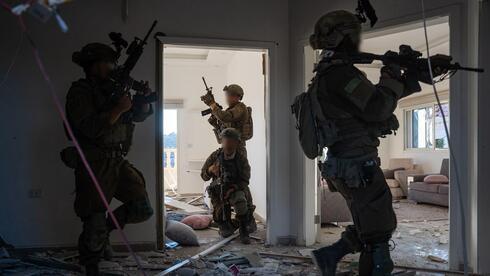
Israel is seeking to gradually seize the strategic Ali al-Taher Heights east of Nabatieh in southern Lebanon while Hezbollah categorically rejects any discussion of evacuating the site, raising the risk that Israel could turn to a “third option”: resuming fighting in southern Lebanon.
“Israel is seeking to gradually seize the strategic Ali al-Taher Heights east of Nabatieh”
Hezbollah’s refusal is tied to the site being “north of the Litani River,” and the group “insists on implementing the Nov. 27, 2024 agreement, based on UN Security Council Resolution 1701,” which it says provides for an end to the aggression, an Israeli withdrawal and exclusive state control over weapons south of the Litani.

A U.S. proposal would have the Lebanese army take over the site so Israel could verify the handover, but Hezbollah views it as “a maneuver” because all sides already know the group will reject it.
Lebanese sources familiar with Israeli movements around the heights say Israel’s military option could begin with “gradual encroachment,” involving making the area unlivable, cutting off supplies and preventing fighters from being rotated in and out.
The Asharq Al-Awsat account says failure of Israel’s strategy before elections could lead to an open battle similar to what prevailed before the ceasefire agreement took effect on June 14.
Hezbollah signals and disputes
Hezbollah’s position is presented as firm in Naharnet, where a prominent Hezbollah source told al-Joumhouria that the group “has no intention of surrendering the Ali al-Taher hill to the Lebanese Army, the enemy, or any other party.”
That same account frames any possible outcome as a battle or a compromise, adding that “Ultimately, the enemy could take the hill, but only through a battle,” because “the culture of surrender and capitulation is not part of the resistance’s culture.”

At the same time, Qmati told al-Manar television that “The resistance has decided to be patient and give the existing political process a chance,” and he said Hezbollah is not completely closing the door to direct communication with Washington.
Qmati also said that regarding Ali al-Taher the resistance’s decision is “to stand firm and confront the situation, while studying all options related to the location,” while categorically denying “the presence of any Iranian fighters within the ranks of the resistance in southern Lebanon.”
The L’Orient Today analysis adds that within Hezbollah “two views are currently emerging in more closed circles,” including one tied to Mohammad Ghalibaf’s claim of direct contact with fighters at Ali Taher and another that portrays Israel as exaggerating the hill’s significance for Netanyahu’s political aims.
What is at stake
The Asharq Al-Awsat analysis frames the Ali al-Taher battle as a test of Hezbollah’s capabilities, focusing on whether Israel can “suffocate the force deployed in the area” using firepower, air power and surveillance.
“the main challenge facing Hezbollah is maintaining its ability to maneuver”
Retired Brigadier General Bahaa Hallal says Hezbollah’s “core strength is not simply holding the hilltop, but its ability to operate in depth,” while warning that underground fortifications can become “a burden if the area around them becomes besieged or isolated.”
Retired Brigadier General George Nader describes the hill as overlooking a wide area north of the Litani River and says it contains “underground facilities and a network of tunnels linked to ammunition, logistics, missiles, drones, fighters and operations rooms.”
Nader argues that Israeli control would give Israel “greater leverage and a greater ability to impose its terms in future rounds of negotiations,” and he expects a major Israeli attack to seize the hill with political implications for Benjamin Netanyahu.
Asharq Al-Awsat also warns that such developments carry the risk of renewed fighting between Israel and Iran, with the prospect of war resuming in Lebanon “remains on the table,” because Ali al-Taher is described as “a flashpoint that could reignite the war.”