West Bankupdated 1h ago3 min read
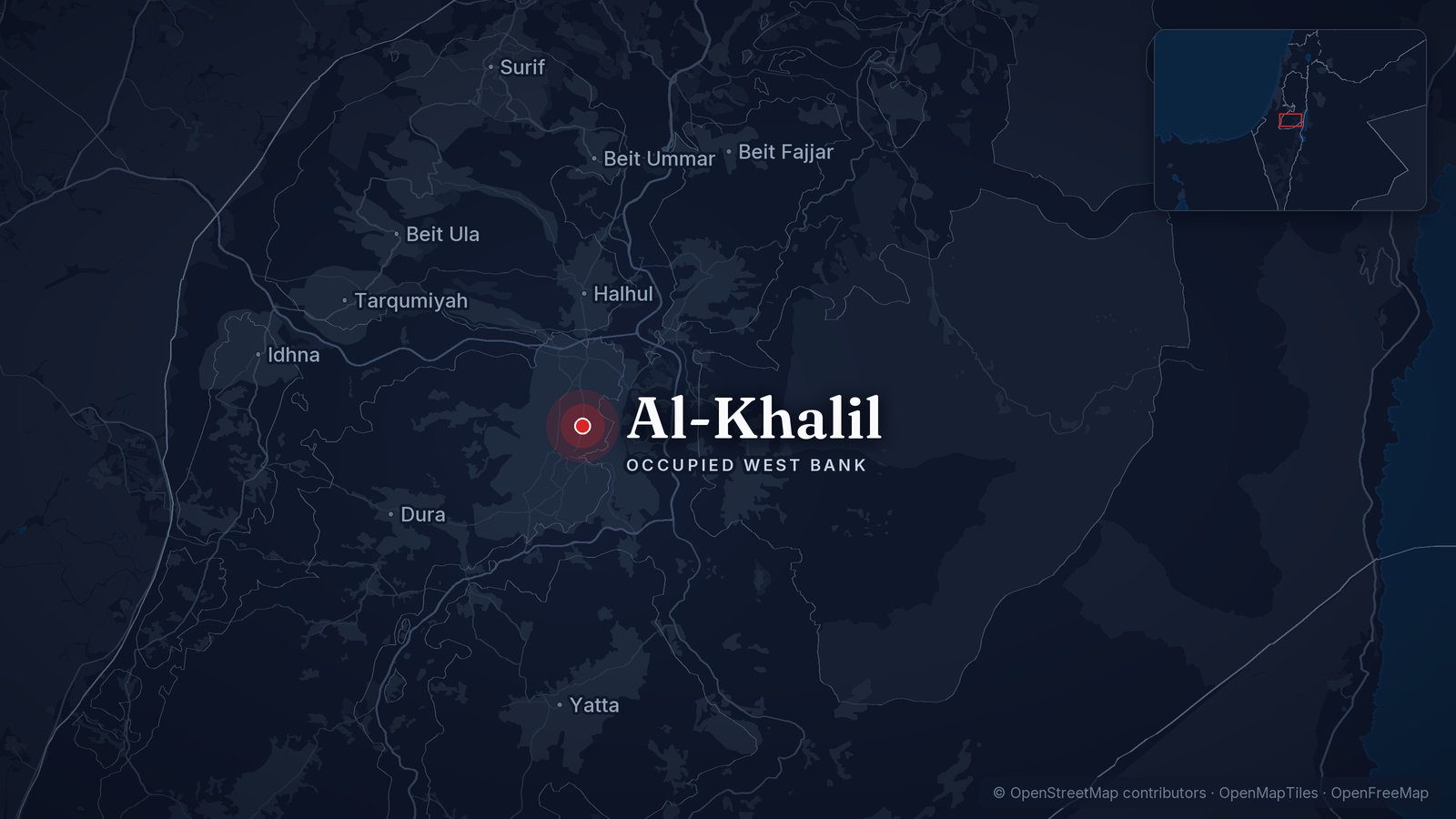
MapIsraeli Forces Turn Hebron Homes Into Military Posts, Displacing 293 Families
“As part of what it termed an ‘operation to thwart terrorism’”
“He criticized the Israel’s actions as ‘collective punishment’ against Palestinians”
Map: © OpenStreetMap contributors, ODbL · Cropped for layout
This article is an automated aggregation of coverage from news outlets. Our editorials offer in-depth analysis curated by the NewsCord team.
Israeli forces forced residents to flee, turning Hebron homes into military posts. Homes in Khallat Manna and Dahiyat al-Zaytoun were seized for barracks.
www.ynetnews › article was read line by line by the Watchdog: 5.4. See the score →
Hebron turned into posts
Israeli forces turned Palestinian homes in Hebron into barracks and observation posts after forcing residents to leave, with Wafa reporting that the takeovers occurred in the Khallat Manna and Dahiyat al-Zaytoun areas of southern Hebron. Israeli forces imposed a lockdown in Hebron and conducted hundreds of raids after two armed Palestinian men allegedly carried out an attack on an Israeli army reserve base on Friday, killing two soldiers, and the two suspects were also killed. The Palestinian Prisoner’s Society said Israeli forces detained at least 47 Palestinians across Hebron since Friday and forcibly displaced 293 families, comprising about 2,200 people, including 127 infants, 81 pregnant women, and 26 people with disabilities.
The Palestinian Prisoners’ Club said in a statement to Al Jazeera that Israeli forces arrested 47 Palestinians in Hebron since Friday and displaced 293 Palestinian families totaling about 2,200 people. Activist Osama Makhamra told Wafa that settlers began establishing two new outposts on Palestinian-owned land in Yatta, including a tent in the Khallet al-Fara area and infrastructure work in the Yatta desert area between az-Zuweidin and Umm Qussa.
Crossings closed for election
The Israel Defense Forces announced a ban on the entry and exit of Palestinian workers throughout Judea and Samaria and the Jordan Valley, including industrial zones, and it said it would close all land crossings during Tuesday's election in Israel.
The Israel Defense Forces said most workers would also be barred from settlements from Sunday, with the exception of industrial zones and a limited number of other areas, and the BBC reported that the restrictions came amid a crackdown after Palestinian gunmen killed two Israeli soldiers in the territory.
Prime Minister Benjamin Netanyahu threatened a "very big surprise" for the Palestinian Authority in an interview with Israel's i24 television channel released on Saturday, and Hebron Mayor Youssef al-Jaabari said the operation was being "driven by the elections".
The Israeli military said it operated in more than 400 different locations over the weekend and arrested 40 Palestinians it claimed were affiliated with Hamas or Palestinian Islamic Jihad, while the operation continued at the same intensity on Sunday.
Hebron Mayor Yousef Zuhair Al-Jabari said, "People cannot reach or enter the city, and they cannot leave it. The blockade has affected every aspect of life," as entrances and exits to the city remained sealed.
Displacement and international pressure
The Hebron municipality estimated that 35 hectares (86 acres) had been destroyed or marked for destruction and said about 1,500 people had been evicted from their homes by Saturday afternoon in the district of Ein Deir Baha. A spokesperson for the Hebron municipality said that about 300 families had been evicted, and Wafa reported Israeli plans to displace a further 2,500 people. A Hebron civil rights activist, Issa Amro, said, "We are being collectively punished for something we neither did nor supported," and he added, "Our suffering is being turned into political material for Israel’s elections, while innocent families pay the price."
The Palestinian Authority called for urgent international intervention to stop forcible displacements, home demolitions, and Israeli military operations in Hebron, where around 1,500 Palestinians had to leave their homes and another 2,500 could be evacuated in the coming hours. The Palestinian Foreign Ministry warned that forced evacuations and property demolitions could repeat the mass displacement of Palestinians during the 1948 Nakba, and it urged preventing what it describes as possible acts of ethnic cleansing and genocide.