Gaza Genocide01 April, 20256 min read
Israeli Forces Kill Eight PRCS Medics and Six Civil Defence First Responders in Rafah
This article is an automated aggregation of coverage from news outlets. Our editorials offer in-depth analysis curated by the NewsCord team.
Eight PRCS medics, six Civil Defence responders, and one UN staff member killed in Rafah. Ambulances, a fire truck, and a UN vehicle struck in al-Hashashin area.
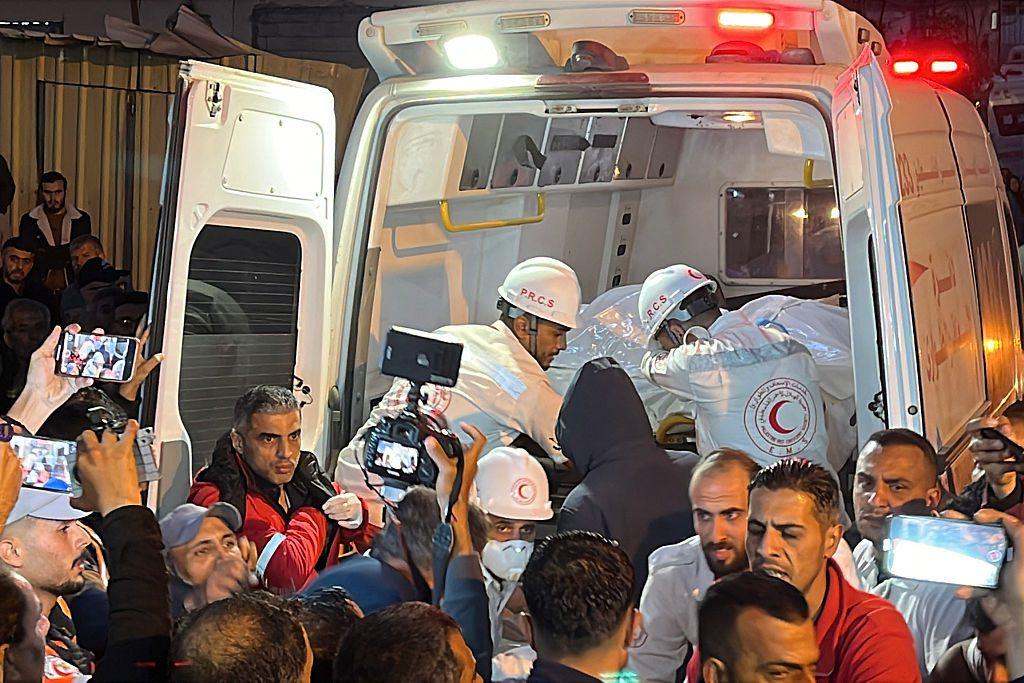
Medics killed in Rafah
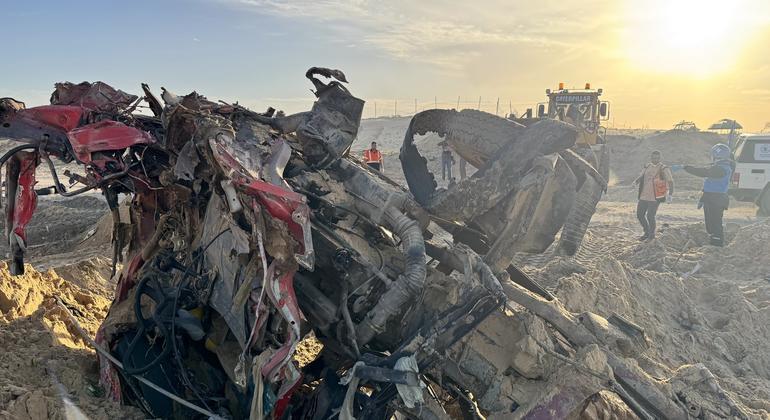
Israeli forces killed eight Palestinian medics from the Palestine Red Crescent Society (PRCS), along with six civil defence first responders and a UN staff member, in an attack in southern Gaza that unfolded in the Rafah area and specifically in the al-Hashashin area on 23 March.
The International Federation of Red Cross and Red Crescent Societies (IFRC) said it was “outraged” after the deaths of “eight medics from PRCS [Palestine Red Crescent Society], killed on duty in Gaza,” and stated that the bodies were retrieved after “seven days of silence” and “having access denied to the area of Rafah where they were last seen.”
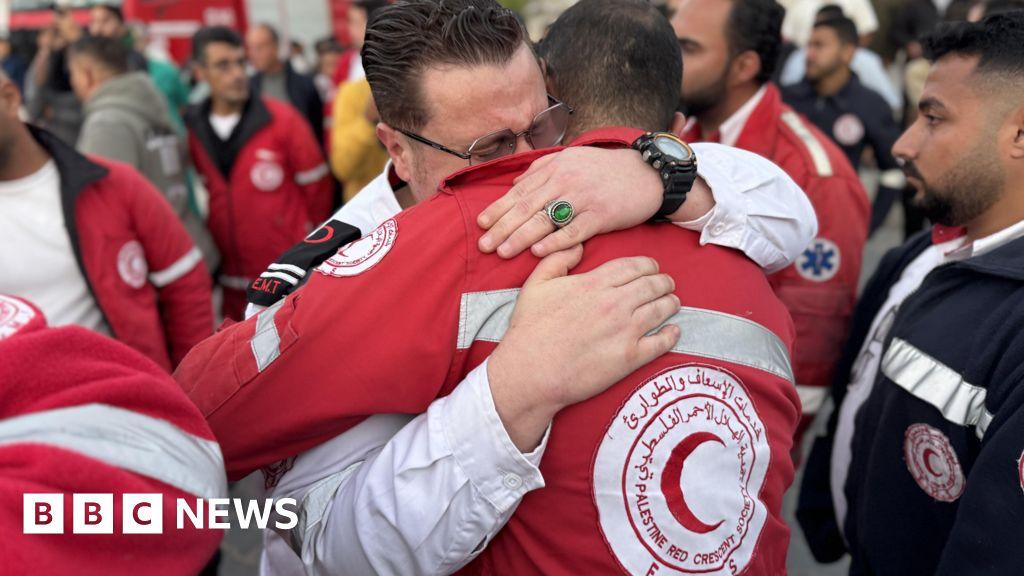
The IFRC secretary general, Jagan Chapagain, said in a statement: “I am heartbroken,” adding that “These dedicated ambulance workers were responding to wounded people. They were humanitarians.”
Chapagain emphasized that the medics “wore emblems that should have protected them; their ambulances were clearly marked,” and said “They should have returned to their families; they did not.”
The BBC reported that five ambulances, a fire truck and a UN vehicle were struck “one by one” in the al-Hashashin area on 23 March, and that the 15 bodies were recovered from a “mass grave” on Sunday.
The UN relief chief Tom Fletcher demanded “justice and answers” after the killings, saying the clearly identified humanitarian workers had been despatched to collect injured people on 23 March in the Rafah area when they “came under fire from Israeli forces who were advancing in the area.”
Timeline and escalation
The killings were reported as occurring in the context of a renewed Israeli offensive in Rafah and the collapse of a ceasefire, with multiple sources tying the incident to the broader escalation. The Guardian said the incident occurred in Rafah city’s Tel al-Sultan neighbourhood “just days into a renewed Israeli offensive in the area close to the Egyptian border,” and it linked the wider bombardments to the date “18 March,” when Israel resumed “its wider bombardments of Gaza on 18 March, breaking a ceasefire that had lasted almost two months.” UN News similarly stated that the attack occurred “following the collapse of the fragile two-month ceasefire between Israeli forces and Hamas militants on 18 March,” and it reported that “On Monday, Israel issued a new mass evacuation order for the whole of the Rafah region.”
The BBC described the incident as taking place on 23 March, when Israeli forces fired on vehicles “advancing suspiciously” without headlights or emergency signals, and it said the IDF opened fire after the vehicles were “not co-ordinated in advance.” In the same BBC account, the IDF said it had “eliminated a Hamas military operative, Mohammad Amin Ibrahim Shubaki, along with eight other terrorists from Hamas and the PIJ [Palestinian Islamic Jihad].” The Guardian also included the IDF’s framing, quoting Israel’s military statement that troops “opened fire toward Hamas vehicles and eliminated several Hamas terrorists,” and that “A few minutes afterward, additional vehicles advanced suspiciously toward the troops … The troops responded by firing toward the suspicious vehicles, eliminating a number of Hamas and Islamic Jihad terrorists.”
Competing explanations and reactions
The incident triggered sharp, competing explanations from humanitarian leaders, UN officials, and Israel, with Hamas condemning the attack as a war crime.
“They [Israeli troops] targeted the first vehicle, then the second and then the third. They killed them in cold blood.”
The Guardian reported that Israel’s military admitted it had fired on ambulances in the Gaza Strip after identifying them as “suspicious vehicles,” with Hamas condemning it as a war crime.
In the same Guardian account, Chapagain said: “These dedicated ambulance workers were responding to wounded people. They were humanitarians,” and he added that “They wore emblems that should have protected them; their ambulances were clearly marked.”
UN News quoted OCHA’s top official in the Palestinian Occupied Territory, Jonathan Whittall, describing how “For days, OCHA coordinated to reach the site but our access was only granted five days later,” and it said that when UN staff reached the area they encountered “a devastating scene: ambulances, the UN vehicle, and fire truck had been crushed and partially buried.”
Whittall also said, “We witnessed a woman shot in the back of the head,” and described how “When a young man tried to retrieve her, he too was shot.”
The BBC included a direct account from the father of Ashraf Abu Labda at the funeral, where Nasser Abu Labda said: “They [Israeli troops] targeted the first vehicle, then the second and then the third. They killed them in cold blood.”
Different outlets, different emphases
While all the sources describe the same core incident—medics and first responders killed while responding in Rafah—each outlet foregrounded different details, including casualty accounting, the location description, and the framing of Israel’s actions. The Guardian said the incident occurred in Rafah city’s Tel al-Sultan neighbourhood, and it reported that the IFRC said the attack was “the single most deadly attack on its colleagues anywhere in the world since 2017.” It also quoted the IDF’s statement that troops “opened fire toward Hamas vehicles and eliminated several Hamas terrorists,” and it included the IDF’s later conclusion that “some of the suspicious vehicles … were ambulances and fire trucks.”
UN News, by contrast, centered on UN access and the sequence of events after the initial assault, stating that “five ambulances, a fire truck – and a clearly marked UN vehicle” were hit and that “contact was lost with teams.” The BBC provided a more granular casualty list, identifying PRCS medics by name and stating that ambulance officer Assad al-Nassasra was “still missing.” France 24 added a political dimension by reporting that French President Emmanuel Macron urged Benjamin Netanyahu to “put an end to the strikes on Gaza and return to the ceasefire,” and it quoted Macron saying “humanitarian aid must be delivered again immediately.”

Aftermath and what comes next
The aftermath of the killings is presented across the sources as both a humanitarian emergency and a legal and accountability crisis, with calls for access, protection, and “answers and justice.” The ICRC said that on 23 March PRCS volunteers were responding to casualties when the PRCS “lost contact with them,” and it stated that since that day it has been in “regular contact with PRCS and the parties to the conflict, requesting access and coordination to locate these volunteers.” The ICRC also said it “provided on-site technical guidance to the local actors who are tasked with the recovery of human remains in Gaza,” and it reiterated that “International humanitarian law is clear: medical personnel, ambulances, humanitarian relief personnel, and civil defense organizations must be respected and protected.”
“International humanitarian law is clear: medical personnel, ambulances, humanitarian relief personnel, and civil defense organizations must be respected and protected.”
The IFRC press release described the retrieval process in more specific terms, saying an emergency medical team of nine “disappeared along with their ambulances when they came under heavy fire in Al-Hashashin on 23 March,” and that “After seven days of silence and having access denied to the area of Rafah where they were last seen, the bodies” were retrieved on 30 March. UN News reported that UNRWA chief Philippe Lazzarini said the burial of bodies in “shallow graves” was “a profound violation of human dignity,” while also stating that the total killed reached “280 killed since the violence erupted on 7 October 2023.” UN News reported that Israel issued “a new mass evacuation order for the whole of the Rafah region,” underscoring how the operational environment for humanitarian work remains volatile after the attack.