Gaza Genocide22 April, 20268 min read
Israeli Occupation Forces Leave Jabalia Refugee Camp Residents Facing Illnesses, Overcrowding, Sewage
This article is an automated aggregation of coverage from news outlets. Our editorials offer in-depth analysis curated by the NewsCord team.
Jabalia residents return to destroyed homes amid overcrowding; sanitation shortages worsen health. UNRWA food distribution center bombed in Jabalia; two makeshift kitchens damaged.
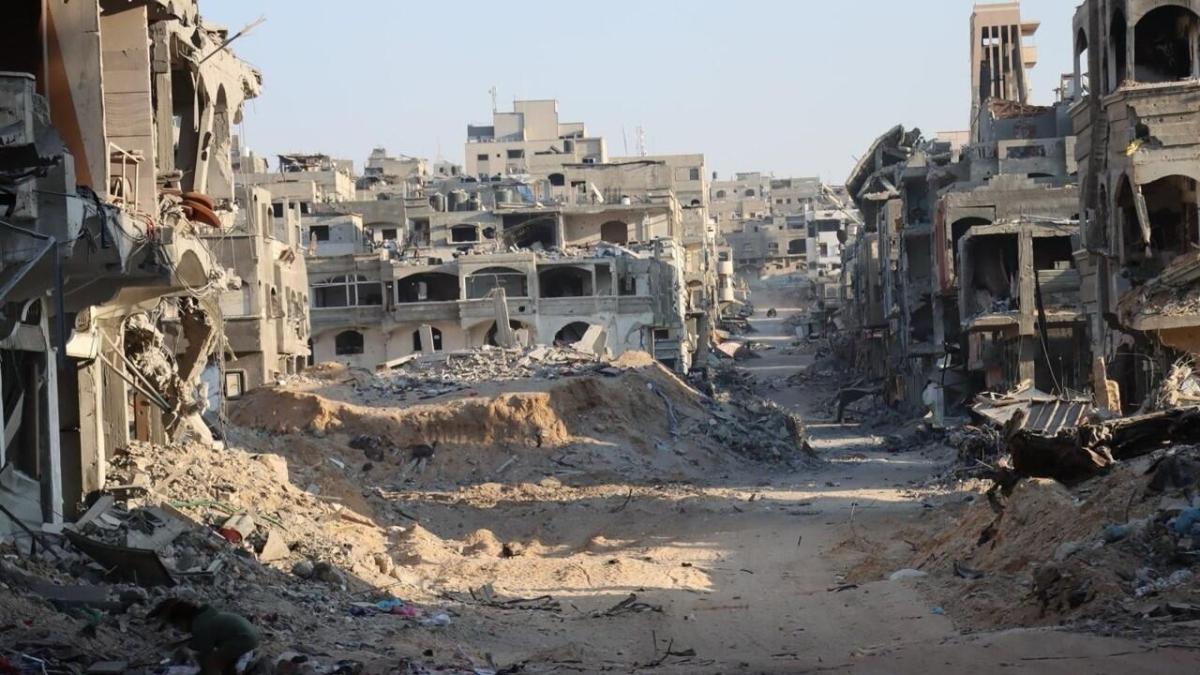
Jabalia’s “Yellow Line”
Displaced people who returned to what remains of their destroyed homes in the Jabalia refugee camp in the northern Gaza Strip are facing illnesses and hardships tied to overcrowding, lack of cleaning materials, and the absence of sanitary tools, according to Al-Jazeera Net. The report says Israeli occupation forces “had completely demolished Jabalia Camp during repeated incursions in the war of extermination waged on the Gaza Strip,” and that they “have retained control over most of its parts within what they call the Yellow Line.” Al-Jazeera Net describes contagious skin diseases spreading as a result of conditions inside camps and shelter centers, including insects and rodents that “cause skin diseases,” and it links the outbreak to “the destruction of the Israeli occupation’s infrastructure” that led to “the spread of sewage water in the streets and neighborhoods.”
The outlet says “Most children in Gaza have been infected with skin diseases,” and it quotes a woman from Jabalia who said she returned because “there was no other alternative for them,” but found “no water, no health care, no education—besides the spread of sewage water and insects and rodents.” The same woman, whose son was martyred in the area, says her children contracted skin diseases “such as scabies” because of “the lack of medicine to treat them.” Al-Jazeera Net also includes testimony from a resident who described the danger as “catastrophic,” saying skin diseases are spreading “among both children and adults without water, medicines, or even bathrooms,” and another displaced person from Beit Hanoun who said they “do not sleep at night or during the day” because of proximity to the Yellow Line and “the ongoing fire from Israeli occupation soldiers and tanks.”

Reproductive health and genocide
A separate thread in the reporting focuses on reproductive health and the legal framing of Israel’s actions in Gaza. L’Express says a UN investigation commission “found that Israeli authorities have partly destroyed the ability of Palestinians in Gaza—as a group—to have children, through the systematic destruction of sexual and reproductive health care.” It adds that “Under the 1948 United Nations Convention, five types of acts can be considered to constitute genocide,” and that “The Commission estimates that two of them were committed in Gaza: measures aimed at hindering births and the intentional imposition of living conditions calculated to destroy a group physically.”
L’Express quotes Chris Sidoti, an Australian human rights lawyer and a member of the Commission, explaining at a Geneva press conference that “We have not concluded that there is a genocide,” while also stating that “We have identified a number of acts that constitute the categories of genocidal acts under the law.” Sidoti also says “We have not yet examined the question of genocidal intent,” and “We will soon be able to address the question of genocide comprehensively.” The report says the Commission points to the destruction of “the largest in vitro fertilization clinic, Al Basma, which housed thousands of embryos,” and it states that this destruction “aimed to prevent births of Palestinians in Gaza and constitutes, in the Commission's view, a genocidal act.”

L’Express further links the Commission’s findings to the “blocking of humanitarian aid in the Gaza war, triggered by Hamas's unprecedented attack on Israel on October 7, 2023,” and it says Israeli security forces “deliberately imposed living conditions designed to bring about the physical destruction of Palestinians in Gaza.” It also reports that “Women and girls died from pregnancy- and childbirth-related complications due to the conditions imposed by the Israeli authorities,” and it says those acts “fall under the crime against humanity of extermination.”
MSF: total destruction and siege
Doctors Without Borders (MSF) describes the war in Gaza as a campaign of total destruction that dismantles the health system and essential infrastructure while also obstructing humanitarian aid. In its report “Gaza: Surviving a Deadly Trap,” MSF says “Repeated Israeli military attacks against Palestinian civilians over the past 14 months, the dismantling of the health system and other essential infrastructure, the siege and the systematic obstruction of humanitarian aid are destroying the very conditions for life in Gaza.” MSF reiterates “its call for an immediate ceasefire by all parties to save lives and enable the delivery of humanitarian aid,” and it says “Israel must halt its targeted or indiscriminate attacks on civilians, and its allies must act without delay to protect Palestinian lives and uphold the laws of war.”
Christopher Lockyear, MSF’s secretary-general, is quoted saying, “The residents of Gaza are struggling to survive in apocalyptic conditions, but no place is safe, no one is spared, and there is no way out of this ruined enclave.” MSF says the north of the territory, “particularly the Jabalia refugee camp, has been subjected to a new siege of extreme violence since October 6, 2024,” and it frames the offensive as “an illustration of the merciless war that Israeli forces are waging against Gaza.” Lockyear adds that MSF has “clear signs of ethnic cleansing as Palestinians are forcibly displaced, trapped and bombarded,” and it states that while MSF “do[es] not have the legal authority to determine intent,” “signs of ethnic cleansing and the ongoing destruction—including massacres, grave physical and psychological injuries, forced displacement and living conditions impossible for besieged and bombarded Palestinians—are undeniable.”
The report also ties its assessment to legal action at the International Court of Justice, noting that “Almost a year ago, on January 26, the International Court of Justice (ICJ) asked Israel to take 'all measures within its power to prevent such commission, including rescinding orders and prohibitions or restrictions on access to humanitarian aid'.” MSF says “The Israeli authorities have taken no meaningful steps to comply with the Court's order,” and it adds that “they continue to prevent MSF and other humanitarian organizations from providing vital assistance.” It further states that “Over the past year, MSF staff have endured 41 attacks and other serious incidents,” and it specifies that staff were forced to evacuate “17 times” from hospitals and care centers.
Hunger, bombing, and aid limits
Reporting from Chronique de Palestine centers on hunger and attacks on food-related infrastructure, describing how Israeli forces bombed an UNRWA food distribution center in Jabalia. The outlet says “Israel bombs an UNRWA food distribution center,” and it reports that by Friday “shortly after sunset, an Israeli missile struck an UNRWA building in the middle of Jabalia refugee camp in northern Gaza, killing four people, including a child according to eyewitnesses.” Chronique de Palestine quotes Al Moatassem Shalayel, 20, telling Drop Site that “The entire area has been destroyed and reduced to rubble,” and it says Shalayel’s uncle, Ehab Abu Hussein, 45, was killed.
It also includes testimony from Shalayel that “I have no uncles or aunts left, only my grandmother,” and it quotes him describing the alleged intent: “Their goal is to starve us to death.” The report says the Israeli army spokesperson stated it had attacked Jabalia using “aerial surveillance assets and precision munitions,” and it adds that Shalayel said, “There is nothing left; everything is completely destroyed.” Chronique de Palestine frames the May 9 attack as part of an intensified bombing campaign “since hostilities resumed on March 18, after a brief 'ceasefire',” and it says Israel “has regularly targeted community kitchens, camps for the displaced, schools, hospitals, 'humanitarian zones' and other civilian gathering places.”

It also reports that “Just on Saturday, Israeli airstrikes destroyed two tents used to prepare meals in Khan Younis and in Gaza,” and it cites Gaza’s Health Ministry saying “more than 2,700 Palestinians have been killed in the past seven weeks, including more than 900 children.” The outlet states that “Since March 2, Israel has also imposed a total blockade on Gaza, barring the entry of all food, medicine, fuel and other essentials,” and it says the blockade is “now in its third month.” Chronique de Palestine further says humanitarian organizations “have halted food distribution, and bakeries have closed,” and it reports that “In recent days, about a third of UN-supported community kitchens” shut “due to depleted food stocks and limited access to fuel.”
Ceasefire violations and wider toll
Anadolu Ajansı reports that Israeli strikes injured Palestinians in Gaza even after a ceasefire, while also placing the conflict’s broader casualty figures and West Bank violence in the same frame. The Anadolu report says “Three Palestinians were wounded Monday during Israeli strikes against the Gaza Strip, marking yet another violation of the ceasefire agreement,” citing medical sources. It specifies that “three people were injured when Israeli strikes targeted the western portion of the Jabalia refugee camp, already severely damaged by previous bombardments,” and it adds that “witnesses told Anadolu that the Israeli strike had targeted an area from which military forces had supposedly withdrawn under the ceasefire agreement.”
Anadolu also says the attacks targeted “the east of Gaza City, in the north of the enclave, the Bureij refugee camp in the center, and the city of Rafah in the south.” In the same report, Anadolu provides a cumulative toll, stating that “Since October 2023, the Israeli army has killed more than 71,200 people in Gaza, mostly women and children, and injured more than 171,200 others.” It adds that “army assaults have continued to target Palestinians in the occupied West Bank on Monday,” including a vehicle strike in Tulkarem reported by Wafa, and it describes “state radio 'Voice of Palestine'” broadcasting footage of Israeli soldiers assaulting a “61-year-old Palestinian from the village of Al-Rakiz, in the Masafer Yatta area, south of Hebron.”
Anadolu says Al-Amour “has already been wounded several times by illegal Israeli settlers,” including “during a shooting in April that led to the amputation of one of his feet.” The report also states that “Since October 2023, Israeli forces and illegal settlers have killed at least 1,103 Palestinians in the West Bank, including East Jerusalem, injured about 11,000 and arrested around 21,000 others, according to Palestinian figures.” Finally, Anadolu references a legal development, saying that “in a historic ruling issued last July, the International Court of Justice declared Israel's occupation of Palestinian territories illegal and called for the dismantling of all settlements in the West Bank and East Jerusalem.”