
Other · 23 August, 2026 · 3 min read
Israeli Settlers Besiege Three Palestinian Families in Qusra, Cutting Water and Electricity
Settlers besieged three Palestinian families in Qusra, cutting water and electricity for days. Israeli army deployed to protect homes, evacuated outpost briefly, but settlers returned amid clashes.
134 outlets told this the same way.
Outlets did split on Jason Arday Found Dead After Resigning From Cambridge Over Plagiarism Allegations →
2 of 3 outlets skipped it: activists supporting Palestinians marched to replenish dwindling food and water.
The New York Times was read line by line by the Watchdog: 6.4. See the score →
134outlets compared
Qusra siege escalates
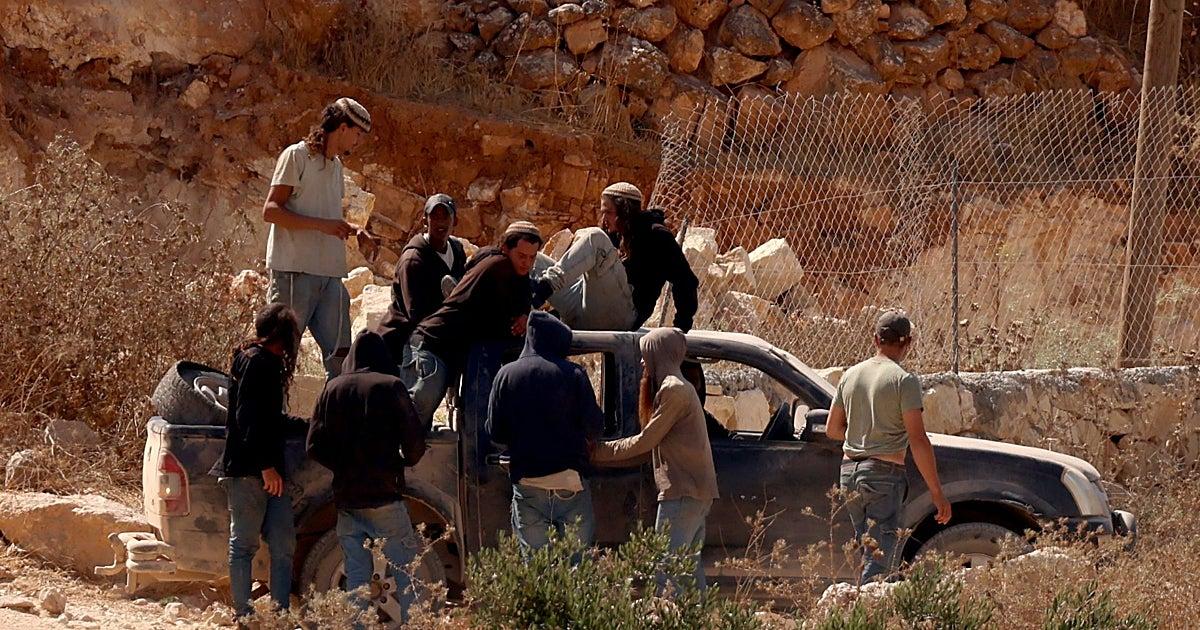
Israeli settlers besieged three Palestinian families inside their homes in the occupied West Bank village of Qusra, cutting off water and electricity while residents described the campaign as an attempt to steal their land. From inside his home in Qusra, Qusai Abu Rida watched on Friday as Israeli settlers moved from where they had erected a tent in front of his house to the valley below, and he said he feared they would again return after the Israeli army left to take over a home owned by his Palestinian American brother in Ohio. The standoff entered a new stage Friday as activists supporting the Palestinians marched toward the besieged homes to replenish dwindling food and water supplies, while Ziv Stahl of the Israeli rights group Yesh Din said, "It’s like a kids’ game, like cat and mouse."
Israel’s military said the village was a closed military zone, and it said the activity was "illegal, reprehensible and unacceptable" and disruptive to residents’ daily lives. In the background of the siege, the AP reported that Israeli forces intervened multiple times and arrived in large numbers Thursday, temporarily moving Abu Rida and his teenage son before allowing them to return hours later.
Huckabee calls it terror
The siege drew an unusually direct rebuke from the United States, with the U.S. ambassador to Israel, Mike Huckabee, condemning settlers’ actions as "terrorism" and writing that there was "no excuse for such brutal behavior."
In a post on X, Huckabee said, "The actions of those who perpetrated this horrible act of terror, aimed at intimidating and harassing this family, are revolting," as he responded to criticisms of the American reaction.

Al Jazeera reported that Huckabee’s comments came as Israeli settlers besieged three Palestinian homes in Qusra, including one belonging to a dual US citizen, and it described the siege as cutting off water and electricity.
The same Al Jazeera coverage quoted Loai Ridi, an American-Palestinian who owns a house in the village, saying, "He [Qusai Abu Rida] does not want to leave the home. Because if he leaves the home, the settlers will take over immediately," while he described the family relying on a temporary solar power system and leftover well water.
Al Jazeera also reported that the UN Office of the High Commissioner for Human Rights condemned the siege, saying the settlers’ actions, "supported or acquiesced to by Israel, the Occupying Power," were aimed at forcing families to leave their homes and land.
Aid blocked, displacement feared
As the siege continued, Al Jazeera reported that activists said Israeli soldiers prevented them from delivering aid to Palestinians besieged by settlers outside their homes in Qusra for nearly a week. In a separate Al Jazeera report, the UN Office of the High Commissioner for Human Rights said the settlers’ actions, "supported or acquiesced to by Israel, the Occupying Power," were making life unbearable for the families and were aimed at forcing them to leave their homes and their land. The same UN statement described the three families as comprising 15 people, including two children, confined to their homes with their water and power cut off since Sunday, while it warned that "Time is running out for these three families before they are forcibly displaced."
Al Jazeera also quoted Qusra resident Abdul Kareem Hassan saying, "This is all a charade," and arguing that if Israeli forces were serious, "the whole operation would not take them one hour." Elsewhere in the occupied West Bank on Thursday, Al Jazeera reported that Israeli forces issued demolition notices for homes in Kafr Sur, the Jalazone camp and farmers’ shelters in al-Jiftlik, and it said soldiers detained seven relatives of a Palestinian fighter killed in a 2024 strike.