Europe
Jabaroot Publishes Identities Of 70,381 Moroccan Security And Intelligence Agents On Telegram

At a glance
- Jabaroot published personal data on about 70,000 Moroccan intelligence and police agents.
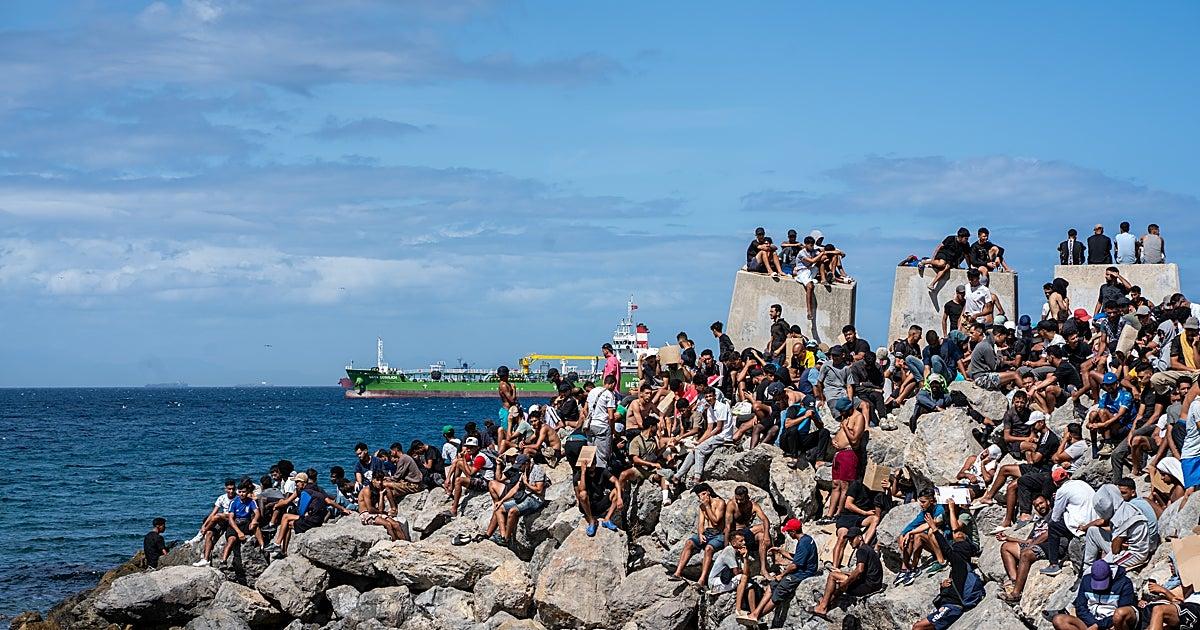
- Leak linked to Ceuta migrant crisis and heightened Spain-Morocco tensions over the incident.
- Data reportedly includes names and IDs; Spanish and other services opened authenticity investigations.
Jabaroot dumps Morocco data
A hacker collective called Jabaroot published what it says are the identities and personal details of 70,381 Moroccan security and intelligence agents, including 21 senior officials, on its Telegram channel on August 25, 2026.
teleSUR says the data include names, dates of birth and identification numbers, and it identifies Abdellatif Hammouchi as heading both the General Directorate of National Security (DGSN) and the General Directorate for Territorial Surveillance (DGST).
Diari ARA says the leak involves databases allegedly containing confidential information from Morocco’s General Directorate of National Security and the General Directorate of Territorial Surveillance, with names, birth dates, identification numbers, rank, and other personal data.
The Spanish outlet El Confidencial is cited by Diari ARA as reporting that several former Moroccan intelligence agents validated the information, while also noting it had not been confirmed by any official channel.
Ceuta retaliation and accusations
Jabaroot framed the disclosure as a “gift to Europe, and in particular, to Spain” in the context of tension between Madrid and Rabat over the arrival of migrants in Ceuta, according to Diari ARA.
teleSUR reports that Jabaroot described the disclosure as “momentous for Europe, and for Spain in particular,” and asserted that the migration of Moroccans to Europe “is an official Moroccan plan.”
Diari ARA says the hackers claim they have evidence of orders directed at Moroccan agents that allegedly orchestrated the events in Ceuta, which the Moncloa described as “an attack on Spanish territorial integrity and sovereignty.”
teleSUR adds that Jabaroot claims to possess information about agents allegedly involved in an operation in Ceuta and says it obtained copies of mission orders for agents who traveled to Castillejos on July 30.
Spain weighs security risk
Antena 3 quotes former CNI head Jorge Dezcallar saying, “70,000 seems too many. Morocco does not have 70,000 intelligence agents,” while adding that he believes the lists of collaborators could enlarge the figure.
Antena 3 also has Dezcallar say the claim that what happened in Ceuta “was planned by a couple of royal advisers and by the head of the Interior Intelligence Service, Abdellatif Hammouchi” is “a very serious claim and accusation.”
Demócrata reports that Spanish services have been investigating since Monday a data leak of about 70,000 members of Morocco’s security apparatus and consider the documents “true” in a first phase of analysis.
Demócrata says the Spanish services are cross-checking identities with information they already have to verify whether any of the people are linked to previous operations, contacts, or investigations, and it quotes a Spanish security agency source explaining the goal is to know if there may be “any infiltrated agent in our services as a source, translator or, in a very, very hypothetical case, as a colleague [agent]”.
Explore the original reporting
Compare all 14 sources
How each outlet frames it
Every outlet we compared, the headline it ran, and a link to the original article.
Western Mainstream
A group of hackers publishes data on 70,000 Moroccan spies and threatens to disclose the names of those who “coordinated the Ceuta plan.”
24 August, 2026
A group of hackers leak the data of 70,000 Moroccan intelligence agents as a "gift" to Spain
25 August, 2026
Jabaroot, the hacker who caused the biggest blow to Rabat's intelligence after the Ceuta crisis: "He is a former Moroccan spy who lives in Germany"
26 August, 2026
The data after the Moroccan information leak: from the supposed brain behind the mass entry into Ceuta to US and Israel’s knowledge of the plan
25 August, 2026
Latin American
Jorge Dezcallar, after Spain’s leak of Moroccan agents’ data linked to the Ceuta crisis: "Morocco, either looked the other way or there was connivance"
25 August, 2026
The Majzen on the ropes: what lies behind the mega hacker leak about Morocco’s intelligence apparatus
26 August, 2026
Other
Spanish services investigate the leaked list of 70,000 members of Moroccan security
26 August, 2026
Un grupo de 'hackers' filtra los datos de 70.000 supuestos agentes de seguridad de Marruecos
25 August, 2026
"The Great Gift to Spain": hackers leak data from 70,000 Moroccan agents and threaten to reveal the Ceuta plan
25 August, 2026
A group of hackers reveals the data of 70,000 alleged intelligence and police agents in Morocco
24 August, 2026
Morocco Deployed Agents to Ceuta Before Mass Incursion, Hackers Reveal
25 August, 2026
A hacker group "gifts Spain" with the leak of 70,000 Moroccan agents who enabled the mass entry into Ceuta
25 August, 2026
West Asian
Hackers Expose 70,000 Moroccan Security Agents in Retaliation for Ceuta
26 August, 2026
Western Alternative
Hacker group claims identities of 70,381 Moroccan agents
25 August, 2026
Read stored source text: ABC
The cyberwarfare that has Morocco as one of its main theaters has taken a new leap. The hacker group Jabaroot — Power in Arabic — published on Monday a database with the names of 70,000 alleged agents of the General Directorate for Territorial Surveillance (DGST, internal intelligence) and the General Directorate for National Security (DGSN, the Moroccan police). The information, shared via their Telegram channel, includes birth dates, identification numbers, and other personal data of the officials identified by the group. This is not the first time Jabaroot, which Moroccan authorities associate with Algeria, has been involved in a leak of this scale. In October of last year, amid a wave of protests led by Generation Z, it published the names of about 3,400 employees linked to the palaces, residences, and properties of the royal family, a disclosure that further fueled social tension in the country. Alongside the new leak, the group published a message directed especially at Europe and Spain: “The great gift for Europe, and especially for Spain, from Jabaroot, the architect of the fulfilled promise… Here you have the names, birth dates, and identification numbers of 70,000 agents of Morocco’s intelligence and security services, who have operated across Europe in the dirtiest intelligence tasks, such as espionage, installing listening devices, and bribing politicians and businesspeople,” the message says. The Moroccan official plan The hackers also claim that “the transfers of Moroccans to Europe, starting with Spain, are part of an official Moroccan plan,” and they conclude with a new threat: “Stay tuned for the nominal list of Moroccan security agents who organized and coordinated the Ceuta plan.” The publication of this database constitutes one of the largest security breaches suffered by Morocco’s intelligence and security services. Days before the leak, the group had already foreshadowed new revelations and had directly singled out Abdellatif Hammouchi, director of the DGSN and DGST. “Spanish authorities will uncover the sham of your failed agents,” they wrote then. The leak’s perpetrators also claim to have additional documentation and announce future revelations about the Ceuta events. They say among the material obtained are orders and instructions directed at agents deployed to Fnideq (Castillejos) before and during the migration crisis. Among the more sensitive allegations contained in the messages released is the supposed involvement of senior figures close to Mohammed VI. The group points to Fouad Ali El Himma, the king’s senior adviser and one of the palace’s most influential figures, as well as another adviser whose identity they do not reveal. “They are the ones who planned the attack to put Spain in a difficult position,” the hackers maintain. The group adds that “everything happened with the knowledge of a large country and another fictitious state,” a claim that seems aimed at the United States and Israel, two of Morocco’s main international allies. Although the hacker group points directly at El Himma and Hammouchi, it does not name King Mohammed VI: “The king [Mohammed VI] knew nothing, had no knowledge of the Ceuta events,” the group writes.
Read stored source text: Antena 3
- Juan Lobato’s reaction after visiting Ceuta: "Unacceptable, there can be no normality" - Admiral Garat calls for the presence of King Felipe VI at the National Security Council to address Morocco’s “hybrid war” - Jorge Dezcallar, former head of the CNI: "Morocco interprets our friendship as weakness, and that is not acceptable" - The interview with the former head of the CNI, full version on atresplayer Advertising A group of hackers has handed sensitive information about members of Spain’s security forces to Spanish authorities, according to information from the digital outlet El Confidencial. Among these agents would be members of Morocco’s secret service, and at least some of them would be involved in actions related to the massive assault on Ceuta’s border. Jorge Dezcallar, former director of the National Intelligence Center (CNI), has addressed this information, claiming he knows only what was published by the aforementioned outlet. He does know the hacker group behind the alleged leak, which is not the first time it has acted against Morocco’s interests: "Revealing information that could be sensitive." "70,000 seems too many. Morocco does not have 70,000 intelligence agents," notes Dezcallar, who does believe that the lists of collaborators could enlarge the figure. "What he says is terrible" The diplomat also admits that the information has surprised him. If true, the gravity of the situation is extreme since it directly links Moroccan authorities to the assault on the Spanish border: "He says what happened in Ceuta (...) was planned by a couple of royal advisers and by the head of the Interior Intelligence Service, Abdellatif Hammouchi. It is a very serious claim and accusation. If they have proof, they will have to prove it. I, until there is proof, cannot believe these things." A conflict that goes back years Dezcallar highlights the enormous uncertainty surrounding diplomatic relations with Morocco. According to the information, Morocco would threaten to release information allegedly obtained from Pedro Sánchez’s phones and his circle through the Pegasus spyware. The devices were hacked after Spain admitted the leader of the Polisario Front, Brahim Gali, for humanitarian reasons in 2021: "Moroccans were very upset about that." "What is there? We don’t really know," admits the former head of Spanish Intelligence, noting a surprisingly candid point about the Spanish Government’s attitude: "Afterwards nothing has been done (...) There hasn’t been any real interest in pursuing this matter. I don’t have any more information." The diplomat concludes by chiding Spanish authorities for their management of the Ceuta and Melilla border and issuing a warning in the form of a forecast: "Spain cannot, under any circumstance, allow control and the security of its sovereignty to be in the hands of a country that wants to keep Ceuta." He notes that it isn’t the first time Morocco would use migratory pressure as a political weapon: "If you’re caught once, they can catch you, but to be caught twice... In this case Morocco has either looked the other way or there has been connivance, or negligence on their part (...) It will happen again." Follow us on our WhatsApp channel and don’t miss the latest news and all current events on our Google profile. More News - Soto Ivars on who carried the megaphone at the Ceuta protest: "PSOE’s Tomato" - "Renting the entire apartment is losing money": the unstoppable phenomenon of room-by-room rental - "Ceuta will be Sánchez’s Stalingrad": García- Margallo accuses the president of not defending the country’s sovereignty Watch the full episode of 'Espejo Público' on atresplayer. Advertising
Read stored source text: Demócrata
Useful links Sections Services Newsletters Sectors en The leak of Jabaroot exposes sensitive data from the Police and Moroccan intelligence, including banking information. 5 minutes Published Last updated The Spanish services have been investigating since Monday the data leak of about 70,000 members of the security apparatus of Morocco andconsider "true" the documents in this first phase of analysis, according to an exclusive publication byEl Confidencial. The information affects personnel from the General Directorate of National Security (DGSN), the Moroccan Police, and the General Directorate of Territorial Surveillance (DGST), responsible for domestic intelligence. The documentation, disseminated by the group ofJabaroot hackersthrough a public Telegram channel, contains names, identification numbers, recruitment dates, and, in some cases, ranks and banking data. Its publication now allows Spanish services to cross-check those identities with the information they already have and verify if any of them are linked to previous operations, contacts, or investigations. Not all names correspond to intelligence agents. The list includes thousands of members of the DGSN, so only a part would belong to the DGST.It is precisely those identities that are of greater interest to the Spanish services, especially if any of those officials have maintained professional or operational contacts with Spain. The investigation is still in an initial phase. The Spanish services are first working on authenticating the documents and identifying the people appearing in them, a process that becomes complicated when it comes to agents who may have used different names in their relations with foreign services. "It serves us mainly to know if there may be any infiltrated agent in our services as a source, translator or, in a very, very hypothetical case, as a colleague [agent]," explains a source from a Spanish security agency to El Confidencial. The cross-referencing of names with photographs and other data would allow verifying if any of them were already known in Spain under another identity or had participated in operations in which Spanish services intervened. The leak may also serve to review relationships maintained so far with certain sources or collaborators. If one of the published identities had been used by Morocco in intelligence or counterintelligence operations, its exposure would force a reconsideration of those contacts. Featured story 5 minutes Once the persons of interest have been identified, the Spanish security forces can check if there are records of their movements in Spain or if their names appear in previous police actions. El Confidencial points out that the identified agents could be subject to indications that allow knowing their entries and exits from the country. Their identities could also be cross-referenced with the records available to the security forces, such as those related to hotel establishments or vehicle rentals. Any investigation that required measures subject to judicial authorization would have to previously have the necessary indications and legal requirements. The scope of the leak will therefore depend on how many of the identities can be verified and how many have connections of interest to Spain. The publication of thousands of identities also raises a question within the Moroccan services themselves:how Jabaroot managed to access that information. The documents could come from an intrusion into the computer systems or from a leak from within. El Confidencial indicates that the consulted sources believe that the database is slightly outdated, although that does not eliminate the risk posed by the exposure of its members. If the origin was a cyber attack, Rabat will have to determine which systems were compromised and if the authors were able to access more documentation that has not yet been made public. An internal leak would pose a different problem, as it would imply that someone with access to sensitive information was able to extract it and deliver it to the group. The question also extends to the material that has not been published. The dissemination of this database does not allow knowing if Jabaroot obtained other files or if any information may have reached third parties before appearing publicly on Telegram. The group disseminated the documents on Monday and presented the operation as retaliation against Morocco for the massive entries recorded in Ceuta at the end of July. Jabaroot maintains that among the names are agents who would have worked in Europe and accuses them of participating in espionage operations, installing listening devices, and bribery. These claims come from the group itself and have not been independently verified. The appearance of a person in the documents does not alone determine what functions they performed or whether they participated in operations outside of Morocco. That is one of the issues that the services analyzing the documentation will have to clarify. The newspaper itself has cross-referenced the files with publicly available information and claims to have independently identifiedat least a dozen agents included in the lists. Among them are, according to El Confidencial, heads of sensitive areas of the DGST, such asthe director of human resources, the deputy director of counterintelligence, or the head of the Research Cell. Some identifications have also been made based on the testimony of people who had direct contact with members of the Moroccan services. Journalist Omar Radi, imprisoned in Morocco in 2019 and released after receiving a pardon in 2024, has pointed out among the leaked names agents of the Judicial Police who participated in his interrogations. The possibility of associating names with photographs, destinations, and functions allows for the reconstruction of part of a structure that usually remains outside public scrutiny. Featured story 6 minutes The Moroccan services had faced other episodes of exposure of sensitive information in recent years, although not with the volume of data known this week. In September 2025, Mohamed VI dismissed General Mostafa Rabil, then head of the General Directorate of Information Systems Security, after a succession of leaks and attacks against the country's agencies. There is also a precedent of greater scope. In 2014, hundreds of documents and emails related to Moroccan diplomacy and foreign intelligence appeared on the internet. The difference this time is in the content of the files: the documentation allows naming thousands of members of the security forces and, among them, members of the internal intelligence. The leak had been circulating for almost 48 hours when El Confidencial published its investigation without the main newspapers and television stations in Morocco having reported on it. Some Moroccan media have since begun to question its scope.Médias24claims that a significant portion of the names corresponds to members of the Police and suggests that Jabaroot may have gathered information from previously compromised databases. While the exact origin of the files is determined,Spanish services continue to analyze their content to identify which names actually belong to Moroccan intelligence and which may be of interest to Spain. Follow us © 2026 DEMÓCRATA - Parliamentary media outlet
Read stored source text: Diari ARA
A group of hackers leak the data of 70,000 Moroccan intelligence agents as a "gift" to Spain Jabaroot hackers point to Moroccan authorities as responsible for the migratory crisis in Ceuta BarcelonaA group of hackers have leaked on social networks and in various internet forums several databases that allegedly contain confidential information of members of Moroccan intelligence and police. The hackers, identified as Jabaroot, allegedly disseminated this data of nearly 70,000 Moroccan security agents as a "gift to Europe and, in particular, to Spain", in a context of tension between Madrid and Rabat over the arrival of migrants in Ceuta. Among the leaked files – which come from the General Directorate of National Security and the General Directorate of Territorial Surveillance, the two main security bodies of the Alaouite country – are names, birth dates, identification numbers, rank, and other personal data. According to the newspaper El Confidencial, several former Moroccan intelligence agents have validated the information contained therein, although it has not been confirmed by any official channel. The group allegedly made this list public via Telegram, but it is currently not accessible because the files violate the platform's terms of use, according to the Efe agency. The documents have appeared accompanied by a message pointing to Jabaroot, which has been responsible for other leaks that have hindered the Moroccan government. But, if confirmed, this information leak would be one of the largest the country has suffered in recent years. In fact, the hacker group had already issued a warning message a few days ago, identifying Abdellatif Hammouchi, a senior official of the security agencies, as responsible for the mass arrival of migrants in Spain. The hackers claim that the publication exposes agents who "have traveled across Europe carrying out dirtier intelligence missions, such as espionage, the installation of listening devices, and the bribery of politicians and businessmen". "Jabaroot fulfills its promise to publish [the documents] to confirm that the migration of Moroccans to Europe, starting with Spain, is an official plan of Morocco", the message adds. Furthermore, the hacker group claims to have evidence of orders directed at Moroccan agents that allegedly orchestrated the events in Ceuta, which the Moncloa itself has described as "an attack on Spanish territorial integrity and sovereignty". While it is unknown who is behind Jabaroot, Rabat points to its strategic rivals, Algeria.
Read stored source text: Diario Público
Un grupo de piratas informáticos identificado como Jabaroot ha anunciado la publicación de datos que atribuye a unos 70.000 agentes de seguridad de Marruecos, en un contexto de tensión entre Rabat y Madrid tras la crisis que vive la ciudad española de Ceuta. Jabaroot habría difundido archivos con datos de miembros de la Dirección General de Seguridad Nacional (DGSN) y de la Dirección General de Vigilancia del Territorio (DGST), los principales cuerpos de Seguridad de Marruecos, con nombres, fechas de nacimiento, números de identificación, rango y otros datos personales. El grupo filtró la lista a través de su cuenta en Telegram, aunque actualmente el listado no es accesible porque los archivos se han eliminado de la plataforma de mensajería "para cumplir con su política de uso". Sin embargo, la autenticidad y procedencia de la información no ha sido contrastada ni establecida de forma independiente, recordó este martes el medio marroquí Bladi.net. Jabaroot ha presentado la filtración como un mensaje dirigido especialmente a España tras la crisis desatada a finales de julio con el cruce de decenas de miles de personas desde territorio marroquí a Ceuta, y sostiene que dispone de información sobre responsables y órdenes impartidas durante la crisis. Antecedentes El grupo comenzó a adquirir notoriedad en 2025, después de varias operaciones contra organismos públicos marroquíes. El pasado año, la Fiscalía marroquí abrió una investigación sobre un ataque cibernético atribuido a Jabaroot contra la cuenta del Consejo Superior del Poder Judicial. La filtración alcanzó al ministro de Justicia, Abdelatif Uahbi, y reveló supuestas irregularidades fiscales relacionadas con la compra de una residencia millonaria. Además, el grupo reivindicó un ataque cibernético masivo que afectó al Ministerio marroquí de Empleo y a la institución de seguridad social CNSS, y que acabó con la publicación de datos de casi dos millones de asalariados marroquíes, entre ellos altos cargos empresariales.
Read stored source text: El Debate
"The Great Gift to Spain": hackers leak data from 70,000 Moroccan agents and threaten to reveal the Ceuta plan The Jabaroot group publishes information about thousands of members of Morocco's intelligence and police and claims to possess the orders of the agents who traveled to Castillejos before and during the massive entry into Ceuta Nearly a month after the invasion, the Ceuta crisis continues to open new fronts. This time it has touched the realm of cyberespionage, after the hacker group Jabaroot disseminated a database that, according to their own statements, contains personal information of about 70,000 members of Morocco's intelligence and security services. The hackers have presented the publication as “the great gift to Europe, and especially to Spain” and have accompanied the documents with the threat that they allegedly have information about the agents who “orchestrated and coordinated the Ceuta plan.” The leak was advanced by El Confidencial, which was able to access the documents and cross-check part of the information with former Moroccan intelligence officers. According to this outlet, several of them have confirmed the membership of some of the names on the lists in the General Directorate for Territorial Surveillance (DGST), responsible for internal intelligence. The disseminated documents contain names, national ID numbers, employee numbers, and years of recruitment of alleged DGST members and the General Directorate of National Security (DGSN), the Moroccan police. In a second list, there are also ranks within the corps and bank identification numbers for about 1,400 people. Among the names would be heads of departments within Moroccan intelligence itself, such as the DGST's human resources director, the deputy director of counterintelligence, or the head of one of its research cells. The hacker group also claims to have more information directly related to the Ceuta events and has announced a new leak in which it aims to identify those responsible for the operation. According to the hackers, they have obtained copies of orders directed to “the agents who traveled to Fnideq (Castillejos) before and during the events.” The group points directly to Abdellatif Hammouchi, director of the DGSN and the DGST, whom they accuse of carrying out the operation related to Ceuta. It also names Fouad Ali El Himma, one of the king Mohamed VI’s main advisers, as one of the people who would have participated in the planning. “They are the ones who planned the attack to put Spain in a difficult situation,” the hackers say, adding that what happened occurred “with the knowledge of a major country and of another fictitious state,” in a reference that seems to point to the United States and Israel. This hacker group has been disseminating documents related to Moroccan power structures since last year and had previously published a list of about 3,400 employees linked to the palaces, residences, and properties of the royal family, in addition to information related to millions of Social Security members. It has also released documents about properties of high-ranking government officials and intelligence services."
Read stored source text: El Faro de Ceuta
A group of hackers identified as Jabaroot has kept their threats and has published on social media several lists that would contain personal data of about 70,000 alleged intelligence and security agents in Morocco, according to El Confidencial. The leak occurs amid the Ceuta crisis over the massive entry of more than 70,000 migrants at the end of July. The information, whose authenticity has been at least partially confirmed by several former Moroccan intelligence officers consulted by El Confidencial, would include names, national identification numbers, employee numbers, and years of recruitment in the Public Administration. The documents would concern members of the General Directorate for Territorial Surveillance (DGST), responsible for domestic intelligence, and the General Directorate of National Security (DGSN), the Moroccan police. A leak with data on thousands of agents According to the information published by El Confidencial, one of the lists contains the data of at least 70,000 alleged agents, while a second list includes additional information on about 1,400 officers, including their ranks within the corps and bank identification numbers. Among the names appearing would be, according to sources cited by the outlet, the human resources director of the DGST, the deputy director of counter-espionage, and the head of the Investigation Cell. The former officers consulted by El Confidencial would have confirmed belonging to the DGST of some of the names included in the lists. However, the outlet notes that the documents could have been obtained some time ago and published now. The leak is accompanied by messages attributed to Jabaroot, a group whose identity and affiliation remain unclear. From Morocco, El Confidencial reports, Algeria has been pointed to as a possible origin of the group. Jabaroot links the leak to the Ceuta crisis The publication comes after Jabaroot threatened to disclose these documents and pointed to Abdellatif Hammouchi, a senior official of Morocco’s interior security agencies, in connection with the Ceuta events. The group argues that the leak would demonstrate that the migration of Moroccan citizens to Europe, and especially to Spain, would be part of an alleged official Moroccan plan. This, however, is a claim made by the hackers themselves and reported by El Confidencial. Jabaroot also claims to have additional documentation in which the names of the agents who, in their version, “orchestrated and coordinated the Ceuta plan” would appear. The group says it obtained copies of orders directed at agents who reportedly traveled to Fnideq, a Moroccan town on the border with Ceuta, before and during the events. The hackers have been spreading messages related to Ceuta since August 7. Among their demands are official apologies for what happened, the declaration of a national day of mourning, and the suspension of the legislative elections scheduled in Morocco for September 23. A group with a history of leaks El Confidencial notes that Jabaroot has accumulated since April of last year a broad history of leaks via Telegram. Among the publications attributed to the group are lists of thousands of employees at the royal palaces and millions of contributions to Social Security, in addition to documents related to real estate owned by prominent Moroccan officials. Among the people whose data had appeared in previous leaks are Nasser Bourita, Minister of Foreign Affairs; Yassin Mansouri, director of Morocco’s foreign intelligence agency, DGED; and Mohamed Raji, identified as the number two in the DGST listening/monitoring division. According to El Confidencial, the volume of the new lists would make this leak one of the largest security breaches suffered by the Kingdom’s security services. A leak in a tense moment The publication coincides with the open crisis between Spain and Morocco after the massive entry of people into Ceuta on July 30 and 31. Jabaroot attributes responsibility for the events to senior Moroccan security officials and expressly mentions Hammouchi. The group also claims that King Mohammed VI would not have been aware of what happened. This version partially aligns, according to El Confidencial, with information previously published by the outlet based on testimony from two exiled Moroccan agents. They stated that a small inner circle of power would have contemplated allowing migrant flows in response to investigative journalism published in July by several outlets. In any case, the accusations by Jabaroot and the content of the leaks do not by themselves prove the existence of that supposed plan, and the information about the authenticity of the documents comes from the sources consulted by El Confidencial.
Read stored source text: El Independiente
It has been his “great gift” to Europe, especially Spain. The hacker group Jabaroot has leaked data from more than 70,000 agents of the Moroccan General Directorate for National Security (DGSN) and the General Directorate for Territorial Surveillance (DGST). In other words, from the national police and the Alawi espionage apparatus. An unprecedented security breach in the Maghreb country, which has seen the inner workings of its intelligence teams laid bare at a stroke. The leak occurred after several days of threats by the cybercriminals. Jabaroot, which means “Power,” are already well known to Moroccan authorities. They are behind some of the most damaging data revelations for Rabat in recent times. Amid last year’s Generation Z protests, the hackers spread the hefty expense bill of the court of Mohammed VI. And months earlier they had already disclosed compromising information about some senior Majzen officials. However, it has been the recent events in Ceuta that have unleashed the anger of these disciples of “Julian Assange.” The group had demanded that Moroccan authorities suspend the legislative elections scheduled for September 23 and issue an official apology for the more than one hundred victims recorded in the Spanish autonomous city after thousands of migrants from Morocco swam ashore. When their demands were not met, they moved to action. “Here are the names, birth dates, and identification numbers of 70,000 Moroccan intelligence and security service agents, who roamed Europe carrying out the dirtiest intelligence missions, such as spying, installing listening devices, and bribing politicians and businessmen,” their Telegram message read after sharing several files with highly sensitive data for thousands of people. Hours later they removed the documents to bypass channel closure, although the information they contained had already spread like wildfire. Moroccan intelligence, laid bare Among the leaked data there is information as compromising as recruitment year or even the bank account details of some agents. The group has boasted of its intrusion into the inner workings of the DGSN and the DGST: “Both services were penetrated widely and deeply.” In fact, they claim that what was published at the beginning of the week is “only a small part” of all the data they obtained. “We had never seen anything like this before. There is no longer a secret service in Morocco,” stressed Ali Lmrabet, a journalist of Moroccan origin, in a conversation with El Independiente. Well acquainted with the intricacies of the Alawi regime, he was detained for several days last July for his caustic critiques of the Moroccan authorities. In his case, he does not doubt the veracity of what was disclosed: “Jabaroot has proven in the past that all their information is truthful.” According to the hackers, this leak has a clear objective: “To confirm that the migration of Moroccans to Europe, starting with Spain, is an official Moroccan plan.” And they have gone further. After sharing this information, they have promised to make public “the list of names of Moroccan security agents who orchestrated and coordinated the Ceuta plan.” The hackers claim to possess copies of mission orders for agents who traveled to Fnideq (Castillejos) “before and during the events.” If true, Rabat’s official version that the influx of thousands of migrants into the Spanish city was the work of mafias would be dismantled. And not content with stirring the hornet’s nest of Spanish-Moroccan relations even further, which the Pedro Sánchez government has tried to preserve by consistently defending the views of its southern neighbors, Jabaroot flirted late Monday night with a different type of leak. “Who cares about the original Pegasus data related to Pedro Sánchez?” they wrote on Telegram. Still, so far they have not shared new leaks. The secret service, in the crosshairs Lmrabet says Jabaroot’s leak is “calamitous” for Morocco’s internal secret service. Although the data did not expose 70,000 spies as such—since DGSN and DGST employees include civil servants—the “entire leadership of the internal secret service and all the country’s police” are now public. “We no longer have secret services,” the journalist concludes, noting that he has never witnessed a scandal of this magnitude before. In his message the group directly targets Abdellatif Hammouchi, the head of both services. The so-called guardian of the regime is one of the untouchables within Mohamed VI’s inner circle. However, Jabaroot has warned the monarch: “The King must act and dismiss Hammouchi before a catastrophe occurs that would humiliate the entire country.” Still, Lmrabet does not believe one of the direct consequences of the leak will be the removal of the police chief and the secret service. “The regime never gets rid of its men after a scandal; it does so later and more discreetly,” he notes. Algerian analyst Akram Kharief, director of the Mena Defense portal, is even more skeptical about a potential dismissal. The security expert believes Hammouchi is “too powerful” to be chosen as a scapegoat in this crisis. Nevertheless, he thinks the security breach has exposed the “weakness” in the security barriers of Morocco’s intelligence apparatus, which has been overwhelmed by a group of uncertain origin. Jabaroot, hacktivists with a dubious objective For now, Moroccan press has not echoed the blow dealt to its country’s intelligence services. Jabaroot members themselves have referred to the lack of information in Moroccan media. “Can Moroccan press, which prides itself on being free, ask Fouzi Leka if he is responsible for the most delicate leak in Morocco’s history (we challenge him to answer no)?” they said about the president of the Moroccan Football Federation. Their targeting of the country’s top power circles, figures very close to Mohamed VI, reveals the political motives behind their actions. In fact, in earlier leaks there was speculation that the hackers were of Algerian origin. Kharief does not share this impression. In his view, the disclosed information is too valuable for Algerian intelligence to make public. “They could use this data to attack Morocco,” he notes. The Algerian analyst goes even further. “They could be part of the Handala Group,” he theorizes, though he concedes that there is currently no solid evidence to support this hypothesis. This group focuses on hacking U.S. and Israeli targets and has been linked by intelligence experts to Iran’s interests. Given the close alliance between Washington, Tel Aviv, and Rabat, Kharief believes Moroccan authorities could have been “a target of opportunity.” On the possibility that these are disgruntled Moroccan hackers unhappy with the country’s internal situation, he rules it out completely. “It’s risky, and who would gain credibility from it from within?” he notes. And he recalls the case of Chris Coleman, the author of MarocLeaks. At first it was thought the information came from within Morocco, but Kharief is among those who believe it was work by France’s external intelligence service as retaliation for the leak of its agent in Rabat. You may be interested In case you missed it Most viewed
Read stored source text: El Mundo
Morocco A group of hackers exposes data of 70,000 Moroccan agents and denounces that the assault on Ceuta was planned by the State Ceuta Crisis Sánchez promised Vivas that Marlaska would stay in Ceuta until the situation was "normalised" and left within 24 hours This is the largest documented breach against the security services of Morocco since its founding, and possibly the biggest counterintelligence blow suffered by a North African service in Europe in recent decades: 70,381 agents exposed from two agencies: the General Directorate for Territorial Surveillance (DGST or internal intelligence) and the General Directorate of National Security (DGSN, or police). Within the revealed document package there is something even more explosive: excerpts from the mission orders of agents who traveled to Castillejos before and during the Ceuta assault on July 30. These orders, which Jabaroot threatens to publish in full, constitute proof that Moroccan state agents traveled to the border city to coordinate the massive entry. The leak points to Abdellatif Hammouchi (decorated by Minister Marlaska with the Grand Cross of the Order of Merit of the Civil Guard) as the top person responsible for the operation, along with Fouad Ali El Himma, the king Mohammed VI’s chief adviser, but promises new documents in future shipments. Who is behind this revelation? We only have the name of an alleged group of hackers that has acted before and with some success in Morocco: Jabaroot, whose meaning in Arabic is “powerful.” Although Morocco blames Algeria, its regional rival, European intelligence services rule out that origin, even though Jabaroot himself claims to be part of a group of “Algerian patriots.” Jabaroot debuted by stealing data from Morocco’s National Social Security Fund and about the royal palace staff and their properties. For European intelligence services, behind the hacker group Jabaroot there is actually a single person, a sort of “lone wolf” who knows the inner workings of Moroccan security services perfectly but operates far from Morocco. Several cybersecurity firms have traced his steps and reached some conclusions. The French company CybelAngel searched for variants of Jabaroot’s alias that the hacker used on platforms like Telegram and found that he used another alias: 3N16M4, which the same hacker used on sites like GitHub. GitHub is a platform where programmers store and share their code. It is like a professional portfolio for developers that organizes ethical hacking tournaments called “Capture The Flag”: cybersecurity challenges such as deciphering passwords, finding vulnerabilities, and penetrating simulated systems. User 3N16M4 participated in several tournaments, allowing researchers to see from which country he usually connected. The investigations led to someone who “could be a computer engineer,” identified as “Tunisian” and who “lives in Germany.” Soon after, another competitor company, Zecurion, arrived at the same conclusion. The Spanish cybersecurity group Navakintelligence adds another interesting point to the profile: Jabaroot’s level of penetration is “hardly explainable without prior privileged access,” hence its hypothesis that he is a former Moroccan spy with training in information systems who emigrated to Germany and from there carries out an operation that can be compared to Edward Snowden’s with NSA data in 2013. Intelligence services across Europe and part of the Maghreb are trying to verify the authenticity of the documents, which offer names of Moroccan agents who may have acted in different countries on the continent. From the CNI, which had monitored some of them, to security services in the Netherlands or France, the investigations so far are positive: those names exist and in some cases are old acquaintances of European intelligence. Although the volume of stolen data is several gigabytes and will be costly to process, so far everything seems real, though the list may be old and outdated. As a curiosity, in one of the Excel documents filtered on Telegram appears the name Mehdi Hijaouy, a little-known Moroccan agent and former #2 of external intelligence (DGED) and for years direct adviser to Fouad Ali El Himma, the king Mohamed VI’s main adviser and brains of the “Ceuta operation” according to Jabaroot. Trapped in the internal war between the two main Moroccan intelligence agencies, he fled the country with state secrets, passed through France and arrived in Spain in 2024, where he nearly faced extradition before disappearing. Sources from DGST assure that he hides in a town on the outskirts of Madrid under the protection of the CNI, although other versions point to Spanish services trying to hand him over and he fled, remaining at large and sought by the Audiencia Nacional. What makes his case particularly explosive is that the publication Escudo Digital, specialized in intelligence, names him as the technical architect of the Pegasus operation against Spain: the espionage of Pedro Sánchez, several ministers and journalists that the Audiencia Nacional archived in January 2026 for lack of cooperation from Israel, creator of the spying program. Yesterday, Jabaroot himself asked in one of his Telegram channels: “Who is interested in the Pegasus data related to Pedro Sánchez?”, although there is still no proof that this hacker has access to that information.
Read stored source text: https
The Jabaroot hacking collective has dumped the personal data of Moroccan intelligence operatives, alleging the state orchestrated the massive Ceuta migrant crossing. A catastrophic intelligence breach has explicitly exposed the identities of nearly 70,000 Moroccan security operatives, thrusting the escalating geopolitical tensions between Rabat and Madrid into a highly volatile new digital theater. The unprecedented data dump, executed by a sophisticated hacker collective known as "Jabaroot" on August 25, 2026, was explicitly framed as a "gift to Spain." The monumental leak directly retaliates against the Moroccan government for allegedly engineering the massive, overwhelming influx of 80,000 migrants into the Spanish enclave of Ceuta weeks earlier, exposing the ruthless weaponization of human migration and cross-border desperation. The compromised databases purportedly contain the highly classified, deeply guarded internal registries of Morocco's premier security apparatus: the General Directorate of National Security and the secretive domestic intelligence service, the General Directorate of Territorial Surveillance. The extensive files, leaked widely via Telegram and various dark web forums, include the full names, birth dates, specific identification numbers, and precise operational ranks of tens of thousands of active agents. Former Moroccan intelligence officials and independent cybersecurity analysts have publicly assessed portions of the leaked material as genuine and authentic. If fully verified, the breach represents one of the most devastating compromises of an African state's security infrastructure in modern history, effectively neutralizing decades of covert operational security in a matter of hours. Jabaroot's unprecedented leak is accompanied by explosive, highly specific political accusations. The collective directly accuses Abdellatif Hammouchi and powerful royal adviser Fouad Ali El Himma of meticulously orchestrating the July 2026 migration crisis, during which an estimated 80,000 desperate people breached the Ceuta border. The hackers claim the massive database contains concrete proof of the specific state agents deliberately deployed to the border town of Castillejos (Fnideq) to facilitate, rather than prevent, the mass crossing. Spanish police unions and European intelligence analysts have long suspected that Rabat routinely utilizes border control as a cynical geopolitical blackmail tool to force massive European concessions regarding the disputed Western Sahara territory. The sudden exposure of Morocco's deeply entrenched security apparatus highlights a rapidly escalating, alarming trend in international relations: the strategic, deliberate deployment of desperate human populations to extract diplomatic leverage from neighboring states. This aggressive tactic resonates far beyond the narrow Strait of Gibraltar. The European Union closely monitors these dynamics, drawing direct, chilling parallels to Belarus aggressively funneling migrants toward Poland. For the United Kingdom government in Westminster, managing unauthorized Channel crossings remains highly dependent on complex, transactional French and North African cooperation. Similarly, in the United States, lawmakers in Congress acutely understand the deep vulnerabilities of relying heavily on third-party nations, such as Mexico, to serve as a buffer against orchestrated migrant surges. As Spanish authorities desperately scramble to process the remaining thousands of migrants trapped in Ceuta, the Jabaroot data leak serves as a stark, undeniable warning to states that manipulate human desperation: the digital blowback can be immediate, untraceable, and severely debilitating to national security. No sign-in required. Choose up to two. This captures your response to the story—it is not a vote on whether the reporting is true. The documents, data and reporting consulted for this article. Links open the original material so readers can inspect the evidence directly. Evidence used Keep the conversation in one place—threads here stay linked to thestoryand in the forums. Sign in to start a discussion Start a conversation about thisstoryand keep it linked here. Other hot threads E-sports and Gaming Community in Kenya Active15 months ago The Role of Technology in Modern Agriculture (AgriTech) Active15 months ago Popular Recreational Activities Across Counties Active15 months ago Investing in Youth Sports Development Programs Active15 months ago No weak match is forced. These are the latest verified stories from Environment & Climate Change. More fromEnvironment & Climate Change Aug 26, 2026 More fromEnvironment & Climate Change Aug 26, 2026 More fromEnvironment & Climate Change Aug 26, 2026
Read stored source text: LaSexta
Supervised AI Summary Almost a month after the massive entry of migrants from Morocco to Ceuta, revelations surface about a group of Algerian hackers called Jabaroot. These hackers have exposed data from high-ranking officials of the Moroccan intelligence service, including Abdellatif Hammouchi, identified as responsible for the massive entry on July 30. Fouad Ali el-Himma, advisor to King Mohammed VI, is also mentioned as the alleged brains behind the operation, of which the United States and Israel would be aware, but not the monarch. According to journalist Ignacio Cembrero, these leaks damage the Moroccan army and reveal the identities of those who work for Moroccan intelligence. The information was disclosed before Mawlid, with references to Ceuta and occupied territories, suggesting a claim of Moroccan sovereignty. * Supervisory summary by journalists. Almost a month after the massive entry of migrants from Morocco to Ceuta, many questions remain unanswered. But some, such as the supposed knowledge of the authorities, have been answered by a group of Algerian hackers (Jabaroot) who have revealed tens of thousands of data records. Data from the highest levels of the Moroccan intelligence service down to agents who manage traffic in the country. For example, they mention the figure of Abdellatif Hammouchi, head of the Moroccan intelligence service and police, whose data have been revealed along with another 70,000 agents. "They are leaks that do a lot of damage to the Moroccan army," says Ignacio Cembrero, journalist and writer. Among those identified is Fouad Ali el-Himma, direct adviser to King Mohammed VI. He is the alleged brain behind the operation which, according to the hackers, both the United States and Israel were aware of, but not Mohammed VI. The hackers claim the monarch would not have been informed of what was going to happen that day in Ceuta. "It’s a very, very useful gift, because suddenly you know who all those who work for Morocco’s internal intelligence are," Cembrero notes. The information was released just before Mawlid, the festival commemorating the Prophet Muhammad’s birth, where the Moroccan Minister of Religious Affairs, Ahmed Toufiq, mentioned Ceuta to recall the origin of two ulemas. In fact, it also mentions occupied territories and their liberation: "To free the occupied Atlantic Cities." A possible assertion of Moroccan sovereignty over Ceuta, all with Mohamed VI present.
Read stored source text: newsfire.gr
Morocco Deployed Agents to Ceuta Before Mass Incursion, Hackers Reveal A hacker collective leaked personal data of 70,000 Moroccan intelligence officers and police in retaliation for last summer's organized migrant surge into Spain's Ceuta enclave. The cyber activist group Jabaroot has released sensitive professional and personal information belonging to agents primarily affiliated with Morocco’s domestic intelligence agency, the DGST, and its General Directorate for National Security, according to The European Conservative. The leaked data also encompasses police officers and other security personnel across multiple departments. Jabaroot explicitly framed the operation as a gift to Spain in response to the mass illegal entry that occurred on July 30th, when thousands of migrants stormed across the border into Ceuta in what Spanish authorities characterised as a coordinated action. Former Moroccan intelligence operatives who examined portions of the leaked material have confirmed its authenticity, as reported by Spanish outlet El Confidencial. Direct Accusations Against Moroccan Leadership The hacker group went beyond simply releasing the data, levelling serious allegations directly at senior figures within the Moroccan state apparatus. Jabaroot accuses Abdellatif Hammouchi, who holds the dual role of leading both the DGST and DGSN, along with royal adviser Fouad Ali El Himma, of orchestrating the migratory assault on Ceuta. The group claims to possess intelligence indicating that Moroccan agents were strategically positioned in Castillejos both prior to and during the border crisis, suggesting deliberate state involvement in facilitating the illegal crossings. Context of the Ceuta Crisis The July 30th incident marked a significant escalation in tensions between Madrid and Rabat, with thousands of migrants overwhelming Spanish border defences in what many analysts viewed as a form of hybrid warfare. The breach has now added a new dimension to the ongoing dispute, potentially exposing the inner workings of Morocco’s intelligence operations and the alleged coordination behind migratory pressure tactics. The leak represents one of the largest compromises of a national security apparatus in recent years, with potentially significant implications for Morocco’s intelligence capabilities and bilateral relations with Spain. With information from The European Conservative
Read stored source text: Onda Cero
Yesterday, Monday, August 24, 2026, the hacker group Jabaroot kept its word and published the feared list from the Moroccan Government. Names, national identification numbers, and other sensitive data that put the Moroccan leadership in a bind, as it confirms that certain agents actively participated in the mass entry of migrants into Ceuta on July 30 and 31. The autonomous city remains not back to normal, and the government of Pedro Sánchez, almost a month after the events, has decided to take action and convene the National Security Council. Jabaroot links the leak to the Ceuta migrant crisis. The hacker group Jabaroot has disseminated a database that, as El Confidencial has been able to confirm, contains personal information of about 70,000 members of Morocco’s intelligence and security services, in a new escalation of its assault on the country’s security apparatus. The group presents the leak as a “gift to Spain” and maintains that among the documents are data related to the operation that led to the mass entry of migrants into Ceuta at the end of July. The leak is said to have been published this Monday and, according to the hackers themselves, affects members of the General Directorate for Territorial Surveillance (DGST), responsible for Moroccan domestic intelligence, and the General Directorate for National Security (DGSN), the country’s police force. The files would contain names, dates of birth, identification numbers, and data related to the incorporation of the alleged agents into the security agencies. In a second list, additional data of around 1,400 people would also appear, according to published information about the leak. According to this version, the hackers would have copies of mission orders for agents who were deployed to Castillejos (Fnideq) before and after the events. They have also announced that they could publish a specific list with the names of those who, in their view, “led and coordinated” the plan. The claim, however, comes from the hacker collective itself and does not imply it is independently corroborated. The leak does not in itself prove that all the database members are active agents nor that the identified individuals participated in the mass entry into Ceuta. More than 70,000 people entered Ceuta. Jabaroot’s offensive follows one of the largest migratory crises experienced in the autonomous city. At the end of July, about 72,000 people managed to enter Ceuta from Morocco, according to data subsequently provided by the Ministry of the Interior. The scale of the arrival prompted the deployment of emergency services and the State security forces and bodies, while Spain sought Morocco’s cooperation to contain the situation. In the following days, numerous reports and social media posts also emerged about the circumstances surrounding the massive arrival and others that even promoted a second entry into Ceuta on August 15. A new threat against Morocco. Jabaroot has been months developing a campaign of leaks against Moroccan security structures. The group had previously threatened to publicize the data of tens of thousands of agents and, finally, has disseminated the database that it claims contains about 70,000 names. The operation has been presented by the group as a revelation of great importance for Spain and Europe. Among the names they claim to have identified would also be members of the leadership of Morocco’s security services, including Abdellatif Hammouchi, director of DGST and DGSN. The group has gone further and has threatened new publications related to Pegasus and the alleged spying on Pedro Sánchez’s phone, claiming to possess original files linked to that case. The leak opens a new front between Spain and Morocco. The publication of this data adds a new element of tension to the relationship between Spain and Morocco, precisely when the Ceuta crisis has again placed border control and bilateral cooperation at the center of the debate. For now, Jabaroot’s accusations about the participation of Moroccan agents in organizing the mass entry into Ceuta should be treated as statements by the group and not as proven facts. What has happened is the dissemination of a huge amount of information that the group attributes to members of Morocco’s security services. Additionally, Jabaroot has announced that the leak is not finished and that it is preparing new documents specifically focused on those who, according to them, were behind the Ceuta operation.
Read stored source text: teleSUR English
Hacker group Jabaroot claims to have published the identities and personal details of 70,381 Moroccan security and intelligence agents, including 21 senior officials. The group also says it possesses information about agents allegedly involved in an operation in Ceuta. Jabaroot claims to have published the identities and personal data of 70,381 Moroccan security and intelligence agents. Photo: EFE August 25, 2026 Hour: 4:24 am 🔗 Comparte este artículo Hacker group Jabaroot claims to have published the identities and personal details of 70,381 agents working for Morocco’s security and intelligence services, including the country’s two main security agencies. RELATED:Undocumented Migrants Into Ceuta Will All Return to Morocco: Spanish FM The group announced the disclosure Monday on its Telegram channel, saying the data included the names, dates of birth and identification numbers of the agents, as well as sensitive information on 21 senior officials. Among those named is Abdellatif Hammouchi, who heads both the General Directorate of National Security (DGSN) and the General Directorate for Territorial Surveillance (DGST). Una publicación compartida por teleSUR (@telesurtv) Text Reads: 📌 The Jabaroot hacker group revealed on its Telegram channel the identities of 70,381 alleged agents of Morocco’s security and intelligence services, including the General Directorate of National Security (DGSN) and the General Directorate of Territorial Supervision (DGST). The leak contains the agents’ names, dates of birth, and identification numbers, as well as sensitive data on 21 leaders of both agencies, including Abdellatif Hammouchi, director of both entities.🔴 Jabaroot described the revelation as “momentous for Europe, and for Spain in particular,” and asserted that the migration of Moroccans to Europe “is an official Moroccan plan.” The group, which has been challenging Moroccan authorities since April of last year, has previously leaked the names of 3,400 employees of the royal palaces and two million people affiliated with the Social Security system. He also claimed to possess the list of agents who “orchestrated and coordinated the Ceuta operation” of July 30 and copies of the mission orders of those who traveled to Castillejos. Jabaroot described the disclosure as its biggest challenge yet to Moroccan authorities and said it was “of major significance for Europe, and Spain in particular.” The group has carried out a series of leaks since April last year, according to the press release. The group alleged that the agents have operated across Europe on intelligence missions involving espionage, telephone tapping and bribes to politicians and businesspeople. Jabaroot said the disclosure fulfilled a promise to release information about Morocco’s security services. It also claimed that the migration of Moroccans to Europe, beginning with Spain, was part of an official Moroccan plan. Jabaroot has previously released other datasets that it says contain information linked to Moroccan institutions. These include the names of 3,400 employees of the royal palaces and two million people affiliated with Morocco’s social security system, according to the press release. Moroccan authorities have accused the hackers of operating under contract with Algeria, Morocco’s main competitor in the Maghreb, the statement said. Jabaroot also claims to possess the names of Moroccan security agents who allegedly organized and coordinated an operation in Ceuta on July 30. The group said it obtained copies of mission orders for agents who traveled to Castillejos before and during the events. Jabaroot presented the latest disclosure as its largest challenge yet to Morocco’s security authorities, following a series of leaks targeting government and security-related data since April last year. IN THIS ARTICLE Ceuta Cybersecurity DGSN DGST hacking intelligence services Jabaroot Morocco Hacker group Jabaroot claims to have published the identities and personal details of 70,381 Moroccan security and intelligence agents, including 21 senior officials. The group also says it possesses information about agents allegedly involved in an operation in Ceuta. Jabaroot claims to have published the identities and personal data of 70,381 Moroccan security and intelligence agents. Photo: EFE August 25, 2026 Hour: 4:24 am 🔗 Comparte este artículo Hacker group Jabaroot claims to have published the identities and personal details of 70,381 agents working for Morocco’s security and intelligence services, including the country’s two main security agencies. RELATED:Undocumented Migrants Into Ceuta Will All Return to Morocco: Spanish FM The group announced the disclosure Monday on its Telegram channel, saying the data included the names, dates of birth and identification numbers of the agents, as well as sensitive information on 21 senior officials. Among those named is Abdellatif Hammouchi, who heads both the General Directorate of National Security (DGSN) and the General Directorate for Territorial Surveillance (DGST). Una publicación compartida por teleSUR (@telesurtv) Text Reads: 📌 The Jabaroot hacker group revealed on its Telegram channel the identities of 70,381 alleged agents of Morocco’s security and intelligence services, including the General Directorate of National Security (DGSN) and the General Directorate of Territorial Supervision (DGST). The leak contains the agents’ names, dates of birth, and identification numbers, as well as sensitive data on 21 leaders of both agencies, including Abdellatif Hammouchi, director of both entities.🔴 Jabaroot described the revelation as “momentous for Europe, and for Spain in particular,” and asserted that the migration of Moroccans to Europe “is an official Moroccan plan.” The group, which has been challenging Moroccan authorities since April of last year, has previously leaked the names of 3,400 employees of the royal palaces and two million people affiliated with the Social Security system. He also claimed to possess the list of agents who “orchestrated and coordinated the Ceuta operation” of July 30 and copies of the mission orders of those who traveled to Castillejos. Jabaroot described the disclosure as its biggest challenge yet to Moroccan authorities and said it was “of major significance for Europe, and Spain in particular.” The group has carried out a series of leaks since April last year, according to the press release. The group alleged that the agents have operated across Europe on intelligence missions involving espionage, telephone tapping and bribes to politicians and businesspeople. Jabaroot said the disclosure fulfilled a promise to release information about Morocco’s security services. It also claimed that the migration of Moroccans to Europe, beginning with Spain, was part of an official Moroccan plan. Jabaroot has previously released other datasets that it says contain information linked to Moroccan institutions. These include the names of 3,400 employees of the royal palaces and two million people affiliated with Morocco’s social security system, according to the press release. Moroccan authorities have accused the hackers of operating under contract with Algeria, Morocco’s main competitor in the Maghreb, the statement said. Jabaroot also claims to possess the names of Moroccan security agents who allegedly organized and coordinated an operation in Ceuta on July 30. The group said it obtained copies of mission orders for agents who traveled to Castillejos before and during the events. Jabaroot presented the latest disclosure as its largest challenge yet to Morocco’s security authorities, following a series of leaks targeting government and security-related data since April last year. IN THIS ARTICLE Ceuta Cybersecurity DGSN DGST hacking intelligence services Jabaroot Morocco Spanish Government Transfers 1,700 Migrants to Temporary Camps in Ceuta UNICEF Calls for Urgent Identification of Unaccompanied Children in Ceuta Spain Opens 1,500 Reception Spots in Ceuta Amid Assistance Collapse Ceuta Threatens Legal Action Against Spain Over Migrant Crisis Migration Through Ceuta Reignites Debate on the Schengen Area Undocumented Migrants Into Ceuta Will All Return to Morocco: Spanish FM