Asia10 July, 20263 min read
Japan’s Lower House Passes Takaichi Bill To Reform Imperial House Law
This article is an automated aggregation of coverage from news outlets. Our editorials offer in-depth analysis curated by the NewsCord team.
Lower House approved the first substantial amendment to the Imperial Household Law. Female members would stay in the Imperial family after marriage.

Imperial Law Push
Japan’s Lower House gave the green light this Friday to the first significant amendment to the Imperial House Law, with a government bill led by conservative Sanae Takaichi aimed at addressing “the risk of extinction of the oldest reigning dynasty on the planet.” The bill would introduce two changes: allowing women to retain their imperial status after marrying commoners, and allowing the reigning family to adopt males aged 15 or older descended through the male line from the 11 former branch families that lost their status with the 1947 Constitution. Sanae Takaichi’s government submitted the bill late last month, but a parliamentary stalemate had prevented debate from starting after opposition backlash against what they say is the ruling bloc’s high-handed approach to other key legislations.
The Lower House approval sets up the ruling Liberal Democratic Party and its coalition partner, the Japan Innovation Party, to seek approval in the House of Councillors for enactment before the current parliamentary session ends on July 17. In parallel, the Asian outlet 조선일보 said Takaichi abandoned a House reform bill during this parliamentary session and instead prioritized deliberations on a revision of the Imperial House Basic Law, attributing the decision to the influence of Taro Aso.

Votes, Parties, Timing
Sinar Daily reported that on Friday the House of Representatives passed the bill after entering deliberations earlier in the day, and said the ruling Liberal Democratic Party and Japan Innovation Party aim to pass it through the House of Councillors for enactment during the current parliamentary session through July 17. NHKニュース said the Lower House approved the revision bill to secure the number of Imperial family members, with females staying in the Imperial family after marriage and the bill enabling adoption of male descendants in the male line of former Imperial branches. NHKニュース also reported that the Centrist Reform Alliance, the Democratic Party for the People and Sanseito voted for the bill, while the Japanese Communist Party and Reiwa Shinsengumi voted against it.
El Mundo America described the adoption change as an “emergency solution” for dynastic continuity, while noting that adopted males would be excluded from the succession but their male offspring would be born with succession rights. El Mundo America further stated that “there are currently only three active males - the current Emperor, his brother and Heir, Prince Akishino, and his son Hisahito,” as the reform would not consider women as empresses or transmit those rights.
Stakes for Succession
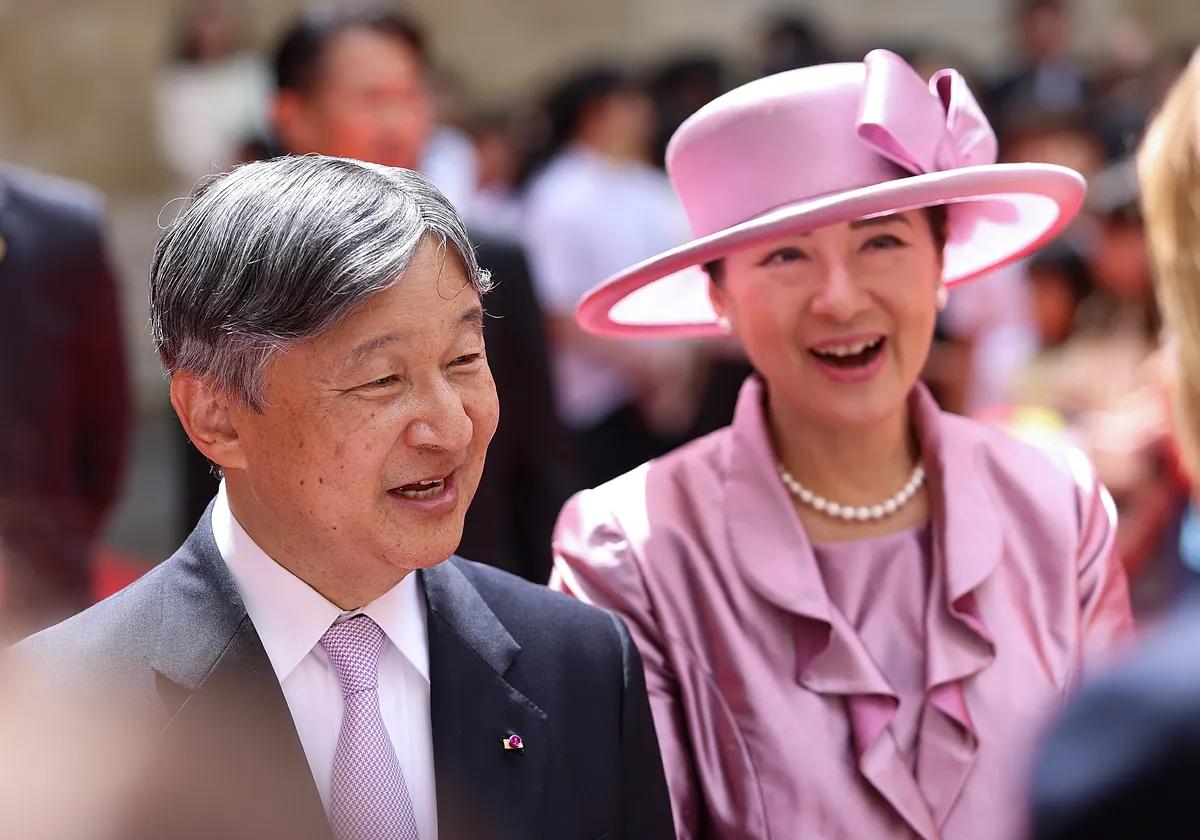
The reform is designed to respond to concerns about the declining number of eligible successors and imperial family members, with NHKニュース saying that under the Imperial House Law the Imperial Throne is succeeded by males in the male line. NHKニュース said the Imperial family currently consists of Emperor Naruhito and 15 others, and that at present only three members are eligible, with only Prince Hisahito belonging to the family’s younger generation. El Mundo America framed the bill as allowing women to retain imperial status after marrying commoners to ensure a “minimum adequate number of active members,” while also allowing adoption of males aged 15 or older from 11 former branch families.
El Mundo America added that “it is clear that under no circumstances has the possibility been considered for women to become empresses or transmit those rights,” and said the Emperor, the Empress, the Emperor Emeritus, as well as Akishino and his wife, Princess Kiko, have been excluded from the list of potential adoptive parents. 조선일보 described the political maneuvering around the Imperial House Basic Law revision, saying Takaichi agreed to prioritize it after facing strong opposition within the Liberal Democratic Party (LDP), and quoted a close aide saying, “We agonized until the very last moment.”