Technology and Scienceupdated 1h ago2 min read
KDE Releases Plasma 6.8 For 30th Anniversary, Retires Native X11 Session Support
This article is an automated aggregation of coverage from news outlets. Our editorials offer in-depth analysis curated by the NewsCord team.
Plasma 6.8 released to mark KDE's 30th anniversary. X11 support retired; Wayland-only sessions become default.
Plasma 6.8, X11 farewell
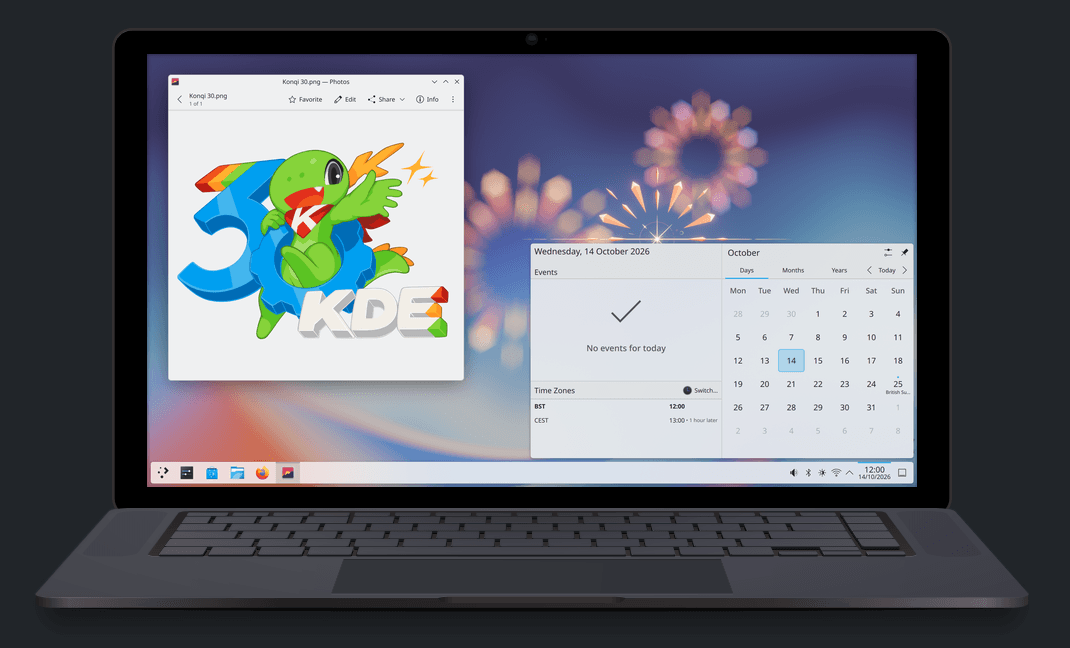
KDE marked its 30th anniversary by releasing Plasma 6.8 on October 14, and the release described Plasma 6.8 as the “30th Anniversary Edition.” KDE retired Plasma’s native X11 session support, and Plasma 6.8 logs users exclusively into a Wayland session. KDE said legacy X11 applications will still function via the XWayland compatibility layer, while users who stay on Plasma 6.7 keep their existing sessions for now.
KDE also framed the change as preparing Plasma for the future, and the release said Plasma will fully adopt the Wayland system and put support for starting new X11 sessions in Plasma to bed. heise online reported that the window manager kwin_x11 will no longer be developed and will only provide bug fixes for Plasma 6.7 and the LTS version Plasma 6.6 for their respective support periods.
Union, Kup, and remote
KDE introduced Union as a new design engine intended to give KDE applications a uniform look, and the release said Union is preparing Plasma for the future. KDE said Union is now covering QtWidgets-based programs in addition to QtQuick applications, and the heise online report named Dolphin and Kate as examples. KDE integrated Kup into Plasma 6.8 as a backup planner, and the release said Kup is now integrated into Plasma.
heise online reported that Kup delegates the actual backup in the background to “bup” (incremental archives) or “rsync” (synchronized folders), depending on the backup type. Ars Technica said the new Plasma 6.8 also includes improved remote upgrades, and it highlighted kscreenctl as a command-line utility that allows power users to adjust display configurations.

Nvidia triple buffering, accessibility
KDE said Plasma 6.8 enables Nvidia triple buffering by default, and Ars Technica described the change as one of the notable additions.
heise online reported that triple buffering is now active by default on Nvidia graphics cards, and it tied the update to fixed errors that hindered the function.
KDE also added HDR support improvements, and Ars Technica said the update includes Nvidia triple buffering being enabled by default and a more streamlined Union theming system.
OMG! Ubuntu said Plasma 6.8 boosts accessibility with a new ‘click dwell’ option to activate a click when mousing over a UI element and waiting.
KDE further expanded remote desktop behavior, and heise online reported that the built-in RDP server adjusts the image quality to the available network bandwidth.