Russiaupdated 1h ago2 min read
MapKremlin Says Russian Warships Off Cuba Pose No Threat After Admiral Gorshkov, Kazan Arrive
“widely seen as a Russian show of force as tensions rise over the Ukraine war.”
“The visit of the vessels - which include a nuclear-powered submarine and a frigate - have been seen as a show of force amid Moscow's tensions with the West over the war in Ukraine.”
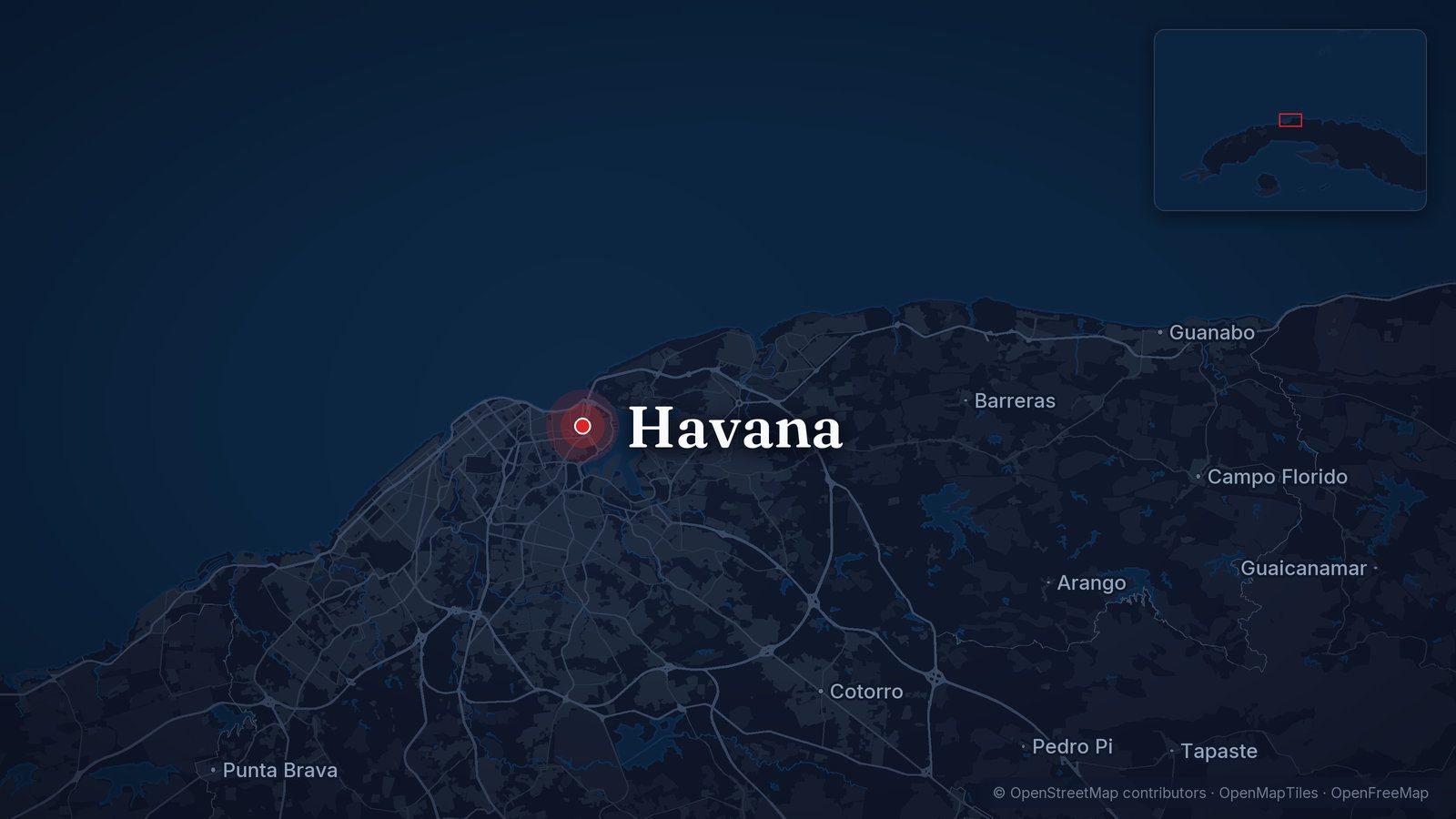
Map: © OpenStreetMap contributors, ODbL · Cropped for layout
This article is an automated aggregation of coverage from news outlets. Our editorials offer in-depth analysis curated by the NewsCord team.
Russian fleet including Admiral Gorshkov and nuclear submarine Kazan arrived in Havana for five-day visit. US officials say the ships pose no threat and are being monitored by American forces.
Save coverage image
Kremlin dismisses US concern
Russia’s Kremlin said there were no reasons for any country, including the United States, to be concerned about Russian warships off Cuba during a drill. Dmitry Peskov told reporters, "This is a normal practice for all states, including a maritime power as large as Russia," as a Russian Navy frigate and a nuclear-powered submarine arrived in Havana harbor on Wednesday.
“So we do not see any reason for concern in this case.”
Jake Sullivan said the United States had "no evidence that Russia transferred missiles to Cuba," while the Kremlin said the exercises were a common practice. The Russian frigate Admiral Gorshkov and the nuclear-powered submarine Kazan arrived in Cuba after conducting a training of "high-precision missile weapons" in the Atlantic Ocean, and Cuba’s Ministry of Foreign Affairs said the ships did not carry nuclear weapons.
US monitors, Cuba salutes
Russia’s Admiral Gorshkov frigate and the nuclear-powered submarine Kazan arrived in Cuba for a five-day visit, and Cuba saluted the vessels’ arrival with a 21-gun salute. Jake Sullivan told reporters on Wednesday, "We have seen this kind of thing before, and we expect to see this kind of thing again," while he added there was no evidence of Russia transferring any missiles to Cuba.
Cuba’s foreign ministry said the fleet was not carrying nuclear weapons, and the Russian Ministry of Defence said the four Russian vessels conducted "high-precision missile weapons" training in the Atlantic Ocean. The US Northern Command deployed three destroyers and a reconnaissance aircraft in the region to monitor the Russian fleet, and the US Southern Command said the fast attack submarine Helena arrived for a routine visit to Guantanamo Bay hours before a Canadian patrol vessel sailed to Havana.
Tensions and next stops
The Russian fleet’s arrival came as Washington and some Ukraine allies allowed Kyiv to use their weapons on targets inside Russia, and the deployment was described as a show of force by Moscow amid rising tension over its invasion of Ukraine. Benjamin Gedan, director of the Latin America programme at the Wilson Center, told The Associated Press news agency that the warships were a reminder to Washington that it is unpleasant when an adversary meddles in your near abroad.
The Kremlin’s message also landed in Cuba’s diplomacy, as Cuba’s Foreign Minister Bruno Rodriguez met Russia’s Foreign Minister Sergey Lavrov in Moscow and Rodriguez expressed his government’s "rejection of the expansion of the North Atlantic Treaty Organization [NATO] towards the Russian border". The Russian ships were expected to remain in Havana until June 17, and US officials expected the Russian ships to remain in the region throughout the summer and possibly also stop in Venezuela.